
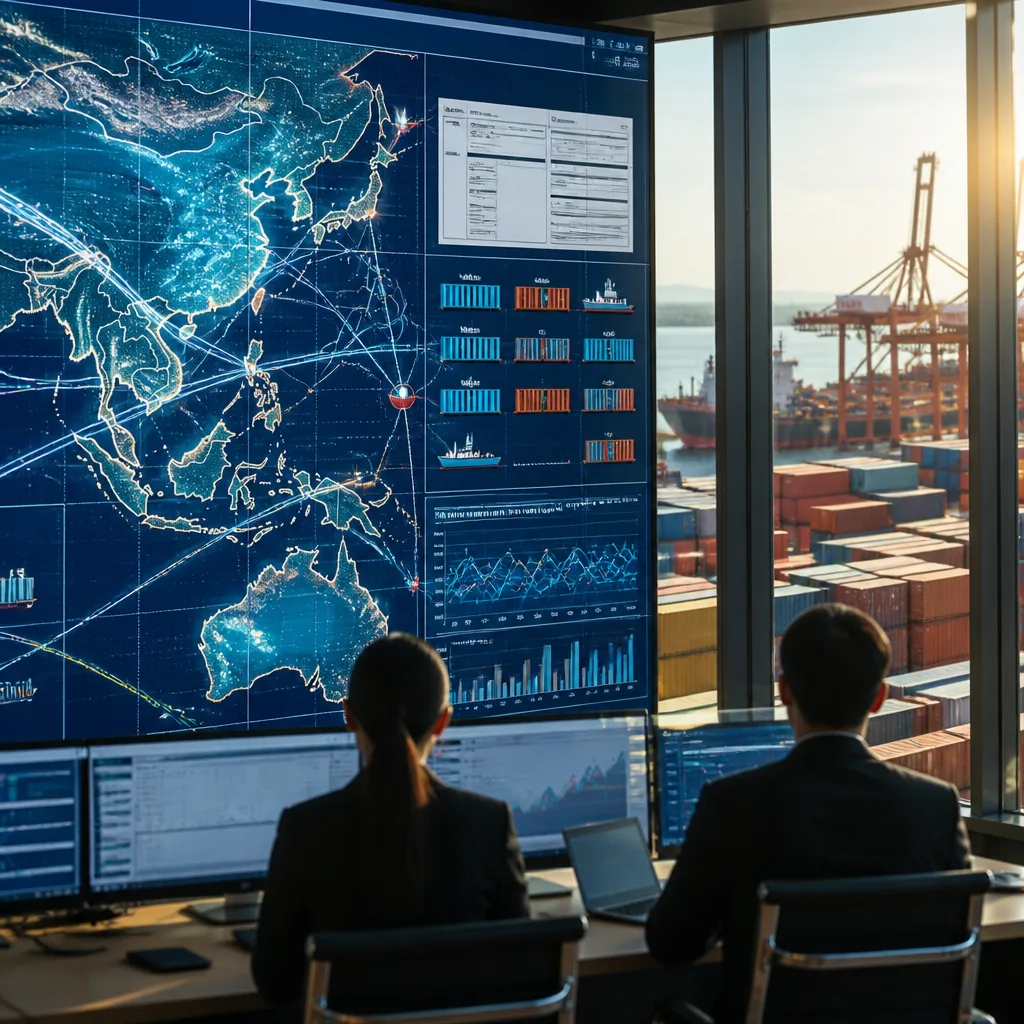
Businesses operating across Asia-Pacific are being pushed to rethink the way technology supports logistics, as trade corridors evolve, regulations multiply and customers demand faster, more transparent delivery. What was once a clear split between business requirements and technical delivery is giving way to a single, integrated operating model that treats physical movement and digital intelligence as a combined offering.
From siloed projects to end-to-end systems
For decades, logistics technology has focused on specific functions — track-and-trace, route optimisation, customs automation and warehouse management — with business teams defining needs and IT delivering separate solutions. That divide is becoming a liability. The pace of change in trade and regulatory environments means systems built for yesterday’s problems now struggle to handle the modern requirement for visibility, fast exception management and predictive interventions.
In practical terms, the consequences are familiar to operators moving goods even between neighbouring markets. A shipment traveling from Malaysia to Singapore still needs accurate customs paperwork, regulatory checks and co‑ordination across multiple operational teams — tasks that are no longer trivial because compliance itself can determine whether a consignment moves or stalls.
What business-first technology delivers
Adopting a business-first approach means technology is designed around the end-to-end commercial process rather than a set of discrete technical outcomes. That changes priorities:
- Validation of customs documentation before arrival to reduce preventable clearance delays.
- Consolidation of shipment, customs and transport events into a single visibility layer so disruptions are flagged earlier.
- Automated recommendations for actions when a shipment is at risk, improving exception resolution times.
When these capabilities are combined they can connect warehouse, gateway and transport teams around shared operational data, smoothing handoffs between inbound processing, customs release and outbound movement. In highly regulated and diverse environments across Asia-Pacific, that translates into more predictable cross-border trade flows and fewer last‑mile surprises for customers.
Practical building blocks
Delivering this convergence is less about a single piece of software and more about changing operating models and priorities. Leaders are being encouraged to break down silos between business and IT and to treat regulatory expertise and reliable execution as central competitive assets — as important as speed.
| Legacy focus | Business-first priority |
|---|---|
| Standalone tracking systems | Integrated visibility across shipment, customs and transport events |
| Separate customs processing | Pre-arrival documentation validation and risk identification |
| Isolated warehouse systems | Shared operational data to improve handoffs and reduce delays |
Those changes also shift where investment is needed: not only in software but in workflow redesign, staff skills and regulatory expertise embedded within technology-driven processes.
Why this matters beyond the region
Asia-Pacific’s mix of fast-moving trade corridors and diverse regulatory regimes makes it an acute example of a global problem. The lessons are transferrable: businesses in any market that depends on cross-border flows must prioritise compliance intelligence and operational resilience as much as throughput. In short, speed without regulatory control is a route to disruption, not advantage.
For firms looking to scale, the implication is clear — success will depend on converging business and IT into operating models that treat physical logistics and digital intelligence as a single, accountable system. That is how predictable, compliant and customer-centred supply chains will be built in the years ahead.









