
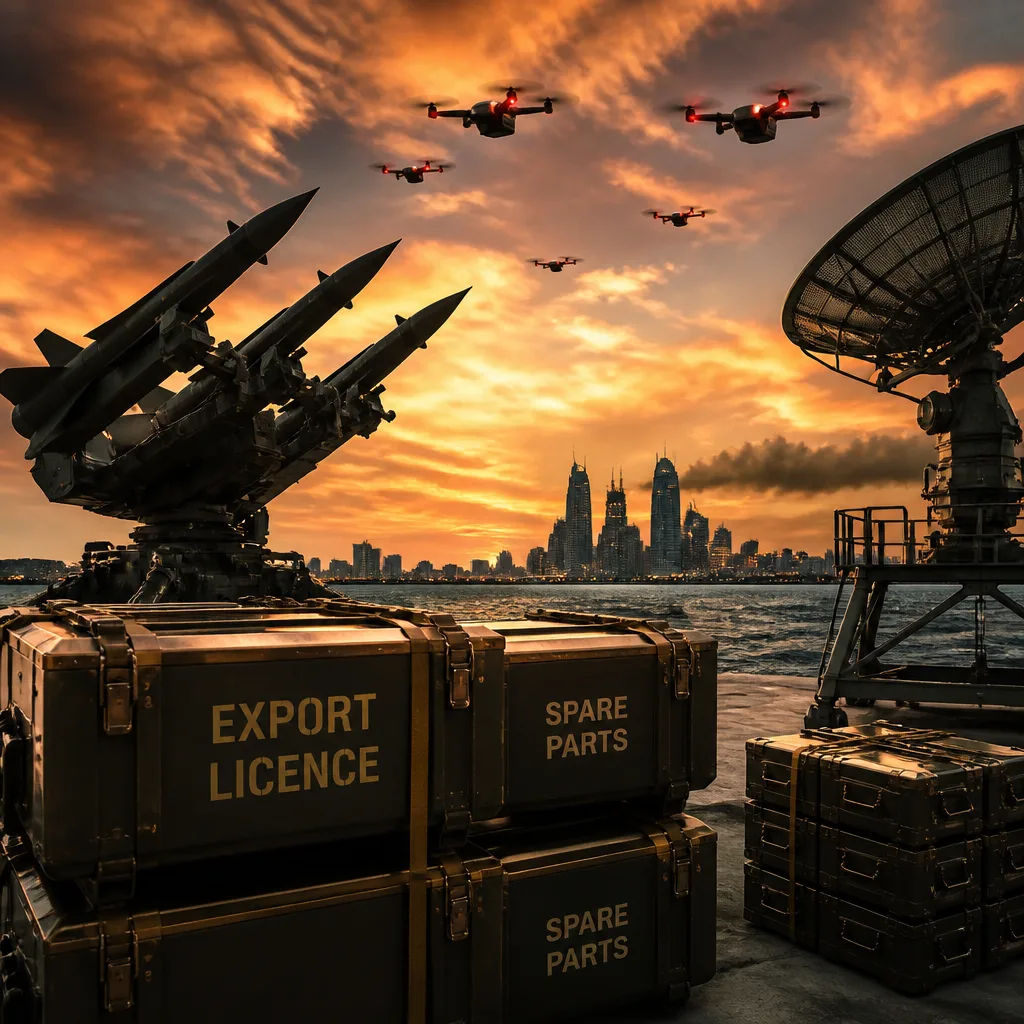
Europe is not keeping up with the pace of change in unmanned and aerial warfare witnessed in Ukraine and would struggle to repel a substantial Russian missile strike, Latvia's president has warned. The blunt assessment, given in an interview and reported by Ukrinform, highlights shortfalls in air-defence and anti-drone capabilities and raises questions about the readiness of NATO forces to handle a sudden escalation.
Rapid evolution outstripping current defences
Edgars Rinkēvičs told the interviewer that drone warfare is evolving at "lightning speed" and that some current preparations for aerial combat could be outdated by the middle of next year. He said that Europe’s ability to defend against missiles, drones and ballistic threats has "serious problems," and contrasted Ukraine’s operational experience with NATO members' preparedness.
"What we see is that air defence, drone defence, anti-ballistic defence has serious problems. And let's be frank. Ukraine has it. The whole of Europe and Nato has it,"
The president also suggested that if Russia launched a sudden air strike involving multiple missiles, many countries would struggle to cope. His remarks come against a backdrop of delays in deliveries of critical munitions and components for air-defence systems, including supplies intended for Patriot batteries and other capabilities.
Supply chain and licensing constraints
Rinkēvičs pointed to logistical and legal obstacles affecting the production and transfer of key systems. He said the United States has explored moving Patriot production to Ukraine and European partners, but that no firm agreement has been reached. Negotiations were continuing, he added, and technical difficulties — notably licensing — were standing in the way.
The combination of platform shortages, complex supply chains and export controls is a familiar challenge for governments seeking to scale sophisticated defence technology quickly. The president also highlighted acts of sabotage, cyber incidents and recent drone and missile events as evidence that adversaries are probing European resolve.
Political and seasonal pressure points
Rinkēvičs signalled that Russia may intensify mobilisation and press its advantages during the winter months, using a combination of military pressure and measures designed to dissuade further assistance for Ukraine. He did not expect a conventional invasion of NATO territory but urged vigilance for alternative forms of coercion and escalation.
- Capability gap: He warned Europe may lag behind battlefield developments driven by unmanned systems.
- Wider vulnerability: Most NATO members would find a multi-missile strike difficult to counter, he said.
- Production hurdles: Moves to expand Patriot production face licensing and technical challenges.
| Issue | Rinkēvičs' observation |
|---|---|
| Drone and air-defence | Developing rapidly in Ukraine; Europe trailing |
| Patriot production | Discussed as possible solution; licensing and negotiations unresolved |
The warning carries implications for defence procurement and industrial policy. Rapidly improving drone tactics and countermeasures mean procurement cycles and operational concepts may need greater flexibility. For governments, that translates into three practical priorities:
- Accelerating deliveries and resolving export or licensing constraints for critical systems;
- Investing in scalable, software-upgradable air-defence architectures that can adapt as threats change;
- Hardening supply chains and improving resilience against sabotage and cyberattack.
For the UK and other European states, those choices come with budgetary, political and industrial trade-offs. Increasing production of high-end interceptors is costly and requires close coordination with manufacturers and partner governments. At the same time, the experience from Ukraine underlines that availability, training and a willingness to share intelligence and logistics are as important as the hardware itself.
Rinkēvičs' comments are a reminder that warfighting is evolving faster than acquisition cycles. If his assessment is correct, policymakers face a narrow window to modernise air-defence architectures and address the export and production bottlenecks that could determine whether Europe can deter or blunt a renewed round of large-scale aerial attacks.









