Kyosei‑Bank has emerged as the new controlling shareholder of Hong Kong‑listed CA Cultural Technology Group after a restructuring completed on 14 August 2026 that reshaped the company’s capital and ownership structure.
Bank takes near‑three quarters of enlarged capital
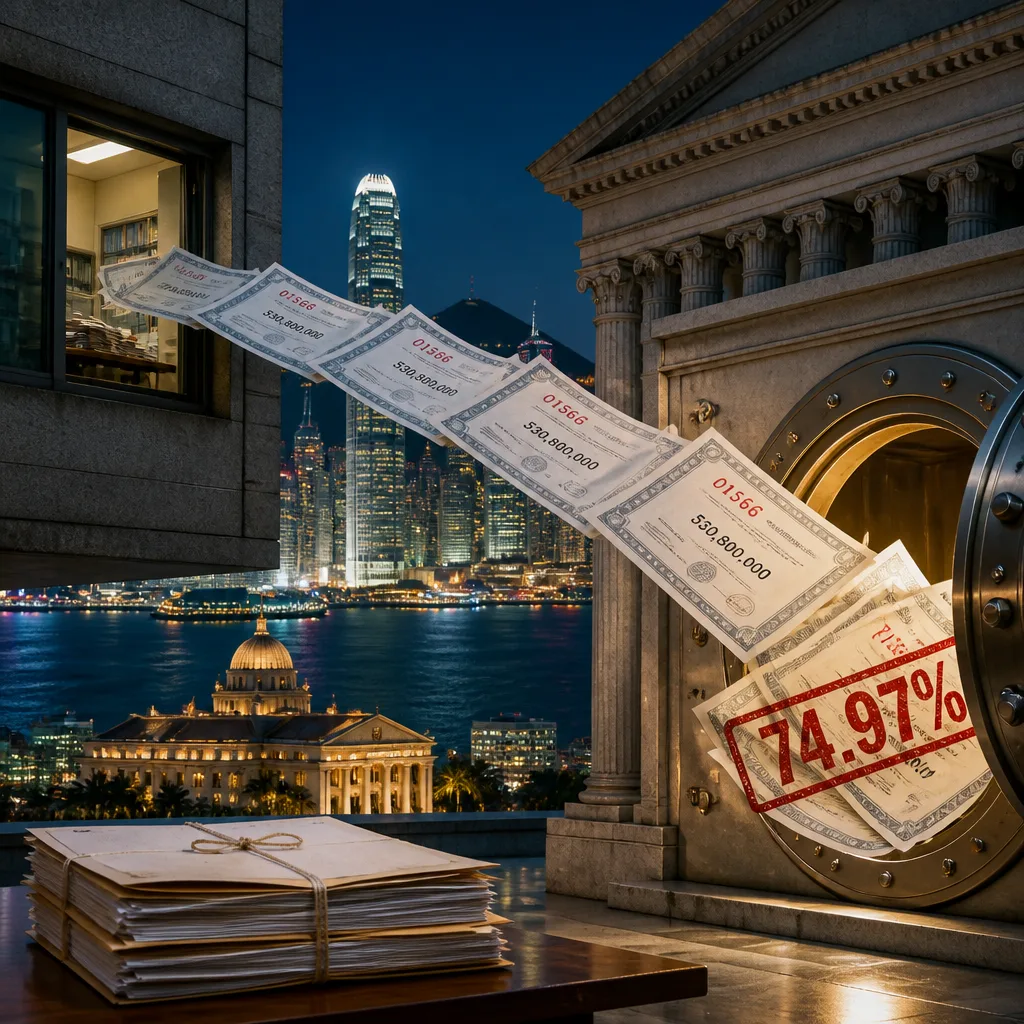
Under the deal, Kyosei‑Bank subscribes for 530,800,000 new shares of the enlarged issued share capital, giving it a 74.97% stake in the company (Stock Code: 01566). The restructuring was coupled with a creditors’ scheme that had previously been sanctioned by the High Court on 19 March 2024 to address long‑running debt problems.
The creditors’ scheme saw 59,000,000 scheme shares issued to SchemeCo for admitted creditor claims, pending their distribution. Two significant shareholders — Bright Rise Enterprises and Fortress Strength — disposed of their combined holdings of 16,327,300 new shares (around 2.31% of the enlarged capital) to independent third parties to meet listing rules.
| Item | Figure |
|---|---|
| Kyosei‑Bank new shares | 530,800,000 |
| Stake taken by Kyosei‑Bank | 74.97% |
| Scheme shares for creditors | 59,000,000 |
| Shares sold by two shareholders | 16,327,300 (~2.31%) |
What the transaction changes
The transaction resolves longstanding solvency pressures by converting creditor claims into equity and bringing a deep‑pocketed shareholder into control. With Kyosei‑Bank now holding a dominant position, it gains the authority to set strategy, influence board appointments and determine the pace of any operational or strategic overhaul.
Company filings confirm that all conditions attached to the Whitewash Waiver have been satisfied and that the minimum 25% public float requirement has been met, allowing the company to retain its listing on the Hong Kong exchange.
- Restructuring was implemented via share subscription and a creditors’ scheme sanctioned in March 2024.
- Kyosei‑Bank’s shareholding gives it clear control to direct the business going forward.
- Measures were taken to preserve compliance with Hong Kong listing rules, including dispersal of certain existing holdings.
Context and consequences
The deal is an example of a broader approach seen in Hong Kong markets where troubled companies use debt‑for‑equity swaps to stay listed while bringing in a solvency backer. For technology groups, which can be capital intensive and face cyclical demand, such restructurings offer a route to stabilise balance sheets without immediate liquidation or forced delisting.
For investors, the immediate consequence is a substantial change in governance. A single controlling shareholder can accelerate decisions — from asset disposals to shifts in product focus — but also concentrates execution risk and reduces the influence of minority holders.
For regulators and the market, the transaction underscores the balancing act between preserving market integrity and allowing debted issuers a viable restructuring path. The issuance of shares to creditors and the satisfaction of the Whitewash Waiver indicate the company took steps to align the transaction with listing rules.
Operationally, CA Cultural Technology’s future will now depend on Kyosei‑Bank’s appetite for investment or strategic change. The lender’s priorities — whether to stabilise and hold the business, to seek synergies with other interests, or to prepare for eventual disposal — will determine the pace and direction of recovery.
While the restructuring removes immediate debt pressure, it also dilutes existing public holdings and concentrates control. Market participants should watch forthcoming board appointments, any refreshed strategy announcements and how the scheme shares are distributed to creditors.
The transaction highlights a pragmatic mechanism available to Hong Kong‑listed companies to address creditor claims and preserve a public listing, but it also serves as a reminder that such rescues can substantially alter the balance of power inside a company.