
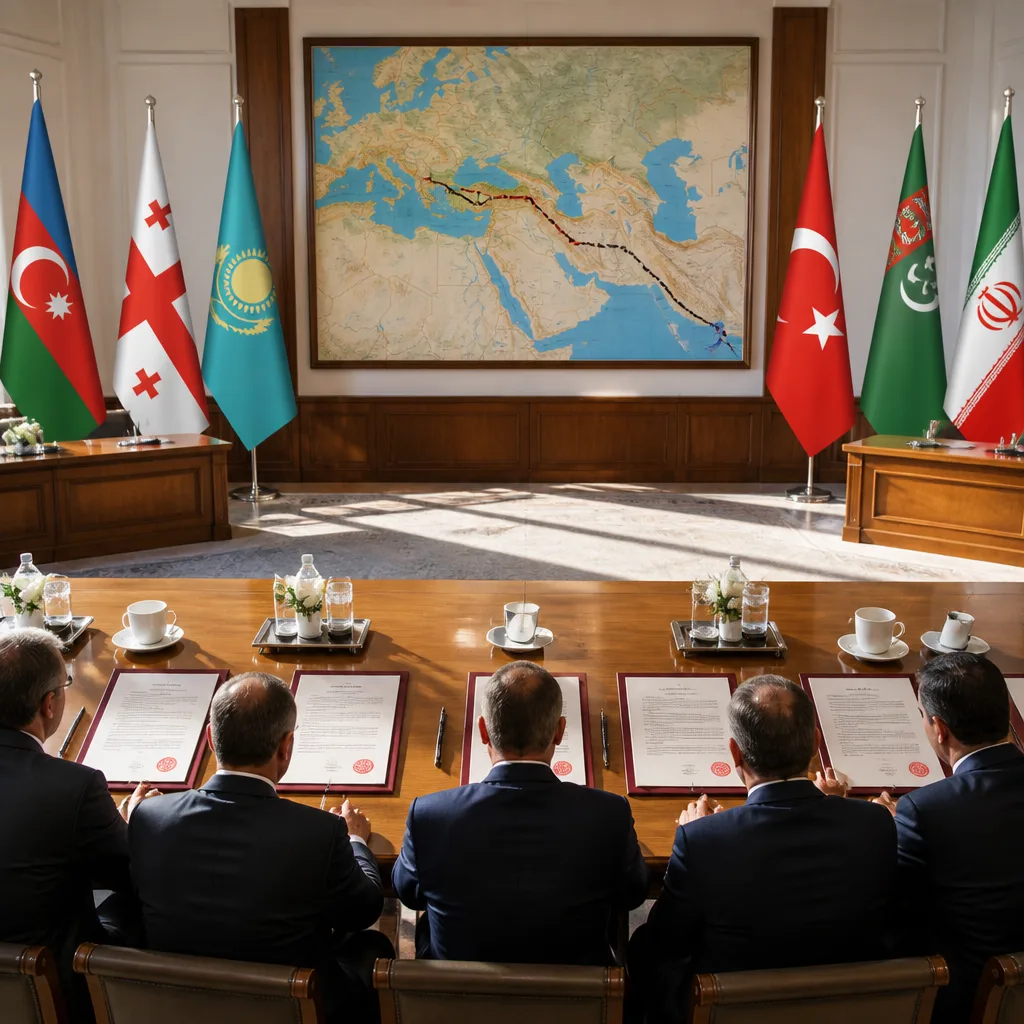
Iraqi Prime Minister Ali al-Zeidi has signalled that economic development will be at the heart of his foreign policy by placing Türkiye at the centre of Baghdad’s route to global markets. His visit to Ankara, immediately following engagements in Washington and Tehran, produced five memoranda of understanding designed to deepen cooperation across education, industry and transport.
Strategic aim: connectivity, not ceremony
The significance of the Ankara talks lies less in diplomatic theatre and more in their economic logic. Two of the five agreements address transport corridors and infrastructure — the Fishhabur–Ovaköy border crossing and broader transport infrastructure development in Iraq in exchange for natural resources. Iraqi officials and Turkish counterparts framed these measures as steps towards operationalising the Development Corridor Project, which seeks to link the Grand Faw Port in Basra to Türkiye and Europe.
Other memoranda signed during the visit covered:
- educational and academic cooperation;
- youth and sport;
- industrial property;
- rail and road transport via the Fishhabur–Ovaköy crossing;
- development of transport infrastructure in Iraq in exchange for natural resources.
The first three agreements were described by observers as widening the social and institutional foundation of the bilateral relationship. The latter two are of direct, practical importance for Iraq’s ambitions to move from agreement to implementation on major transport and energy projects.
Context and continuity
The visit also underscores continuity in Baghdad’s ties with Ankara. The source material records that when President Recep Tayyip Erdoğan visited Baghdad in April 2024, 27 legal texts were signed. A subsequent High-Level Strategic Cooperation Council meeting in May 2025 produced a further 11 documents. The inclusion of Ankara on Mr al-Zeidi’s first foreign itinerary following Washington and Tehran indicates that the new Iraqi government views the relationship as both strategic and practical.
Türkiye’s appeal to Baghdad is straightforward. Unlike capital-intensive security relationships or historic political influence tied to Washington and Tehran, Ankara offers a tangible route to global markets through land corridors, ports and transport links. For an Iraqi government prioritising development, the promise of moving goods and energy to wider markets via existing Turkish infrastructure is a compelling proposition.
Project implications and next steps
Progress on the Development Corridor Project depends on turning memoranda into executable contracts and on securing finance and technical delivery. The agreements signed in Ankara address parts of that chain: border crossing capacity, rail and road links, and a mechanism for exchanging natural resources for infrastructure work. If implemented, they would strengthen logistical links from southern Iraq to the Turkish border and onwards to Europe.
| Memoranda focus | Immediate purpose |
|---|---|
| Educational and academic cooperation | Institutional and social ties |
| Youth and sport | Social engagement and soft diplomacy |
| Industrial property | Framework for business and trade |
| Rail and road transport (Fishhabur–Ovaköy) | Border transit capacity |
| Transport infrastructure development for natural resources | Financing and delivery mechanism for projects |
Challenges remain. The practicalities of cross-border infrastructure projects are complex: financing, security, rights of way and timelines all present obstacles. Moreover, the geopolitical balancing act Baghdad is conducting — engaging Washington and Tehran while deepening economic ties with Ankara — will require steady diplomatic management to avoid friction with key partners.
For now, the Ankara visit offers a clear message. By prioritising agreements that enhance connectivity and that can be tied to a concrete project, the Iraqi government is signalling a pragmatic turn: use regional partnerships not only for diplomatic recognition, but to build the transport and energy systems that underpin growth.












