
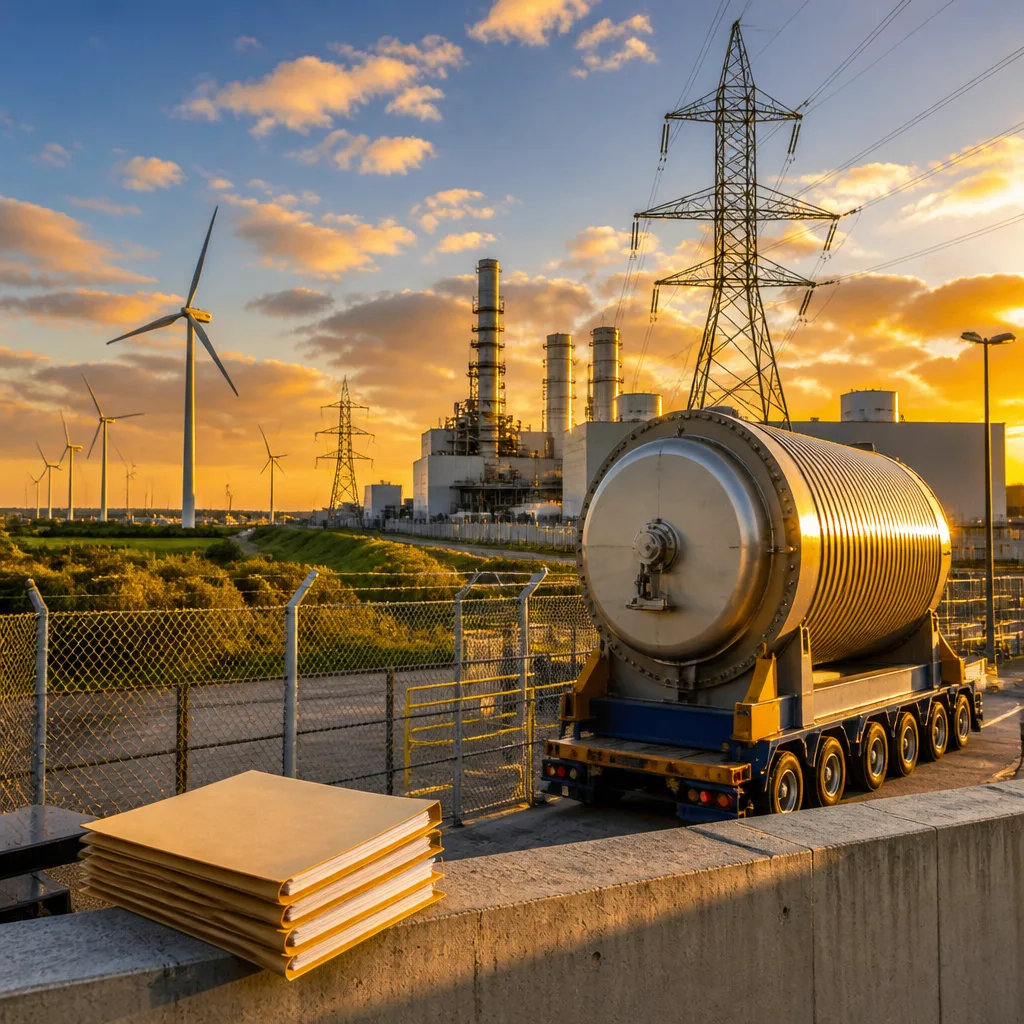
Canadian investor Kevin O'Leary has told listeners he will lean into energy assets — notably electricity production and uranium — as his preferred route to profit from the artificial intelligence expansion, rejecting a direct push into volatile technology equities.
Reasoning: power, not platforms
Appearing on the Stock Sharks: The Deep End podcast, O'Leary described his approach as deliberately indirect. He said he prefers to buy into the systems that supply and stabilise compute capacity rather than attempting to pick winners among AI software and hardware companies.
“I’m a picks and shovels guy,”
The metaphor evokes 19th-century prospectors who profited from selling tools rather than speculating on discoveries. O'Leary highlighted sectors he believes will benefit from rising electricity demand tied to AI workloads: natural gas generation, turbine manufacturers and nuclear fuel in the form of uranium.
Evidence cited
To illustrate the logic, O'Leary pointed to a high-value power arrangement in Finland in which Google agreed a long-term contract with a local utility reportedly worth $3 billion. He argued the deal demonstrates that technology companies are increasingly treating reliable power as a strategic asset in its own right — separate from data centre deals — and are prepared to secure supply well in advance.
- Focus areas: electricity production, natural gas, turbines, uranium.
- Investment horizon: the next 36 months is the window O'Leary cited for his concentrated attention.
- Example deal: a reported $3 billion long-term power contract in Finland involving Google.
Context and consequences
O'Leary's stance reflects a wider reassessment of how best to capitalise on the AI wave. There are two practical pressures driving that shift. First, the computational load from large-scale AI models implies sharply increased electricity demand in data centres, often in locations where grid capacity and long-term power contracts are critical. Second, the short-term performance and valuation swings of AI-related equities make direct stock selection risky for investors looking for steadier returns.
Backing infrastructure — generation, delivery and fuel sources — offers a potentially lower-correlated investment that benefits from long-term contracts and regulatory visibility. For governments and regulators, the logic also raises questions: an emphasis on securing energy supply to support compute growth could influence planning decisions, grid upgrades and licensing for new generation capacity.
Where uranium fits
O'Leary named uranium as a newer theme for him. Nuclear fuel becomes relevant where policymakers and companies seek steady baseload power with low operational emissions. If data centres and AI operations scale up, demand for predictable, high-availability power sources could make nuclear-derived electricity more attractive — and that in turn would raise interest in fuel supply chains.
Investment implications
The shift towards energy infrastructure investment could redirect capital flows away from speculative tech stocks toward suppliers, utilities and equipment manufacturers. That matters to:
- Investors seeking alternative exposures to the AI story.
- Energy companies evaluating long-term contracts with hyperscalers.
- Policy makers planning grid resilience and permitting for new capacity.
| Area | Why it matters |
|---|---|
| Natural gas | Flexible generation to meet peak compute demand |
| Turbines | Infrastructure for dispatchable power supply |
| Uranium | Baseload, low-emission electricity for scale |
| Long-term contracts | Secure supply for tech companies, reduce price exposure |
O'Leary's approach does not dispute the transformative economic potential of AI. Rather, it reframes where investors might find the most reliable returns: not in headline-grabbing AI platforms, but in the energy backbone that will have to expand and adapt if those platforms are to run at scale.
This perspective is already influencing corporate behaviour. Large technology firms have been locking in power supplies and investing in energy projects; O'Leary argues retail and institutional investors should follow by prioritising the suppliers of energy and equipment over the volatile, and often crowded, lists of AI equities.
How policymakers respond — by facilitating grid upgrades, reviewing energy permitting or shaping nuclear fuel policy — will determine whether those investment opportunities materialise at the scale he and others anticipate. For now, the takeaway from O'Leary's podcast appearance is simple: in the race to back AI, he sees the real money in wires, turbines and fuel rather than in chips and code.









