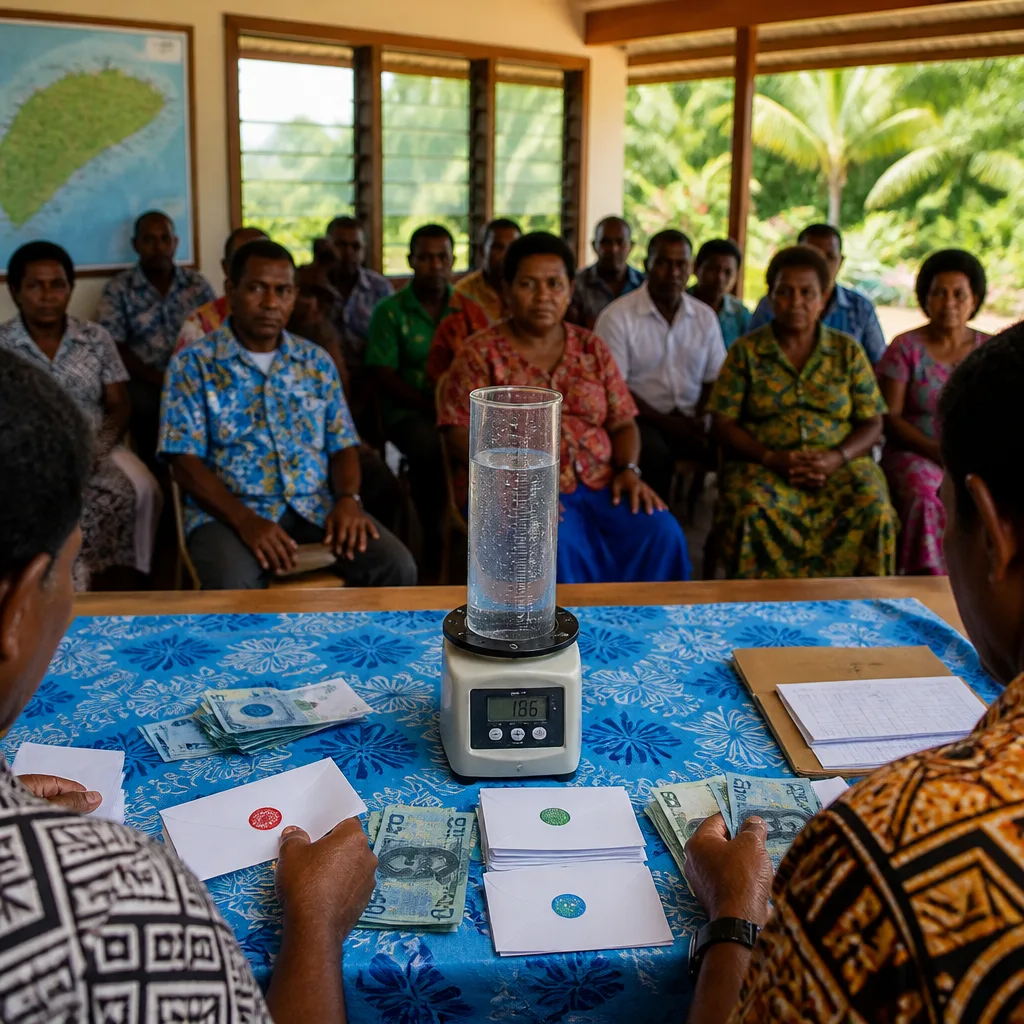
Tower Insurance has completed its inaugural parametric rainfall payout in Fiji, disbursing a total of FJ$27,050 to 278 customers in Kadavu after heavy rain in late June pushed measured rainfall above policy thresholds.
What happened and how the product works
The payout, made within three weeks of the extreme weather, followed automatic triggers tied to rainfall gauges rather than traditional claims assessment. Under the Rainfall Response Cover, when rainfall at an insured location crosses a predetermined threshold measured at a specific gauge over a defined period, the policy pays out without an on‑site assessor confirming damage.
"Following heavy rainfall, nearly 300 Fijian families received a helping hand through our parametric rainfall product, enabling faster access to financial support when it was needed most," said Tower chief underwriting officer Ron Mudaliar.
The product was launched as a 12‑month pilot in November 2025. The pilot is supported by the United Nations Capital Development Fund (UNCDF) through the Pacific Insurance and Climate Adaptation Programme, with regulatory oversight and subsidy mechanisms provided by the Reserve Bank of Fiji and the InsuResilience Solutions Fund. Tower developed the administration platform with insurtech firm CelsiusPro in 2024; the platform processes trigger data and automates payouts without manual claims handling.
Scale, speed and the stubborn realities
On the face of it, the payout demonstrates the attraction of parametric products: automated, data‑driven payments can get cash to households faster than conventional claims processes. Tower has said it wants to reach a target of paying qualifying claims within seven days of an event — about half the time this initial payout took.
That raises two immediate practical questions for households and policymakers. First, how meaningful are the individual payments? The pilot distributed FJ$27,050 among 278 recipients — an average of about FJ$97.34 per customer. Second, can the product scale and accelerate to meet the seven‑day target without increasing costs to policyholders or creating new administrative dependencies on remote gauges and data feeds?
| Metric | Value |
|---|---|
| Total payout | FJ$27,050 |
| Recipients | 278 |
| Average per recipient | ≈ FJ$97.34 |
Parametric cover avoids the delays and costs of on‑site loss adjustment, which can be important after widespread events when adjusters are in short supply. But because payments are linked to indexed measurements rather than itemised loss, they may not fully reflect an individual household's repair costs or income loss. That trade‑off matters in economies where many households lack savings and where even modest sums can be the difference between buying food and borrowing.
Broader context: product evolution and regional rollout
Tower's parametric portfolio in the Pacific began with Cyclone Response Cover in 2022 and subsequently expanded to Tonga and Samoa. The Rainfall Response Cover pilot in Fiji is intended to provide operational learnings ahead of a wider launch in the country later this year. Tower says the pilot is supported by regulatory and development partners to help subsidise the product while it scales.
- Product launched as a 12‑month pilot in November 2025.
- Administration platform built with CelsiusPro in 2024 to automate triggers and payouts.
- Reserve Bank of Fiji and InsuResilience Solutions Fund contribute oversight and subsidy mechanisms.
For insurers and governments, parametric cover promises a way to de‑risk fiscal exposure to smaller but frequent climate shocks by getting cash to people quickly and reducing the administrative burden of traditional claims. For consumers, the value depends on affordability, the calibration of trigger thresholds and the size of payouts relative to actual losses.
The Kadavu episode will be watched closely by regulators and development agencies. If Tower can shorten payout times to the seven‑day target without making policies prohibitively expensive, parametric insurance could become a more central part of climate adaptation strategies across the Pacific. If not, the pilot risks showing the limits of index‑based protection for low‑income households facing large, uneven losses.
Either way, the case underscores a larger economic tension: rapid, automated support can blunt the immediate impact of weather shocks on household budgets, but meaningful resilience will still depend on jobs, wages and longer‑term investments in infrastructure that reduce exposure to flood and storm damage.