
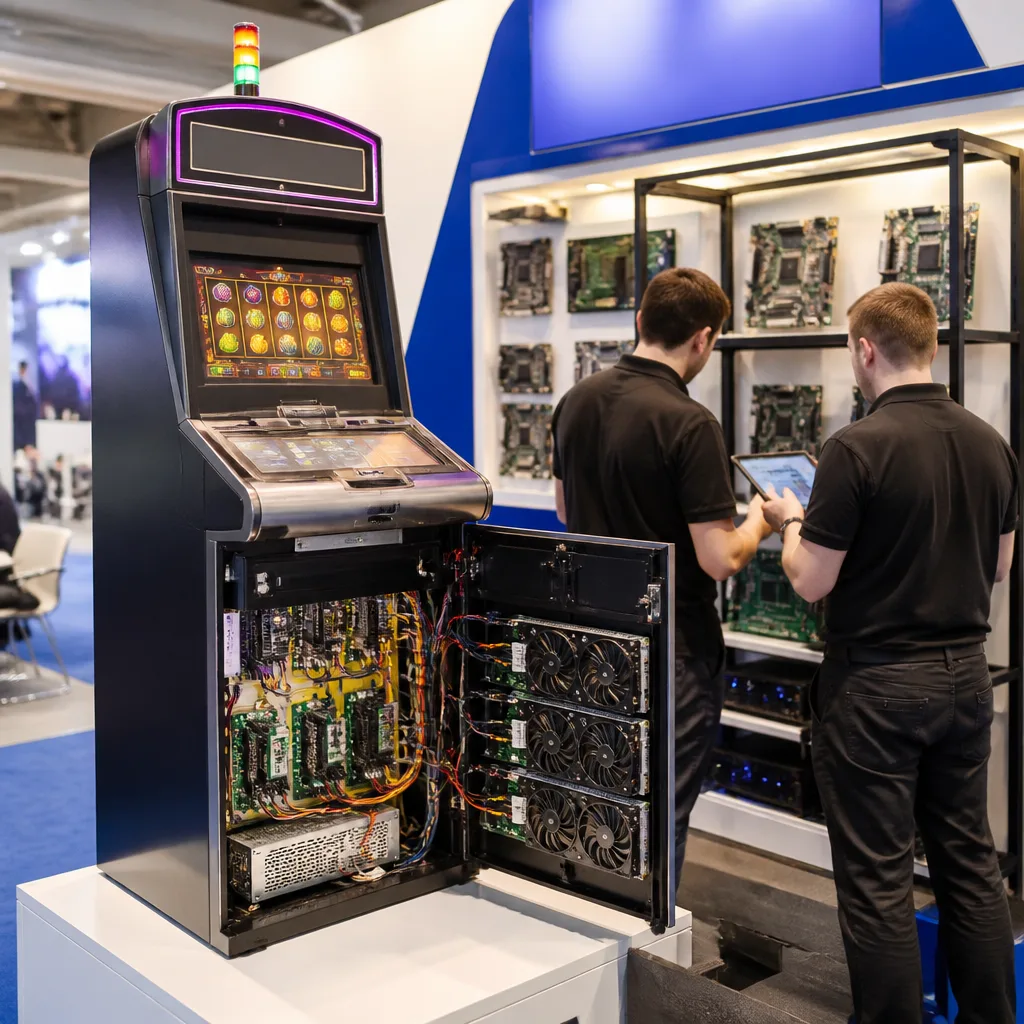
ADLINK, an industrial computer manufacturer, is positioning its engineering depth and in-house manufacturing as a differentiator for the gaming industry ahead of this year’s Global Gaming Expo (G2E).
From industrial roots to gaming cabinets
The company, which supplies electronics and complete systems to multiple verticals, says its experience beyond the gaming sector allows it to offer tailored solutions rather than off-the-shelf boxes. That approach includes original design manufacturing (ODM), prototype development and moving products to mass production while retaining control over the full production chain.
Senior Director of ODM and Technical Sales Support Scott Salzman told CDC Gaming that ADLINK often adapts standard platforms into customer-specific systems and frequently delivers fully custom designs to what he characterised as tier-one gaming companies.
“Our experience is much deeper than just gaming… We bring a lot to the table when it comes to innovation.”
What ADLINK says it delivers
ADLINK emphasises three linked capabilities:
- Custom design (ODM) — engineering to a customer’s requirements rather than pure catalogue sales.
- Complete electronic integration — supplying game controller, GPU and graphics as a single electronic link for slot machines.
- End-to-end manufacturing and lifecycle management — in-house prototyping, production and post-sale support, with no outsourcing of core manufacturing.
Those capabilities are presented as commercial advantages in a sector that values long product life, resilience and regulatory compliance. ADLINK highlights ruggedness and longevity as important attributes for gaming hardware, where systems can see sustained, intensive use.
Benefits and trade-offs for operators and suppliers
For operators and major suppliers, the promise of a single vendor handling design, production and lifecycle support can reduce coordination overhead and simplify component validation. Consolidating the electronic link — controller, GPU and graphics — may also streamline certification and integration efforts.
However, suppliers relying on a single manufacturer for bespoke systems can face vendor-concentration risks. The ability to modify standard products or create tailored hardware is valuable, but it ties customers to the supplier’s engineering roadmap and supply chain practices.
| ADLINK capability | Intended benefit |
|---|---|
| ODM and custom engineering | Hardware matched to operator specifications |
| Integrated electronic assemblies | Simpler validation and system integration |
| In-house production & lifecycle management | Greater control over quality and longevity |
ADLINK’s insistence that it does not outsource core manufacturing gives it tighter oversight of component selection and assembly, which the company frames as important when customers demand ruggedness and long service lives. It also enables rapid iteration from prototype to mass production when customers require bespoke features.
Where this matters
The gaming sector includes a mix of high-volume, standardised products and premium, customised systems for major operators. ADLINK’s pitch targets the latter: companies that need tailored electronics and a supplier able to carry a design from concept through sustained field support.
Whether this model proves decisive depends on procurement priorities. Operators focused on cost and commodity availability may prefer modular suppliers with multiple sourcing options. Those prioritising integration, warranty and long-term support may find a single-vendor approach attractive.
The company will be showcasing these capabilities at G2E, aiming to underline that its industrial-computing pedigree can translate into practical advantages for gaming manufacturers and operators.









