
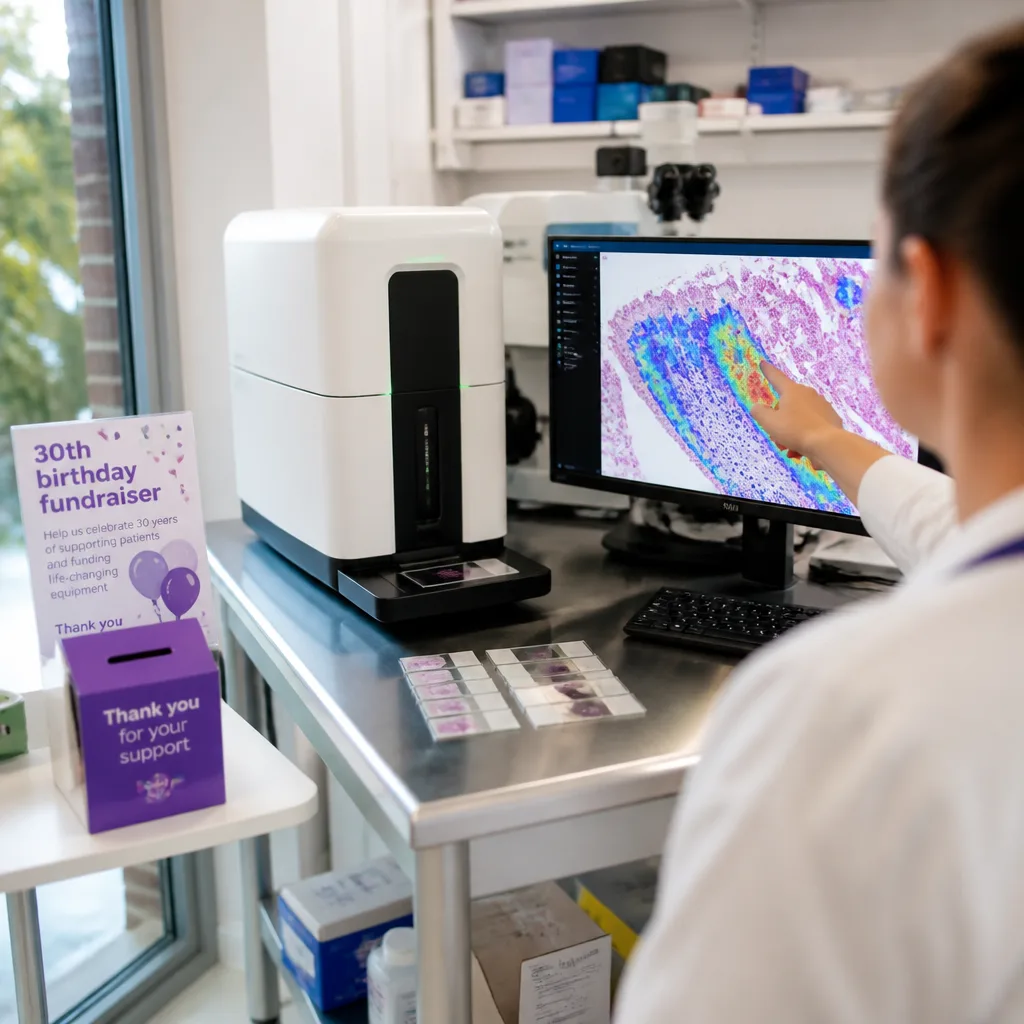
Harrogate and District NHS Foundation Trust has become the first NHS Trust in England to deploy a new AI‑assisted HER2 tissue scanning system aimed at accelerating diagnosis and treatment decisions for breast cancer patients.
What has been installed
The Histopathology Department at Harrogate District Hospital has taken delivery of a high‑resolution tissue scanner from Roche paired with an advanced artificial intelligence algorithm that supports pathologists in assessing HER2 status. The purchase was funded by Harrogate Hospital & Community Charity, which raised more than £40,000 as part of its 30th birthday campaign.
“This project has been a labour of love and will make a real difference for patients by delivering results more quickly and supporting faster treatment decisions.”
The system captures digital images of breast cancer tissue samples and runs an algorithm that detects whether the HER2/neu gene is present in a sample. HER2 status is a crucial factor in identifying patients likely to benefit from targeted drug treatments; timely assessment can shorten the interval between diagnosis and the start of therapy.
Why the trust and clinicians backed it
Harrogate’s Histology Section Manager said the scanner and software installation followed sustained efforts by the charity and the histopathology team. The trust emphasised that the technology is intended to support pathologists rather than replace clinical oversight, allowing human experts to review algorithmic outputs at every stage.
Local clinicians also pointed to potential wider uses: while the system will initially focus on breast cancer pathways, staff expressed the hope that the same approach could help interpret other cancer biomarkers in future — for example, in lung cancer.
Immediate benefits and caveats
Reported benefits align with two practical aims:
- to deliver test results faster, enabling earlier treatment decisions;
- to reduce patient anxiety by shortening the waiting period for definitive results.
The trust is careful to stress that the algorithm aids assessment rather than autonomously reporting diagnoses. That distinction matters because pathologists retain responsibility for clinical interpretation and sign‑off, which is the prevailing regulatory and professional approach to automated decision tools in the NHS.
Funding and local involvement
The scanner was funded by the Harrogate Hospital & Community Charity (HHCC), which mounted a fundraising drive linked to its 30th anniversary. The charity’s campaign raised more than £40,000, enabling the purchase and installation of the Roche scanner and associated software for the histopathology department.
| Item | Detail |
|---|---|
| Manufacturer | Roche |
| Funding | Harrogate Hospital & Community Charity – >£40,000 raised |
| Initial use | Assessment of HER2 status in breast cancer tissue |
Broader implications
This deployment is one of a growing number of NHS projects using digital pathology and machine learning to streamline busy pathology workflows. Proponents argue these tools can relieve bottlenecks in diagnostic services, while clinicians caution that validated clinical governance, integration with laboratory processes and ongoing oversight are essential.
For patients in Harrogate, the immediate promise is practical: quicker HER2 results should mean faster initiation of targeted therapies and potentially reduced stress while awaiting diagnosis. The trust has highlighted plans to explore whether the same platform can assist with other biomarkers, which would broaden the clinical impact if realised.
As more NHS sites trial similar systems, national bodies and trusts will watch for evidence on accuracy, workflow benefits and safety to inform wider adoption. For now, Harrogate’s installation represents a locally funded step towards that future.









