Council backs scheme to build on pub car park and beer garden
The Brookmead Trust has been given permission to build a ten‑home development on land to the rear of The Harrow Inn in Compton, Guildford, a decision that will reshape part of the village’s backland while providing six affordable homes.
Site lies within Green Belt and Surrey Hills National Landscape
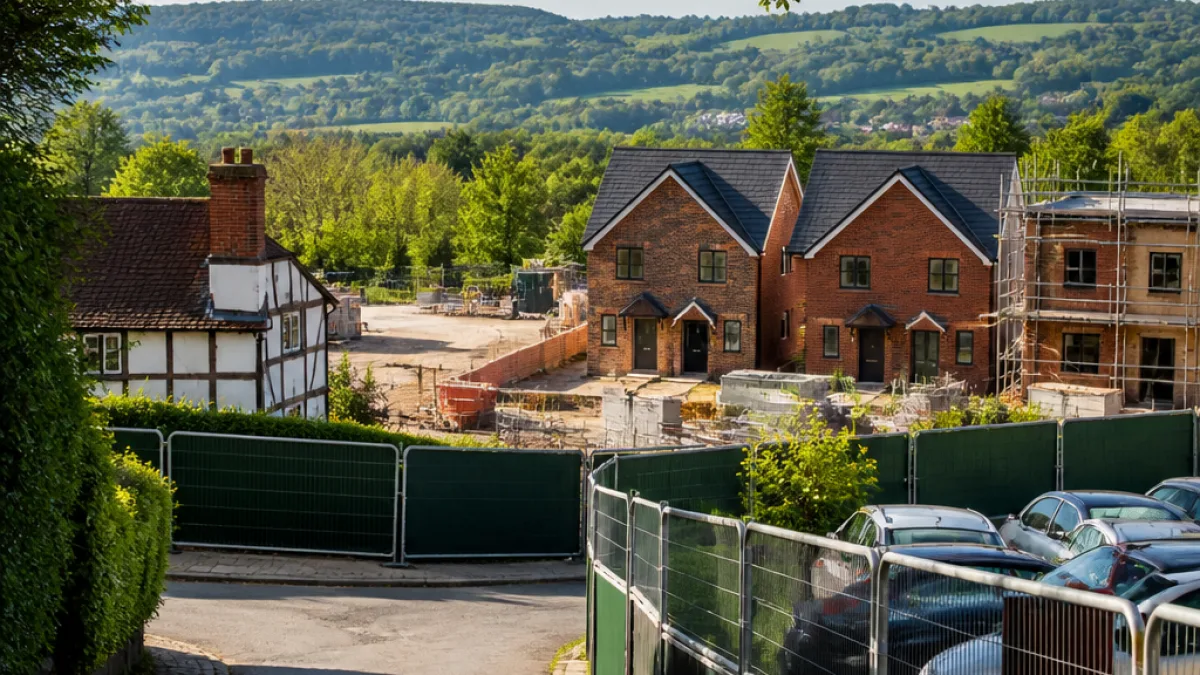
The plot, currently used as car parking and a beer garden for the public house on The Street, sits within a predominantly residential area but also falls inside the Green Belt and the Surrey Hills National Landscape. Neighbouring heritage assets include the locally listed Harrow Inn and village hall and a Grade II listed building to the west.
The approved layout comprises three principal buildings: two semi‑detached market houses and a two‑storey block of affordable homes made up of a mix of one‑ and two‑bed apartments. The scheme also includes amenity space, car parking and landscaping; the affordable block has been designed with a barn‑hipped roof to reflect the local vernacular.
Design constraints and technical work underpin decision
Heights have been limited to reduce visual impact on neighbouring properties and the village hall, with the tallest structure — the affordable block — reaching 8.8 metres. Separation distances between the new buildings and existing homes were set as part of the permission to manage outlook and privacy.
The planning submission was accompanied by a range of technical documents covering design, energy, trees, transport, viability, ecology, flood risk and biodiversity, which the council considered when reaching its decision. The approval reflects the council’s view that the scheme can deliver housing — including affordable units — while maintaining an appropriate relationship with the surrounding properties and the character of the area.
- Total homes approved: 10
- Affordable homes: 6
- Tallest building height: 8.8 metres (affordable block)
- Site use before development: pub car park and beer garden
- Landscape/designations: Green Belt, Surrey Hills National Landscape
What this means for Compton and Guildford
For residents of Compton, the decision will be felt in a number of practical ways. The loss of pub car parking and a beer garden may alter patterns of parking and the amenity offer at The Harrow Inn, and the new homes could change local demand for services and infrastructure. At the same time, the addition of six affordable dwellings will be a tangible contribution to the borough’s housing supply — particularly in a village setting where such provision can be limited.
Locally listed and listed buildings nearby mean the council needed to be satisfied that the scheme would not harm heritage assets or the setting of the village. The modest building heights and the use of traditional roof forms for the affordable block were among the measures intended to ensure the development sits with sensitivity in its context.
| Element | Detail |
|---|---|
| Buildings | Two semi‑detached market homes; one two‑storey affordable block |
| Affordable mix | One‑ and two‑bed apartments |
| Supporting material | Design, energy, trees, transport, viability, ecology, flood risk, biodiversity documents |
Points of contention likely to remain
Planning permissions of this kind often raise questions locally about Green Belt policy and the extent to which housing need can justify development on land normally protected from built form. While the council has accepted the case for this scheme, some residents may remain concerned about precedent, traffic and parking changes, and the visual effects on the village.
The developer’s technical assessments will now be central to how the scheme is implemented on the ground — for example, protections for trees, management of surface water and any measures to enhance biodiversity. The landscaping proposed around the new buildings will be important in screening and softening their presence from public vantage points.
With planning permission secured, the Brookmead Trust can now move towards delivering the homes subject to any detailed conditions attached to the consent. The case highlights the balancing act that Guildford Borough Council and local communities face as they try to meet housing needs while protecting countryside and heritage values.