
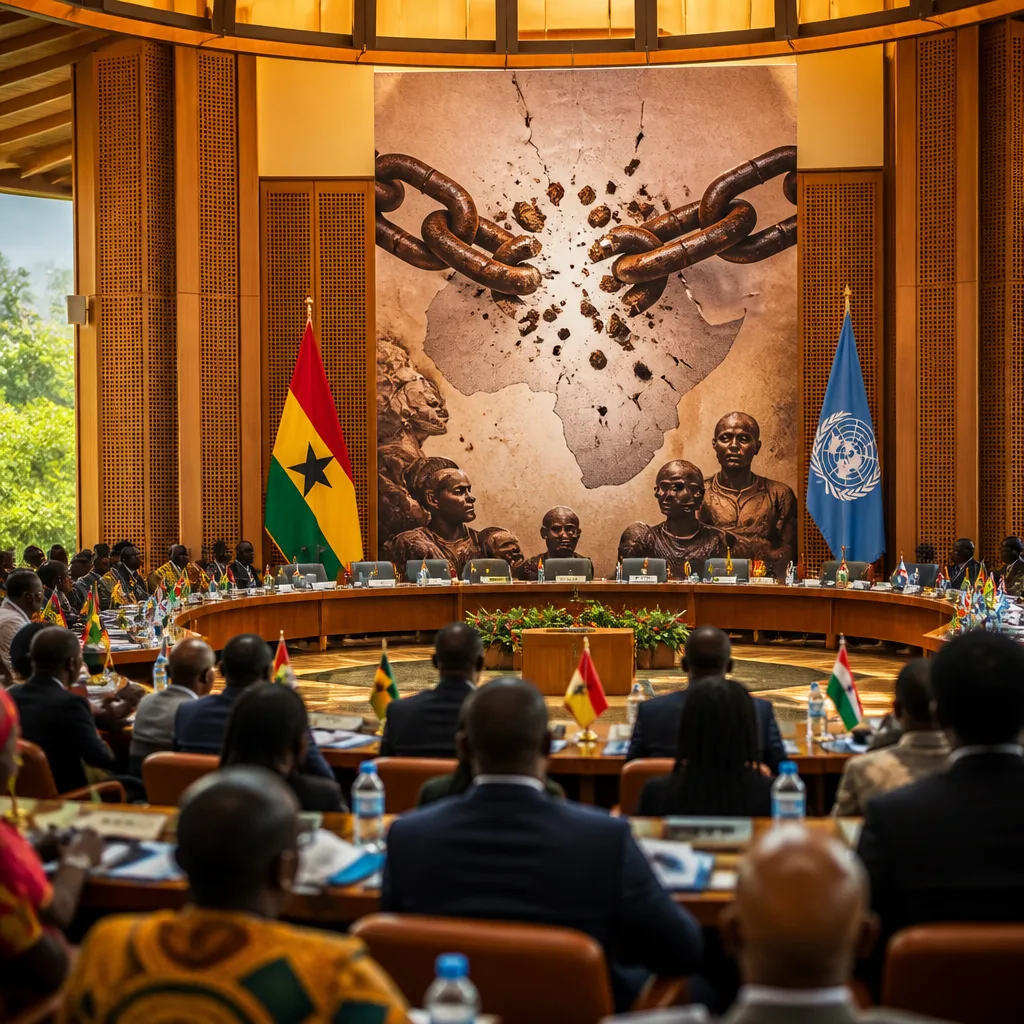
Ghana has positioned itself at the forefront of a growing international campaign for reparations related to the transatlantic slave trade, arguing that the country has a special responsibility to pursue accountability and compensation for the harms inflicted on millions of Africans.
UN resolution and Accra summit
It was Ghana that tabled a United Nations resolution and, in June, hosted a summit in Accra attended by delegates from around 80 countries, who concluded that recompense is long overdue. The African Union has appointed Ghana to act as a “champion for reparatory justice,” a role that the country’s political leadership is pursuing actively.
Ghana’s Foreign Minister, Samuel Okuzeto Ablakwa, told reporters the country’s history of early independence in sub‑Saharan Africa underpins its responsibility. He said Ghana’s experience made it both a symbol and a practical leader in the effort to secure redress for the transatlantic trade.
"Ghana has always been a pan‑African leader. We're the first country to attain independence in sub‑Saharan Africa and to prove that it is possible to fight imperial might, and win,"
Scale and forms of redress proposed
Speakers and organisers at the Accra summit underlined the scale of the historical crime. Estimates of the transatlantic traffic put the total number of Africans forcibly removed at about 12 million; organisers say roughly 10–15% of that number were from the territory that is now Ghana, and even greater numbers were embarked from its coasts.
The proposals discussed included:
- educational scholarships and grants;
- venture capital and business support for young African entrepreneurs;
- research into long‑term health impacts allegedly rooted in the conditions of enslavement;
- debt relief and debt cancellation as forms of systemic redress;
- holding specific institutions that benefited from slavery to account and seeking financial reparations from them.
Mr Ablakwa emphasised that the initiative was not framed as a vehicle for personal enrichment by current political leaders, but rather as a means of establishing a durable system of reparatory justice targeted at communal and structural harms.
Institutional liability and the Church of England
The summit and subsequent public debate have also focused on the liability of institutions that profited from the slave trade. One prominent example highlighted in discussions is the Church of England. Historical research and reporting have pointed to connections between the Church’s finances and the commercial profits of slavery in the 18th century.
According to reporting, the Church’s missionary wing ran plantations and owned enslaved people during the period, and many clergy held slaves privately. A recent report by the Church’s endowment fund concluded the institution made significant investments related to the trade and derived substantial sums.
Those leading the reparations push argue that institutions like the Church should be held to account and pay compensation where their historical activities and investments can be shown to have directly benefited from enslavement.
Context and consequences
The Ghana initiative comes at a moment of increased global attention to historical injustices and their present‑day legacies. If the campaign secures commitments from states or major institutions, it could prompt a range of legal, financial and diplomatic processes, from negotiated settlements to calls for formal apologies and structural reforms in areas such as education and development finance.
At the same time, proposals for debt relief and institutional payments will face legal and political scrutiny in donor countries and among targeted institutions. The practicalities of quantifying harm, identifying recipients and designing enforceable mechanisms for compensation are likely to dominate the next phase of debate.
| Estimate | Figure |
|---|---|
| Total enslaved in transatlantic trade | ~12 million |
| From what is now Ghana | 10–15% |
The summit in Accra has made clear that calls for reparatory justice are moving beyond symbolic gestures towards detailed proposals. How recipient states, former colonial powers and implicated institutions respond will determine whether the initiative becomes a defining feature of international policy on historical justice or a protracted moral and political contest.