
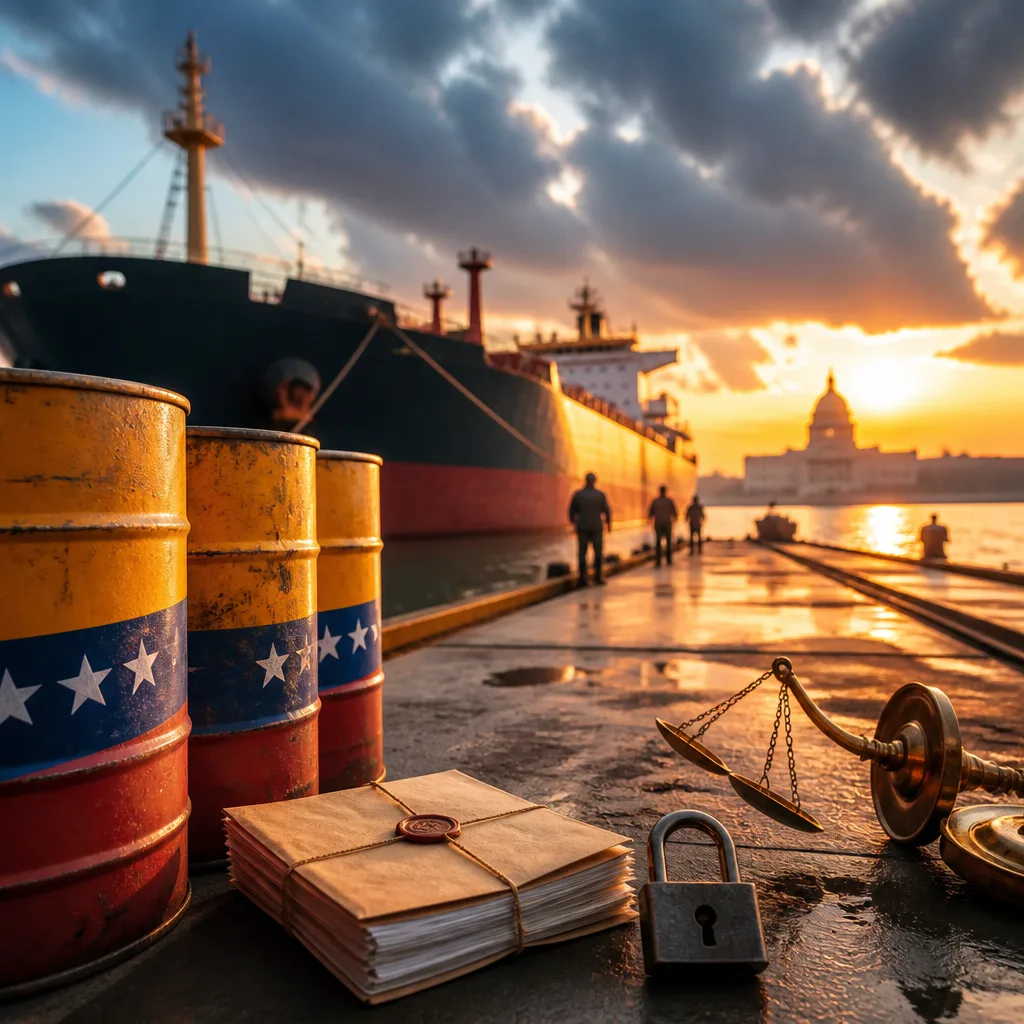
President Donald Trump has announced an arrangement he described as the largest oil deal ever, after US forces seized Venezuelan president Nicolás Maduro and installed Delcy Rodríguez in his place. But independent experts and officials interviewed by the Guardian say the plan is likely to collapse under a raft of legal and logistical problems.
Claims at odds with legal and technical reality
The White House has said the Pentagon’s newly repurposed Office of Strategic Capital will take a one‑third stake in North American Blue Energy Partners (Nabep), the second‑largest private oil firm involved in Venezuelan production. Trump has suggested the arrangement would help refill the US Strategic Petroleum Reserve.
Specialists in energy law and government authorities told the Guardian that key elements of the administration’s narrative do not stand up to scrutiny. Their criticisms include:
- Venezuelan law on oil development limits contracts to a maximum of 25 years, not the century‑long deals that have been suggested;
- The Office of Strategic Capital, as constituted, is not clearly authorised under US law to hold equity in private companies;
- The structure of the transaction, as described publicly, is unlikely to deliver fresh capital to Venezuela’s oil sector;
- Contrary to presidential claims, the deal will not promptly supply oil to refill the US Strategic Petroleum Reserve.
Historical context and recent actions
Trump’s stated desire to seize oil resources abroad dates back decades. In 1987 he told ABC’s Barbara Walters that American responses to attacks on shipping could include taking oil fields from a hostile state: "Why couldn’t we go in and take over some of their oil, which is along the sea?" That line of thinking resurfaces in the administration’s current posture toward Venezuelan assets.
Earlier this year US forces removed Nicolás Maduro and transported him to a federal detention facility in the United States. Delcy Rodríguez was then installed as Venezuela’s leader in Washington’s view. In the aftermath, the president warned Rodríguez in an interview with The Atlantic that she could face severe consequences if she did not follow the new US line.
“If [Rodríguez] doesn’t do what’s right, she is going to pay a very big price, probably bigger than Maduro.”
Practical obstacles to delivering oil to US reserves
Officials and analysts emphasise that even if an ownership stake in Nabep were legally possible, converting that stake into barrels flowing into the Strategic Petroleum Reserve is neither immediate nor straightforward. Logistics, existing contractual frameworks, and international sanctions regimes all complicate any rapid transfer of Venezuelan crude to the United States.
| Claim | Assessment from experts |
|---|---|
| Deal will allow Pentagon office to own one‑third of Nabep | Legal authority for the Office of Strategic Capital to hold company shares is doubtful |
| Venezuelan oil will refill the US Strategic Petroleum Reserve soon | Experts say delivery to the reserve is unlikely in the near term |
| Venezuelan law permits century‑long oil contracts | Venezuelan law restricts contracts to a maximum of 25 years |
Consequences and uncertainties
If the deal collapses, the administration will face both diplomatic and domestic questions: how to justify the use of military force to change Venezuela’s leadership, and how to deliver on high‑profile promises about strengthening US energy security. If legal obstacles force a re‑scoping of the plan, any economic benefit for Venezuela’s oil industry appears limited under the structure described so far.
For now, analysts caution that much depends on interpretations of Venezuelan and US law, the authority the administration accords to its newly configured Pentagon unit, and the practical ability to move crude in a politically charged international environment. Those conditions make the long‑term prospects of the president’s “biggest oil deal” uncertain at best.









