
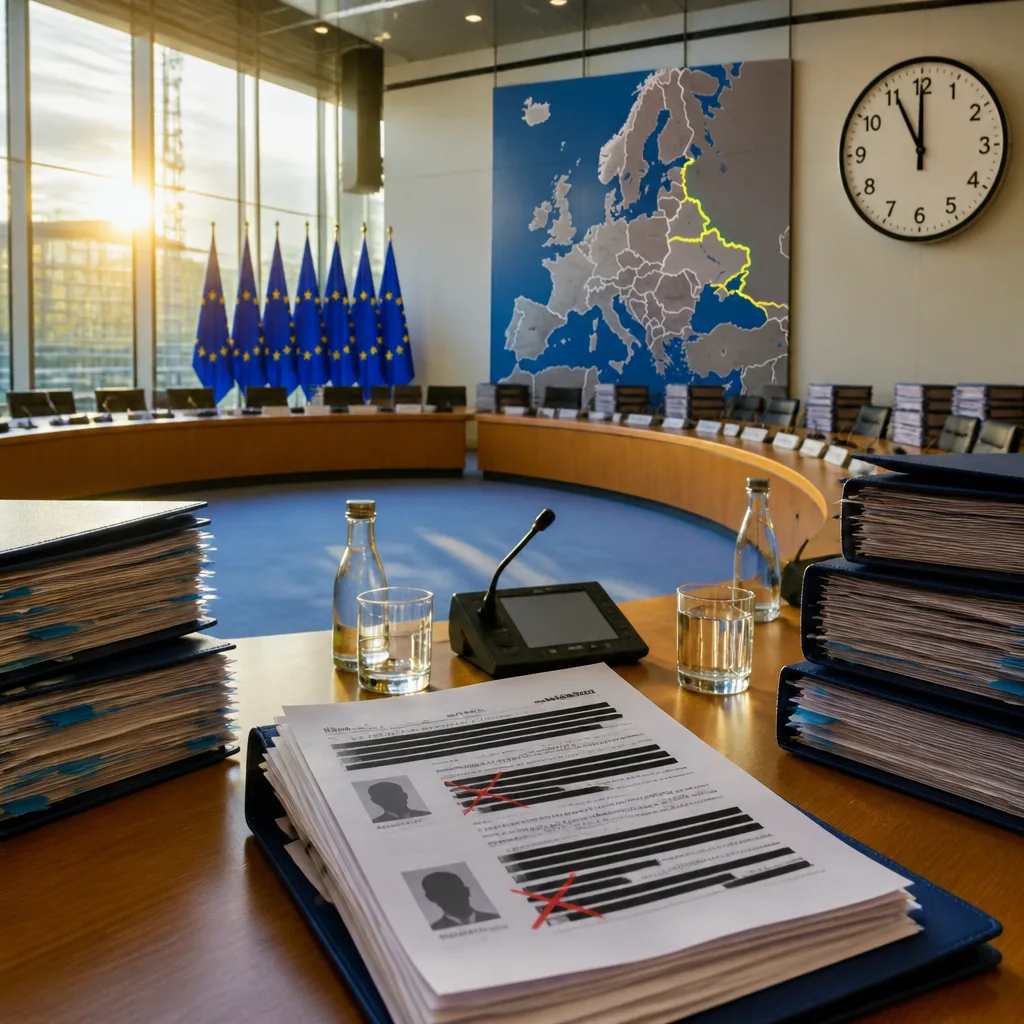
EU governments reached a deal on Tuesday to extend asset freezes and travel bans linked to Russia for 36 months, while taking two prominent businessmen off the list of sanctioned individuals, EU diplomats said.
Delistings and a longer renewal period
The agreement foresees the formal removal of Alisher Usmanov and Mikhail Fridman from the European Union’s sanctions list before midnight, when the listings were due to expire. Both men have been subject to the bloc’s restrictions since 2022.
In return, member states agreed to lengthen the regular review cycle for the sanctions regime from six months to 36 months, a concession designed to provide greater predictability for countries on Russia’s eastern flank, diplomats said.
“In maintaining the regime we have reached a difficult compromise,” said a spokesperson for the Irish Council of the EU presidency, which chaired the talks.
The decision to delist the two oligarchs emerged amid tense behind-the-scenes negotiations that exposed divisions within the EU. Diplomats warned that the outcome risked creating a precedent where bilateral or national priorities could shape multilateral sanctions decisions.
How the compromise unfolded
Sources said the French government pressed urgently for Usmanov’s removal on what it described as national security grounds. That request was linked, according to diplomats, to a potential prisoner exchange involving a French national convicted of spying in Azerbaijan.
“This is what France does best,” one diplomat said. “Shoving stuff down the throat of those who don’t want it.”
France’s move prompted other capitals to seek parallel delistings. Slovakia and Luxembourg subsequently pushed for Mikhail Fridman to be removed from the list, turning the talks into a nexus of competing national interests rather than a straightforward technical renewal.
Diplomats described protracted bargaining over language and timing, with technical work and a written procedure expected to be completed ahead of the midnight deadline so the changes can be formally adopted.
Numbers and implications
The package maintains roughly 3,000 asset-freeze and travel-ban listings tied to individuals and entities associated with Russia. It marks a shift in the mechanics of how the EU will manage the measures going forward.
| Item | Current value |
|---|---|
| Number of listings retained | ~3,000 |
| Review period (previous) | 6 months |
| Review period (now) | 36 months |
| Delisted individuals | Alisher Usmanov, Mikhail Fridman |
Supporters of the compromise argued the extended renewal window would bolster the regime’s stability and predictability. Critics warned that allowing national priorities to influence delistings could undermine the coherence and deterrent value of EU sanctions.
Political consequences and reaction
Diplomats said the episode revealed a growing tendency for sanctions negotiations to become arenas in which member states trade concessions to satisfy domestic or bilateral aims. That dynamic may complicate future efforts to present a unified EU stance on Russia.
- France invoked national security to push for Usmanov’s removal.
- Slovakia and Luxembourg sought Fridman’s delisting after France’s move.
- The compromise extends the sanctions review cycle to 36 months.
The Irish Council of the EU presidency framed the deal as difficult but necessary to sustain the broader sanctions framework. Riga indicated it would abstain from the proposed compromise, signalling lingering discomfort among some Baltic states and others most directly affected by Russia’s actions.
Diplomats emphasised the immediate technical steps required to enact the decision, noting that a written procedure to formalise the changes was expected to be completed before the current measures lapsed at midnight.
How the new approach will affect enforcement and the EU’s leverage in dealings with Russia remains to be seen. For now, member states have opted for a pragmatic settlement that preserves the bulk of the bloc’s measures while allowing room for specific national interventions.












