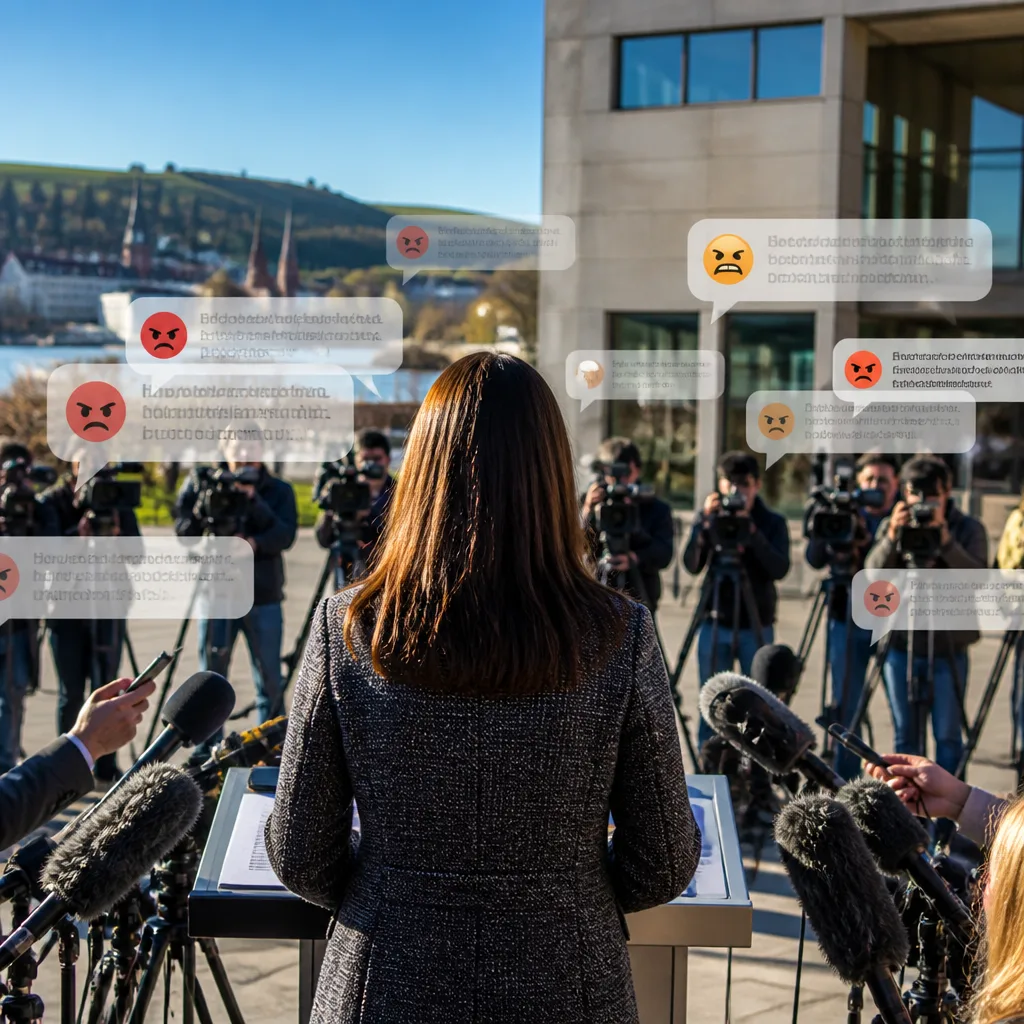
Scotland’s Deputy First Minister said on Wednesday that the political environment has become significantly more hostile for women and minorities, and warned that abusive commentary on social media has become an accepted — if damaging — element of public life.
Harder to operate in today's politics, she says
Speaking to journalists during a visit to Dundee, the senior minister said the rougher tone of contemporary politics made it “much harder for women to operate” than when she first entered the Scottish Parliament around a decade ago. She suggested the change has had an adverse effect on the ability of women and minority groups to participate in elected politics.
“We’re living in much more hostile times, that actually it is much harder for women to operate in a much more combative political environment than existed, for example, when I was first elected.”
She singled out social media as a major factor. The Deputy First Minister said she had become used to seeing abusive remarks online as part of her day-to-day work, and that this was not a normal expectation in most workplaces. She warned that the ubiquity of such commentary could change the character of political debate.
Context within Scottish politics
The remarks came after former first minister Nicola Sturgeon said she did not expect to see another female party leader at Holyrood “any time soon”. When asked whether that observation amounted to a criticism of prominent women in Scottish politics, the Deputy First Minister rejected that interpretation. Instead, she suggested Sturgeon’s comment could reflect broader problems women face across political life.
Her comments focused on three interlinked themes:
- Hostile public discourse: a tougher, more combative political atmosphere than a decade ago.
- Online abuse: social media as a routine source of abusive commentary for elected women.
- Barriers to participation: the potential effect on the accessibility of elected office for women and minorities.
| Issue | Deputy First Minister's view |
|---|---|
| Political tone | Markedly more combative than when she was first elected |
| Social media | Abusive comments have become a normalised part of political work |
| Impact | Detrimental to women and minorities' participation |
The Deputy First Minister emphasised that the problem is not limited to women alone; she framed it as an issue affecting minorities generally and, by extension, the openness of the political system.
Implications and questions for parties
The intervention raises immediate questions for political parties and parliamentary authorities about how to respond. If abusive behaviour on digital platforms is now a routine part of political life, parties may face renewed pressure to: implement stronger support for members targeted by abuse; review training and safeguarding measures; and engage with tech companies on moderation and harassment policies.
At a broader level, the remarks feed into continuing debates about diversity in political leadership. They underline concerns that women and minority politicians may be deterred from seeking or accepting senior roles if the public arena is perceived as increasingly hostile.
The Deputy First Minister stopped short of proposing specific remedies in her remarks, focusing instead on describing the shift she has observed since her election to Holyrood. Her comments add to an ongoing conversation about the tone of political debate and how institutions should adapt to changing public and online environments.
Whatever policy responses emerge, her intervention is likely to prompt renewed scrutiny of party practices, parliamentary support systems and the role of online platforms in shaping who can participate in democratic life.