Croydon council is examining a first-of-its-kind pilot in London that would see prolific shoplifters fitted with electronic ankle tags and banned from the town centre, as local leaders seek new tools to tackle rising retail theft.
Executive Mayor Jason Perry told businesses the technology could help enforce exclusion zones and deter repeat offending, saying Croydon had “had enough” of people repeatedly targeting shops.
"Shoplifting is not a victimless crime," Mr Perry said. "It threatens people’s livelihoods, drives up prices for honest customers and leaves shopworkers facing intimidation and abuse simply for doing their jobs."
The council’s proposals follow a successful trial in East Sussex, where two prolific offenders were ordered to wear tags and avoid specific supermarket areas for a year. Croydon officials have met with Sussex Police, the Metropolitan Police and technology providers to explore how a similar scheme might operate in the borough, but funding has not yet been secured.
Local impact and trader concerns
Traders in Croydon say shoplifting is hitting their bottom lines and adding to rising security costs. Benedict Selvaratnam, managing director of Freshfields Market and co‑founder of Croydon Business Association, warned that the problem was more than the value of goods lost: it includes staff intimidation, increased insurance and the expense of security measures.
“Our businesses have had enough of prolific offenders repeatedly targeting their shops, and so have I,” Mr Perry said. He framed the proposal as a zero‑tolerance response that would use "every legal tool available" to protect shops and staff.
Scale of the problem
Official figures released by the council show the scale of retail theft in the town centre. In the most recent 12‑month period there were almost 4,800 recorded shop thefts in Croydon town centre, compared with 5,043 the year before.
| Period | Reported shop thefts (Croydon town centre) |
|---|---|
| Most recent 12 months | ~4,800 |
| Previous 12 months | 5,043 |
Those numbers underline the persistence of the problem even if they suggest a slight decline year on year. For businesses already struggling with the cost of living and high rents, any consistent series of thefts can be decisive.
How the ankle‑tag system would work
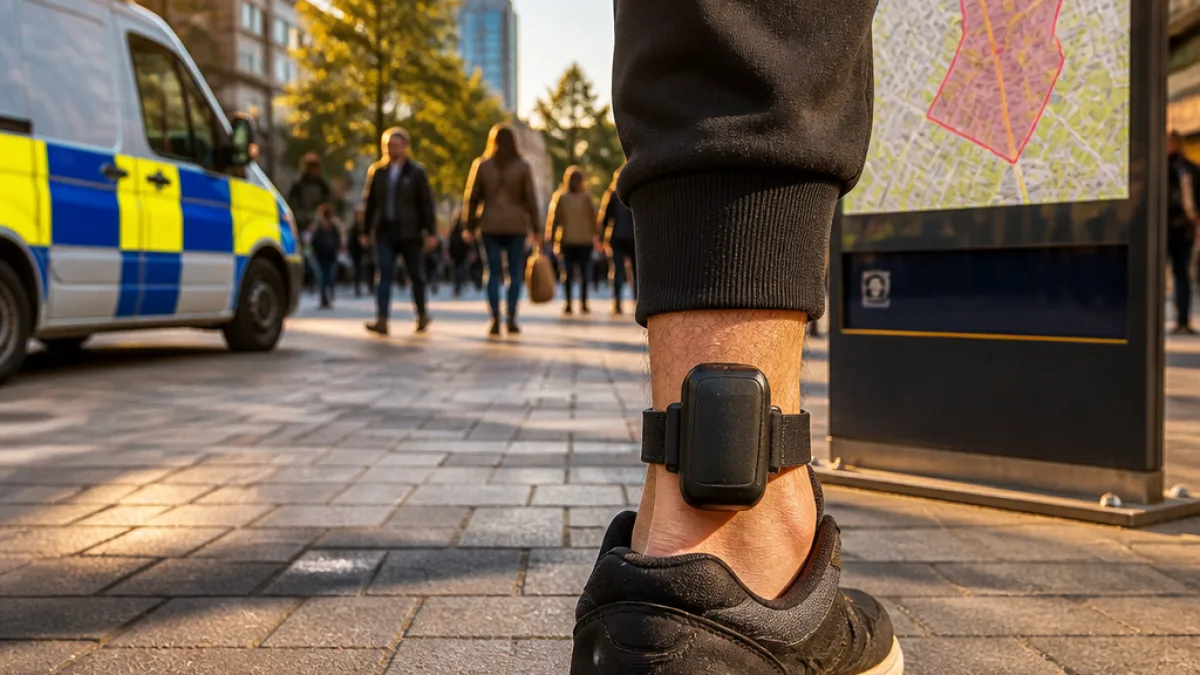
Under the scheme being considered, officers could seek court orders or other legal instruments to require prolific offenders to wear GPS‑enabled ankle tags and observe exclusion zones drawn around shopping precincts. The tags would allow authorities to monitor movements and alert police or enforcement teams if someone enters a banned area.
- Purpose: deter repeat offending and prevent return to targeted areas.
- Mechanism: GPS ankle tags linked to exclusion zones and monitoring systems.
- Precedent: East Sussex pilot where two offenders were ordered to wear tags for a year.
No legal details have been published by Croydon council and it remains unclear whether tag orders would be imposed by criminal courts, under local public protection powers, or via civil measures. Funding, oversight and data‑protection arrangements will be central to any rollout.
Questions over costs, civil liberties and effectiveness
Civil liberties groups are likely to probe the proposal, particularly around proportionality, monitoring and privacy. Using GPS electronic monitoring in public spaces raises questions about the legal threshold for imposing such conditions and the safeguards for those tagged.
Councillors and campaigners will also want clarity on costs. Croydon has not committed money to the project and officials say they are still in discussion with technology providers and police. Traders want immediate action, but some fear a pilot could focus resources on monitoring rather than prosecution or prevention.
Locally, residents I spoke to in the town centre expressed mixed views. One shopworker, who asked not to be named, said: "We need something that protects us. People come back again and again. It wears you down." Others warned against measures that could criminalise poverty rather than address organised theft networks.
For now, Croydon council says it will continue working with the police, businesses and technology firms to develop proposals that can be brought forward for decision. If adopted, the pilot would be one of the most high‑profile uses of electronic monitoring to tackle retail crime in London.