
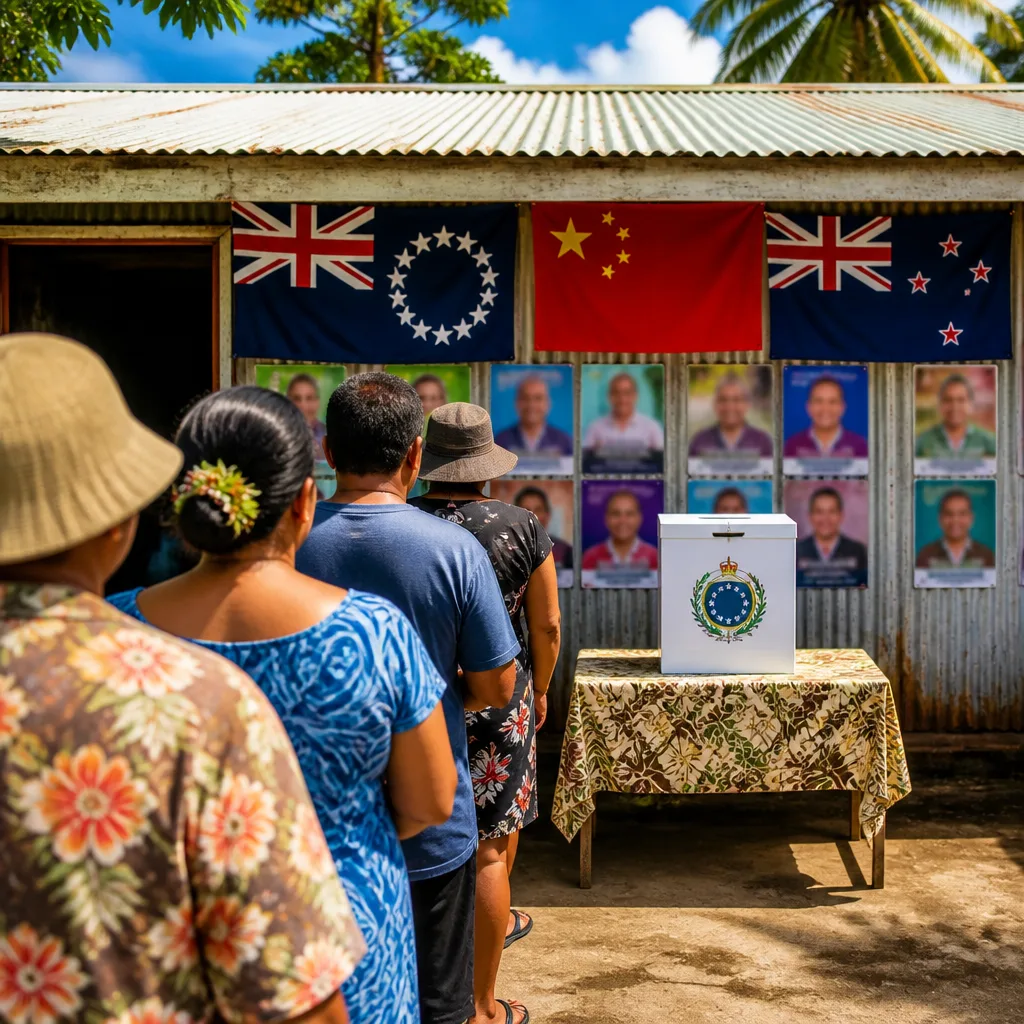
Voters in the Cook Islands went to the polls this week in a contest overshadowed by a diplomatic storm that has thrust the South Pacific nation into international focus. The campaign has been dominated by debate over a 2025 strategic partnership with Beijing, a subsequent rift with long-standing partner New Zealand, and an April agreement intended to mend relations.
Diplomacy at the centre of a close race
Prime Minister Mark Brown, who has led the Cook Islands for the past four years, defended his record in the run-up to the vote, arguing that external engagements were negotiated with the nation’s interests in mind. He told the Guardian that foreign relationships should be shaped by priorities identified by the Cook Islands.
“For us in the Cook Islands, it’s important that these engagements are on our terms … and that their collaboration with us is on areas that we’ve identified as priorities for the Cook Islands.”
Brown acknowledged the controversy surrounding the diplomatic manoeuvring, conceding that the fallout "does have bearings" on voter sentiment. The public debate sharpened after officials in 2025 signed partnership documents with China that prompted alarm in Wellington and concern among Cook Islanders, including those living in New Zealand.
Opposition seizes on transparency and ties to New Zealand
The principal challenger, the Cook Islands United party led by Teariki Heather, has made the partnership agreement the centrepiece of its challenge. Heather organised a public protest last year opposing the deal and has criticised Brown for a perceived lack of openness about the documents signed on behalf of the country.
“What prime minister Mark Brown did has upset the people. It is not the way to act,”
Heather added that humility and the Cook Islands’ historical relationship with New Zealand — a connection dating back to 1965 — remain important to many voters.
Small population, outsized geopolitical attention
With a population of roughly 17,000, the Cook Islands is small in demographic terms but has become a stage for broader regional competition. Analysts say Pacific island states are increasingly courted by multiple powers, and choices by island governments can trigger strong reactions from traditional partners.
The April bilateral agreement with New Zealand was presented as a diplomatic reset after the tensions of 2025. While that move restored formal ties, it has not removed the political cost at home: the partnership with China and the manner of its negotiation remain polarising among voters and the diaspora.
What voters are weighing
Opinion polling cited by local media suggested the election could be close, with the governing Cook Islands Party and Cook Islands United competing intensely for seats. Beyond the headline diplomatic dispute, domestic concerns such as the economy and the rising cost of living also featured on campaign trails.
- Strategic partnership with China (2025): Triggered diplomatic alarm in New Zealand.
- Bilateral agreement with New Zealand (April): Sought to patch the rift; effects on voter sentiment remain uncertain.
- Domestic priorities: Economy and cost of living continue to influence voter choices alongside foreign policy.
| Actor | Position |
|---|---|
| Mark Brown / Cook Islands Party | Defends strategic engagements; stresses Cook Islands' priorities |
| Teariki Heather / Cook Islands United | Opposes China partnership; calls for transparency and stronger New Zealand ties |
For regional capitals and Canberra, Wellington and Washington, the outcome will be watched closely. A change of government could alter the Cook Islands’ foreign-policy orientation or at least the tone of its external relationships. Even if the incumbent remains, the episode has underscored the political sensitivity of external agreements in small states with large strategic value.
As votes are counted, the Cook Islands will weigh how it balances immediate domestic needs with the strategic opportunities and risks presented by partnerships beyond the Pacific. Whatever the result, the campaign has already signalled that diplomatic decisions will be an enduring feature of politics in the islands.









