
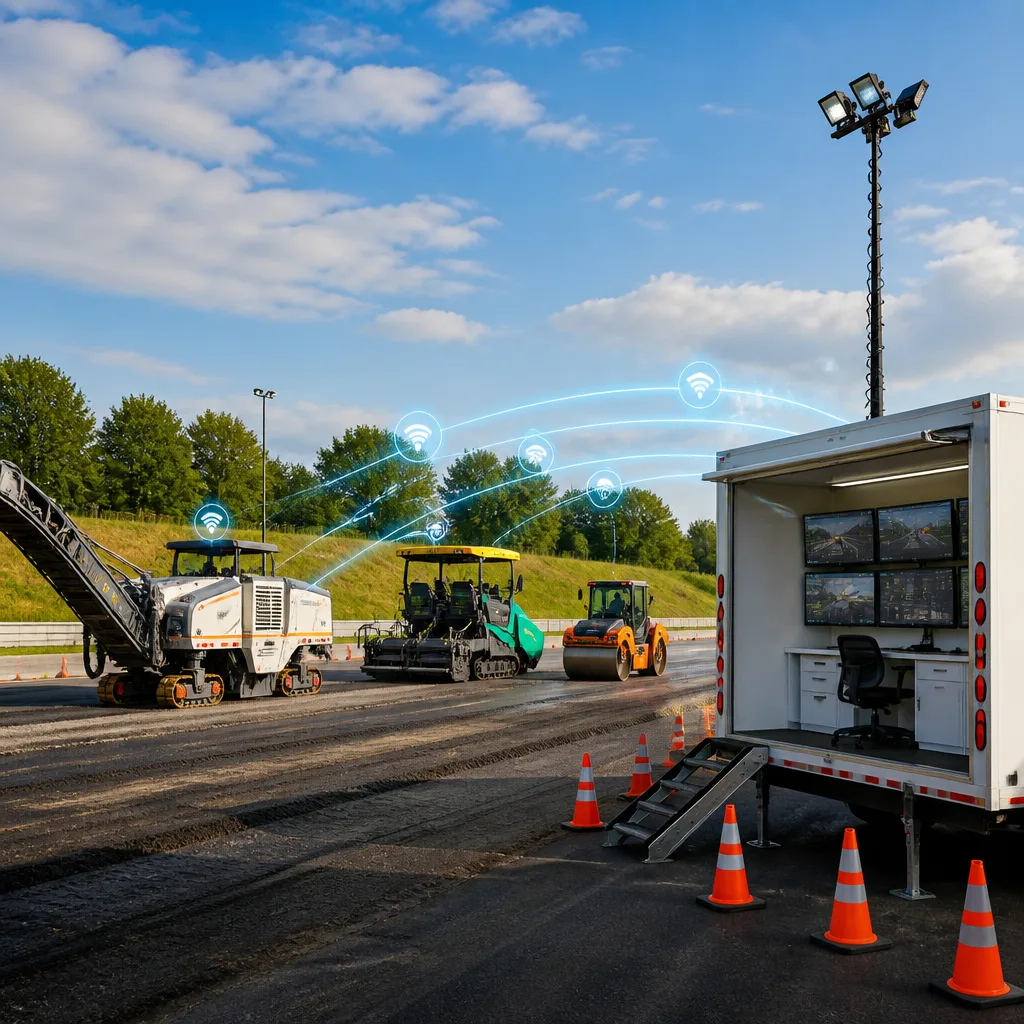
Wirtgen has staged a live demonstration of a connected roadbuilding workflow that links specialised milling, paving and compaction machinery with John Deere’s digital fleet and telematics tools. Held at the company’s training and technology centre near Nashville, the event showcased automation, real‑time data and machine connectivity designed to improve productivity, reduce fuel consumption and raise pavement quality.
What was shown
Machines from three Wirtgen Group brands were operated together to present a continuous construction sequence: Wirtgen for rehabilitation (milling), Vögele for paving and Hamm for compaction. The Vögele Super 2100‑5 X‑Tier tracked asphalt paver was featured with SmartPave technology, which automatically controls pave width, position and direction.
- Connectivity: Machines were linked into John Deere’s TechStack and digital fleet management systems.
- Automation: Paving functions such as width and position were demonstrated under automated control.
- Data and telematics: Real‑time monitoring and control were used to aim for greater efficiency, consistency and safety.
The demonstration also referenced other Wirtgen Group brands relevant to full life‑cycle roadwork, including Kleemann for crushers and screening plants and Benninghoven for mixing and recycling plants (the latter is not part of the U.S. portfolio).
Why Deere matters
Wirtgen joined John Deere’s construction equipment portfolio after the latter’s acquisition of the group in 2017. Management described the move as a catalyst for bringing technologies developed in Deere’s agricultural business into construction — notably telematics, the Deere Operations Center and other fleet‑level monitoring and control systems.
“We lean very hard into specialization… We had available to us a tremendous amount of information, the Deere TechStack… we can move that over into the construction space. We’re finding a way to adapt that. So really accelerating us on the innovation curve.”
The company says that adapting Deere’s existing digital ecosystem has accelerated product development and enabled features that synchronise machines across a paving train — a practical step towards reducing labour intensity and improving consistency of work outputs.
Context and implications
The sector Wirtgen addressed faces several structural pressures: demand for new and upgraded roads is increasing while contractors confront labour shortages, rising material costs and constrained project windows. At the demonstration, the firm cited an industry projection that the U.S. construction sector will need nearly 700,000 additional workers by 2031 to meet demand.
Those pressures mean digital systems that extract greater efficiency from existing crews and equipment are becoming commercially attractive. Telematics can support preventative maintenance, reduce unplanned downtime and improve fuel economy; automation can address repetitive or skill‑scarce tasks; and integrated data flows can support better planning and quality control on short paving seasons.
However, the benefits depend on several factors that were not tested in the demonstration and remain practical questions for contractors and public clients:
- How straightforward is retrofitting and integrating mixed fleets from different manufacturers into a single digital workflow?
- What are the training and safety implications as control moves from operators to automated systems?
- How will contractors measure return on investment across variable project types and operating environments?
| Brand | Role in demonstration |
|---|---|
| Wirtgen | Rehabilitation / milling |
| Vögele | Paving (SmartPave on Super 2100‑5 X‑Tier) |
| Hamm | Compaction |
For public authorities procuring roadworks, the demonstration points to a shift in the evaluation of bids: digital capability and data‑driven quality assurance may become as relevant as price per square metre. That raises procurement questions about data ownership, interoperability and long‑term support for digital systems supplied by OEMs.
Wirtgen’s showcase signals how established equipment makers are leveraging software and telematics to close gaps created by labour shortages and compressed schedules. The technology is maturing, but contractors and clients will need to weigh integration costs, skills and governance as digital tools move from demonstrations into everyday projects.









