
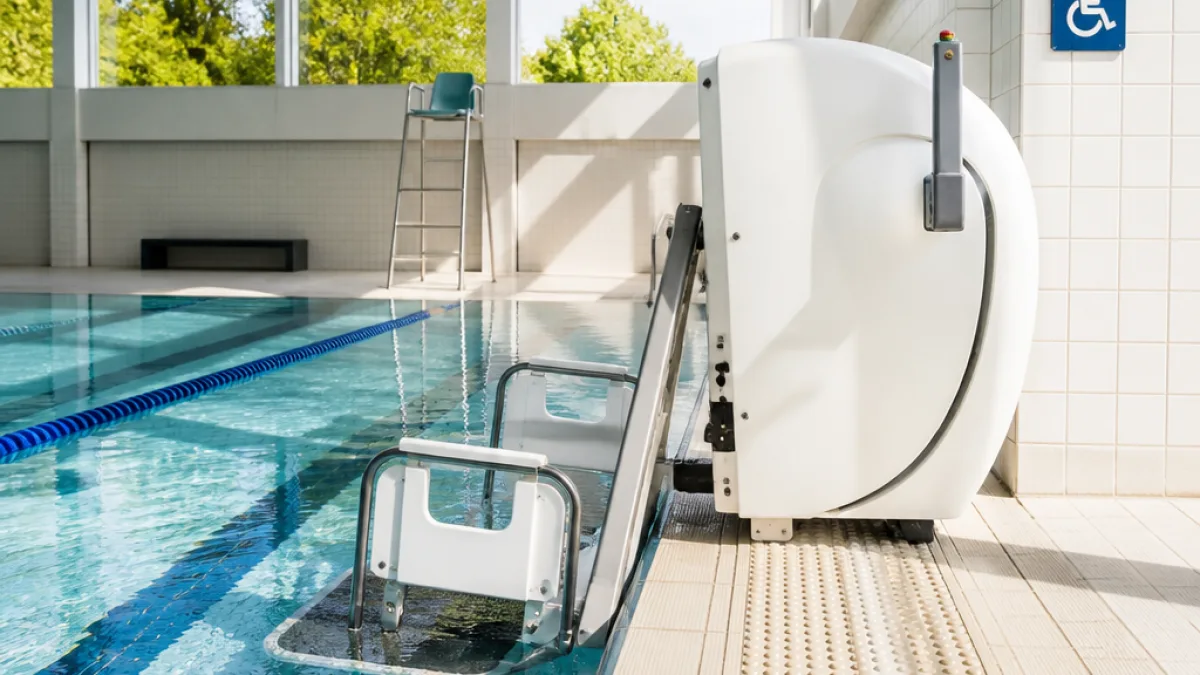
Council installs pool lifts to improve independent access
Chelmsford City Council has added new mechanical pool lifts—known as Poolpods—at its two main leisure sites to improve access for people with physical disabilities and mobility limitations. The changes, funded through Essex County Council’s Disabled Facilities Grant, were completed in June and July 2026.
The programme means that both the Riverside Leisure Centre and South Woodham Ferrers Leisure Centre now have Poolpods allowing independent entry to pools that previously required steps or assistance. Riverside, which already had one pod, gained a second in July so that both the main pool and the learner pool are now accessible. South Woodham Ferrers received its lift in June.
Why the lifts matter locally
Swimming is widely recognised as a low-impact form of exercise particularly suitable for people with reduced mobility because water supports body weight and eases pressure on joints. Local campaigners and leisure staff have argued that physical access barriers restrict the ability of some residents to benefit from regular exercise and the social opportunities that pool sessions provide.
The Poolpods being installed are manufactured by Contenda and are specifically designed to allow users to enter and exit the water without assistance, increasing independence and dignity for swimmers who would otherwise need help.
- Locations equipped: Riverside Leisure Centre; South Woodham Ferrers Leisure Centre.
- Installation months: South Woodham Ferrers – June 2026; Riverside (second pod) – July 2026.
- Funding source: Essex County Council Disabled Facilities Grant.
Funding and policy context
The Disabled Facilities Grant is typically used to fund significant home adaptations for disabled residents and is usually directed to individuals or housing projects. The grant board gave approval for the leisure team’s proposal after seeing the potential to open up pool access to a wider number of people across the district.
Chelmsford City Council’s leisure team argued the investment would allow more residents to take part in aquatic exercise and reduce inequalities in access to health-promoting activities. The decision to use grant funding in this way represents a pragmatic allocation of a scheme more commonly associated with housing adaptations.
“We know that regular physical activity provides a range of health and social benefits, and it’s important that everyone has equal access to those benefits. The installation of these Poolpods at our swimming pools will make entering the pool far easier for many people, creating a more accessible and enjoyable experience. Chelmsford City Council is committed to improving health outcomes and reducing health inequalities for our residents and this is an important step forward in that work
The remark, made by the council’s Cabinet Member for Culture and Leisure, frames the installations as part of a wider public-health approach. While the capital cost of each Poolpod was not disclosed in the council notice, using existing grant mechanisms avoided direct budgetary pressure on the leisure service.
Practical consequences and next steps
For users, the immediate effect is practical: people who previously could not use the pools without assistance should now be able to access sessions independently. That will matter for regular swimmers, therapy users and families where carers previously had to provide lifting or close support.
Longer term, the council will need to monitor uptake and any operational impacts on staffing, programming and maintenance. Pool lifts require maintenance regimes and periodic safety checks; ensuring these are scheduled will be necessary to keep the facilities reliable for users.
Local voluntary groups and health providers may also look to coordinate with the leisure service to encourage take-up where aquatic exercise offers clinical or wellbeing benefits. The installations do not remove all barriers—for example, transport to the centres and session times remain practical considerations for many people—but they remove a significant physical obstacle to participation.
As the council describes the work as an "important step", residents and interest groups are likely to watch how benefits are tracked and reported, and whether further adaptations at other council-owned sites follow.