
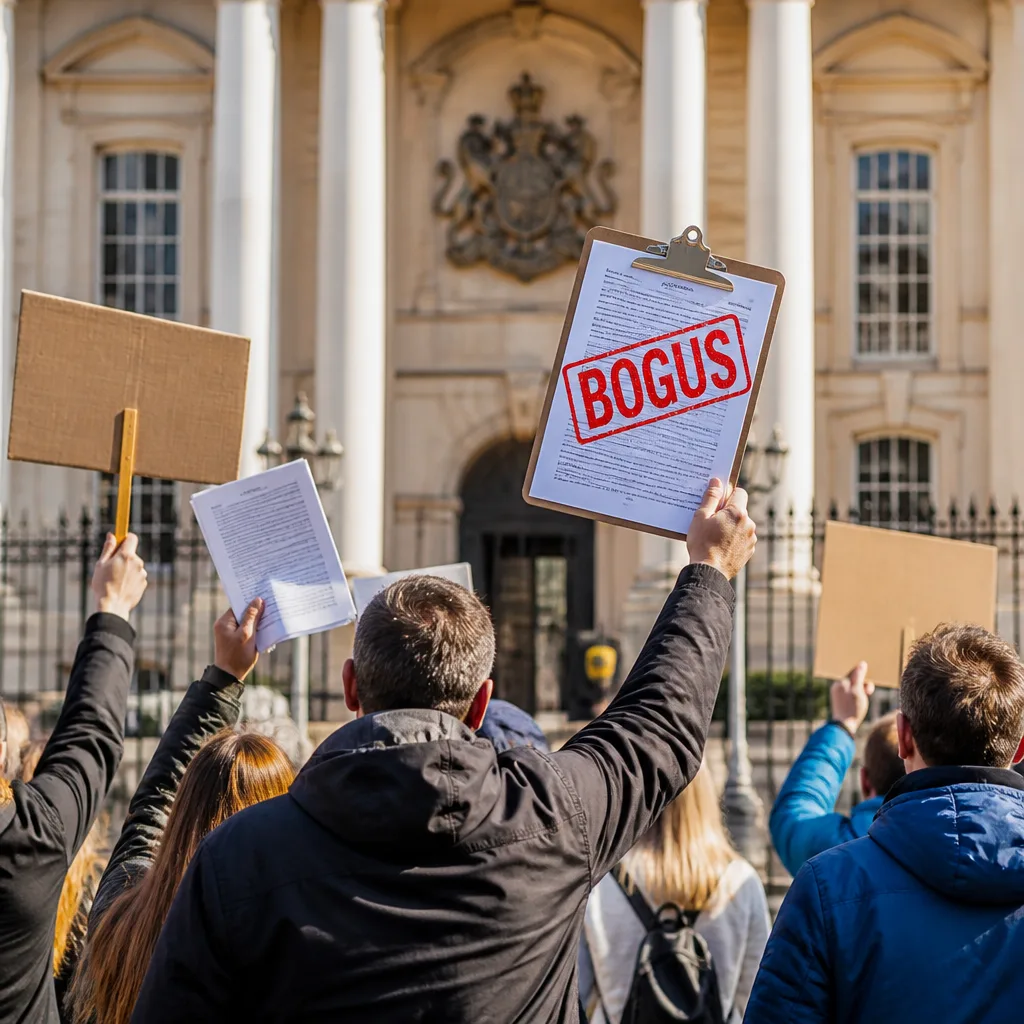
Campaigners have urged the prime minister to use new enforcement powers to tackle widespread misclassification of workers, saying as many as 4 million people in the UK are operating in a legal gap that denies them basic employment protections.
The Fabian Society, a Labour‑linked thinktank, and the Joseph Rowntree Foundation, an anti‑poverty charity, published a joint report calling on ministers to give the government’s Fair Work Agency greater teeth. They want the watchdog to deploy its civil proceedings powers to prosecute companies that use “widespread bogus self‑employment” to avoid granting statutory rights such as parental leave, redundancy pay and protection from unfair dismissal.
What campaigners say and who is affected
The report warns that Britain’s three‑tier system of employment status — employee, worker (sometimes called ‘limb (b)’) and self‑employed — leaves many people in an intermediate category with fewer protections than full employees. It says this arrangement has been exploited in sectors including hairdressing, personal training, and among delivery drivers and other platform workers.
“widespread bogus self‑employment”
Campaigners argue that companies in the gig economy and other industries have deliberately used this gap to reduce labour costs and shift risk onto individuals. The report frames enforcement as essential to “make work pay” amid ongoing cost‑of‑living pressures.
Policy history and political context
Labour previously pledged to replace the three classifications with a single “worker” status for all but the genuinely self‑employed, but retreated from that commitment before the 2024 general election amid concerns about the impact on business. Once in government the party did not include a single status in its initial overhaul of employment rights, although it said it would consult on "moving towards a single status of worker" — a consultation that, according to the report, has not materialised.
The Fair Work Agency, launched in April as a powerful watchdog for workers’ rights, has civil enforcement powers, and campaigners now want it to use them to pursue firms suspected of systematic misclassification.
What this means for wages, jobs and firms
Enforcement against bogus self‑employment could raise costs for firms that have relied on flexible or off‑payroll arrangements, through higher wage bills, employer national insurance and holiday and redundancy liabilities. For workers, the immediate impact would be improved access to statutory protections that affect pay and job security.
- Workers: potential access to parental leave, redundancy pay and unfair dismissal protections.
- Firms: risk of higher employment costs and potential civil penalties if prosecuted.
- Government: must balance enforcement with concerns about business competitiveness and lobbying pressure.
The report also highlights the political pressures facing ministers. Business groups have mounted intense lobbying against parts of the Employment Rights Act, which sought to curb exploitative practices such as zero‑hours contracts. Any move to broaden employment definitions or step up prosecutions is likely to provoke further resistance from employers, especially those that rely on flexible labour models.
| Employment classification | Typical rights |
|---|---|
| Employee | Full statutory protections (eg, unfair dismissal, redundancy pay) |
| Worker / limb (b) | Some protections but fewer than employees |
| Self‑employed | Limited statutory protections |
For policy makers, the practical questions are straightforward: will the Fair Work Agency prioritise large‑scale misclassification cases and have the resources to pursue them, and will ministers press ahead with legislative changes to simplify employment status? The answers will determine whether millions of people currently in precarious roles gain greater security, or whether employers retain flexibility at the expense of worker protections.
Any shift in enforcement or law will have ramifications for household incomes, employer costs and the labour market. With wages and living costs still under pressure, the case for clearer rights and stronger enforcement will resonate with many workers. Equally, government decisions must reckon with the lobbying power of business and the potential for unintended consequences if firms scale back hiring or pass on higher costs to consumers.
The report places the responsibility squarely with the prime minister and ministers overseeing employment policy: to use the tools already created, and to consider structural reforms that reduce the scope for exploitation while balancing the economic trade‑offs for jobs and prices.