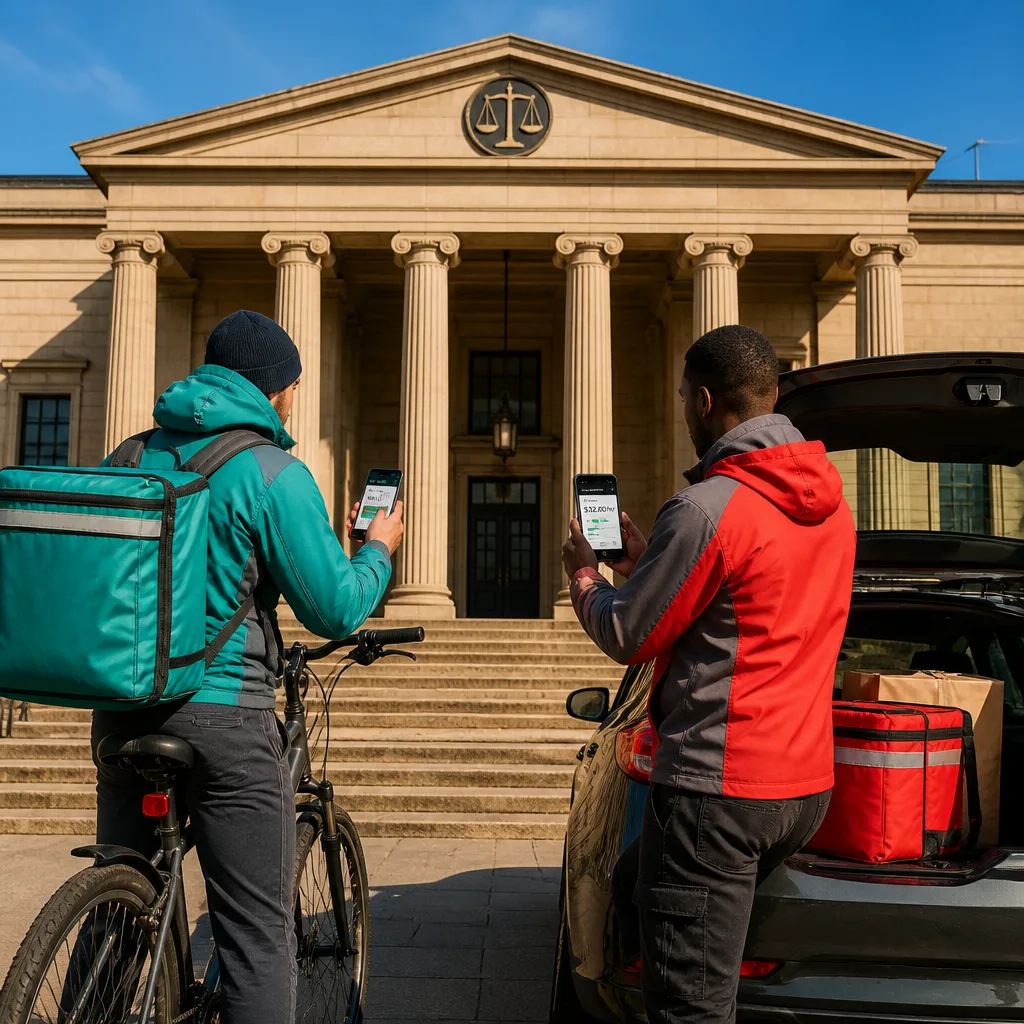
The Fair Work Commission in Australia has imposed a set of minimum standards for app‑based delivery workers, establishing an earnings floor and new workplace protections for couriers working for platforms such as Uber Eats and DoorDash.
The measures, hailed by organised labour as a “world first”, do not convert gig drivers into salaried employees. Instead, platforms will be required to ensure that a worker’s average pay over a rolling period does not fall below the safety‑net rates determined by the commission.
What the new standards set out
The headline elements are:
- Minimum average earnings for engaged time: an initial floor of $31.30 an hour for bike riders and $32 for car drivers;
- a mechanism requiring platforms to calculate total worker earnings over a 21‑day period and top up pay where the average falls below the floor;
- additional protections including new dispute processes, feedback mechanisms, representation rights and personal injury insurance for injured workers.
The commission has said these minimums will rise by 50 cents an hour from 1 January 2027. The rules are framed as a “safety net” rather than a conventional hourly wage: companies will continue to pay per trip, using time, distance and promotional bonuses to set rates. If that trip‑based pay averages below the floor when assessed over 21 days, the platform must make up the difference.
Reaction from workers and unions
Transport Workers’ Union (TWU) negotiators celebrated the outcome as a major step for gig economy workers who, they say, have long suffered low pay and limited protections. The union pointed to historic variability in earnings: the TWU has previously said some couriers were paid as little as $14 an hour under the old arrangements.
"She pay will 'definitely' go up as a result of the order,"
That comment came from a long‑time delivery driver, who told reporters she expected her earnings to rise under the new order. Platform groups and independent analysts will now be watching how the rule is implemented and enforced in practice.
How platforms must comply — and what remains uncertain
Crucially, the decision does not force platforms to change the way they contract with couriers: drivers will remain engaged on a per‑trip basis. Compliance rests on the platforms’ ability to track earnings and top up pay where necessary, and on transparent calculation of what constitutes “engaged” time for the purposes of the hourly floor.
There are several points of practical uncertainty:
- How platforms will define and measure engaged time across different delivery modes and markets;
- Whether the 21‑day averaging approach will produce stable incomes for drivers with variable workloads;
- What enforcement mechanisms will be most effective if platforms fail to make required top‑ups.
These uncertainties matter for couriers’ take‑home pay and for platforms’ operating models. The commission’s approach tries to balance worker protections with the flexibility of on‑demand arrangements, but the success of that balance will depend on technical implementation and monitoring.
Potential wider effects
The order has prompted questions about downstream effects. One policy question often raised in coverage is whether higher guaranteed earnings will feed through into consumer prices for takeaways and grocery deliveries. The commission’s order does not prescribe pricing changes for customers; instead, it alters the cost structure platforms face.
Industry observers and economists will be watching whether platforms absorb higher labour costs, reduce margins or pass them on to consumers through higher fees. The platforms’ competitive responses, and the degree to which the new protections are enforced, will shape the practical outcome for workers and customers alike.
For now, the ruling marks a significant regulatory intervention into the gig economy in Australia: setting a statutory earnings floor, strengthening worker protections and creating a compliance framework that other jurisdictions are likely to study as they consider how to regulate platform labour.