
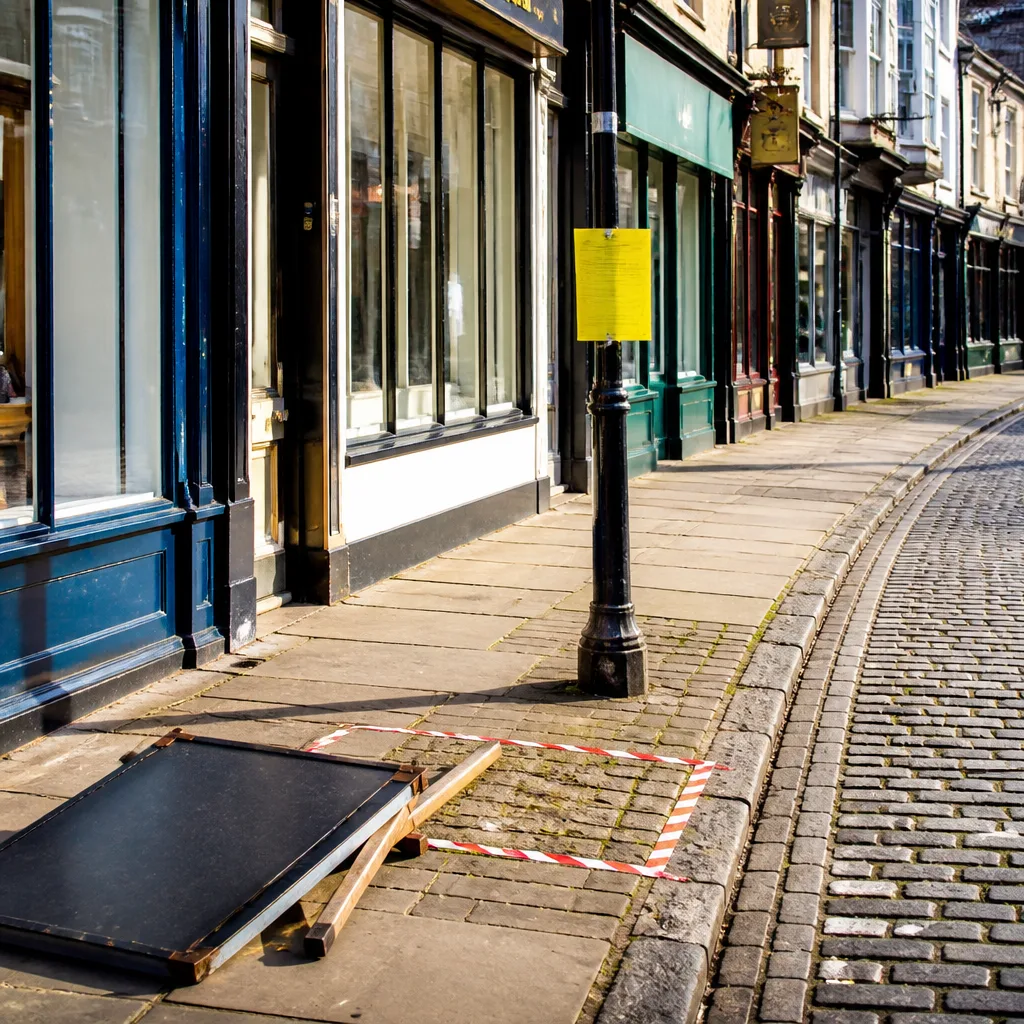
Traders on Lymington’s cobbled Quay Street have warned that Hampshire County Council’s demand to remove outside displays and signage will see them "suffer massively", as businesses say the move threatens passing trade and the attractiveness of a historic shopping street.
Council cites safety and accessibility
The authority told affected shops they must remove displays by Friday or contractors would do so, following three anonymous complaints on 15 July about items outside Quayside Fish Hut, Out of the Blue and Lymington Mobiles. A Hampshire County Council spokesperson said the council has a duty to keep pavements and verges "safe and accessible for everyone", and that some items, such as advertising boards, could narrow footways, block access and create hazards.
Business owners and their supporters argue the decision will hit independent traders who rely heavily on passing trade and that it will change the visual character of the street. The dispute has prompted a public reaction: a petition launched by a local Liberal Democrat county councillor gathered more than 1,000 signatures in less than 24 hours, according to campaigners.
Traders say displays are essential for trade
Owners and staff at businesses on Quay Street emphasise how long they have used displays to attract customers in a narrow, historic setting. Rachel Reynolds, owner of Quayside Fish Hut, told reporters that as of Friday afternoon the shop’s signage and displays had not been removed and that her business had showcased items outside for more than 40 years. She warned that removal would "damage our business so much" because much of the shop’s trade comes from what is displayed outside.
"Most of our trade comes from what we display outside, a lot of people don't even know we're here unless we display things outside,"
Mel Cullis, manager of Quayside Fish Hut, told the Local Democracy Reporting Service the new rule could damage the character of the historic street and was "ridiculous". She said outside displays are "vital for bringing people through the door, particularly for businesses that rely on passing trade" and warned the measures would be "horrendous" if applied.
- Three anonymous complaints triggered the enforcement action (15 July).
- Businesses named in the council notice include Quayside Fish Hut, Out of the Blue and Lymington Mobiles.
- A petition opposing the move gained over 1,000 signatures within a day.
Implications for town centre trading and policy
The clash in Lymington highlights the tension between public-access obligations and the commercial realities of small retailers. Many small shops depend on spontaneous footfall; in tourist and heritage locations, street displays can function as low-cost marketing that channels visitors into narrow retail plots. Removing such displays is likely to reduce visibility for micro-businesses that cannot afford other forms of advertising.
Local authorities must balance safety and accessibility with support for economic activity. The council’s framing of the issue around hazards and narrowing footways is legally defensible: pavements need to remain usable for people with mobility aids, parents with pushchairs and the general public. Yet the rapid mobilising of local support suggests the policy decision has not landed well with the community of traders and shoppers who value the area’s character and vibrancy.
For small businesses already facing pressure from rising costs and changing consumer habits, enforcement that reduces passing trade could have immediate consequences for turnover and jobs. The Lymington case will be watched by other towns where a similar balance between pedestrian access and the commercial life of the street must be struck.
The council has not announced a change of course; traders and a county councillor are pressing for a rethink. How the authority responds will determine whether the outcome is a negotiated compromise on safe, well-managed displays or a stricter regime that alters the appearance and trading patterns of Quay Street.