
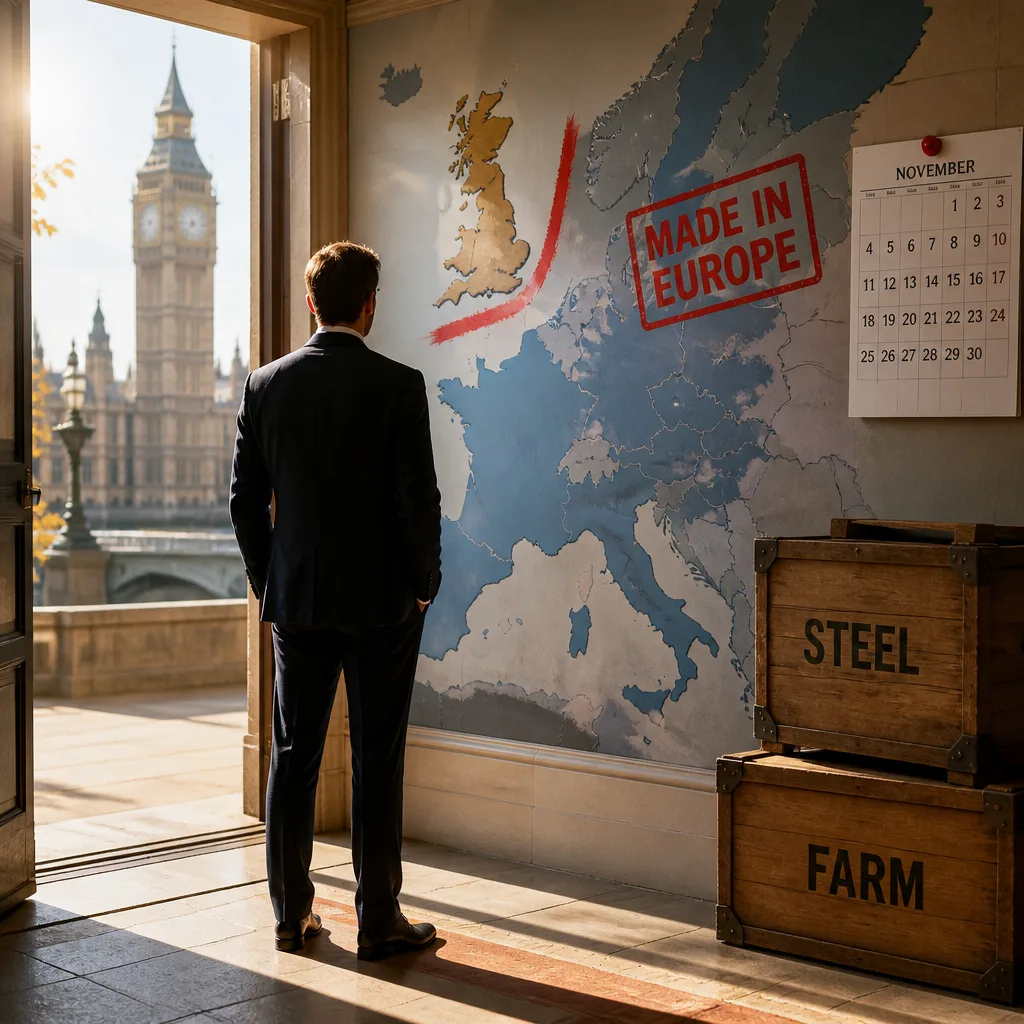
Prime Minister Andy Burnham has set domestic policy at the centre of his early programme but is pursuing a cautious renewal of relations with the European Union, officials in London and Brussels say. Talks between UK and EU officials are resuming, with a summit planned for November, even as the EU pursues a protectionist “Made in Europe” approach that could have consequences for key British industries.
Diplomacy resumes amid competing priorities
On Monday, the new Europe minister, Hamish Falconer, held his first meeting with EU trade commissioner Maroš Šefčovič. Both sides were guarded about the outcome of the discussion. Officials in London and Brussels, however, are said to be lining up an EU‑UK summit in November to press ahead with a so‑called “reset” agenda that had been postponed after the departure of Keir Starmer as prime minister in June.
Burnham has so far devoted much of his opening weeks to domestic initiatives, including a campaign to end homelessness and a suite of popular but modest measures. He also travelled to Kyiv to meet Ukrainian president Volodymyr Zelensky, underlining that foreign policy will not be absent from his brief.
Balancing close ties and sovereignty
The new prime minister has signalled a desire for closer practical co‑operation with the EU without seeking a return to the single market. In parliament on 2 September he argued that Britain’s long period of low growth was “partly a result of Brexit” and urged opposition MPs to confront the country’s economic challenges.
“It’s clear the low growth we’ve had – the decade of low growth – has been partly a result of Brexit,” Burnham told parliament on 2 September.
Whitehall and Brussels officials expect negotiations to focus on achievable, targeted co‑operation rather than a wholesale policy reversal. One likely area of agreement is a youth mobility scheme. EU negotiators have pressed since 2023 for a programme to allow 18‑ to 30‑year‑olds to study, train and work across borders, possibly with part‑funding from both sides.
Trade tensions: protecting industry while limiting fallout
Behind the talks lies a more immediate concern for the UK: the EU’s strengthening of trade defence measures and domestic industrial policies aimed at countering competition from third countries, notably China. Officials in London are particularly watchful for measures that could harm British steelmaking and farming – sectors Burnham specifically named when setting out early priorities.
- Youth mobility scheme: a potential bargaining chip in talks, offering limited mobility for 18–30 year‑olds with shared funding.
- Industrial protection: the EU’s ‘Made in Europe’ policies could lead to trade defence steps affecting steel and agriculture.
- Summit diplomacy: a November summit is being prepared to reset the post‑Brexit relationship without rejoining the single market.
Officials say the UK will seek to limit collateral damage from EU measures designed to shield European industry from cheaper imports and to manage fallout from a changing global trade environment. That task requires careful negotiation: Burnham’s government must balance protecting domestic industries while preserving market access and co‑operation with the bloc.
| Issue | UK position |
|---|---|
| Youth mobility | Open to modest, mutual scheme with part‑funding |
| Single market | No appetite to rejoin |
| Trade defence / industrial policy | Seek to limit harm to steel and farming |
Burnham’s approach so far is pragmatic. He appears ready to accept limited, technical deals that deliver practical benefits, while resisting any move perceived as compromising post‑Brexit sovereignty. The coming weeks of technical talks and the planned summit will test whether that stance can reconcile domestic expectations with an EU negotiating posture increasingly influenced by industrial protectionism.
President Emmanuel Macron’s meetings with UK ministers in recent weeks underscored the French interest in stabilising relations. For London, the priority is clear: protect domestic industries and secure co‑operation in areas of mutual benefit without reversing the political settlement reached at the time of Brexit.












