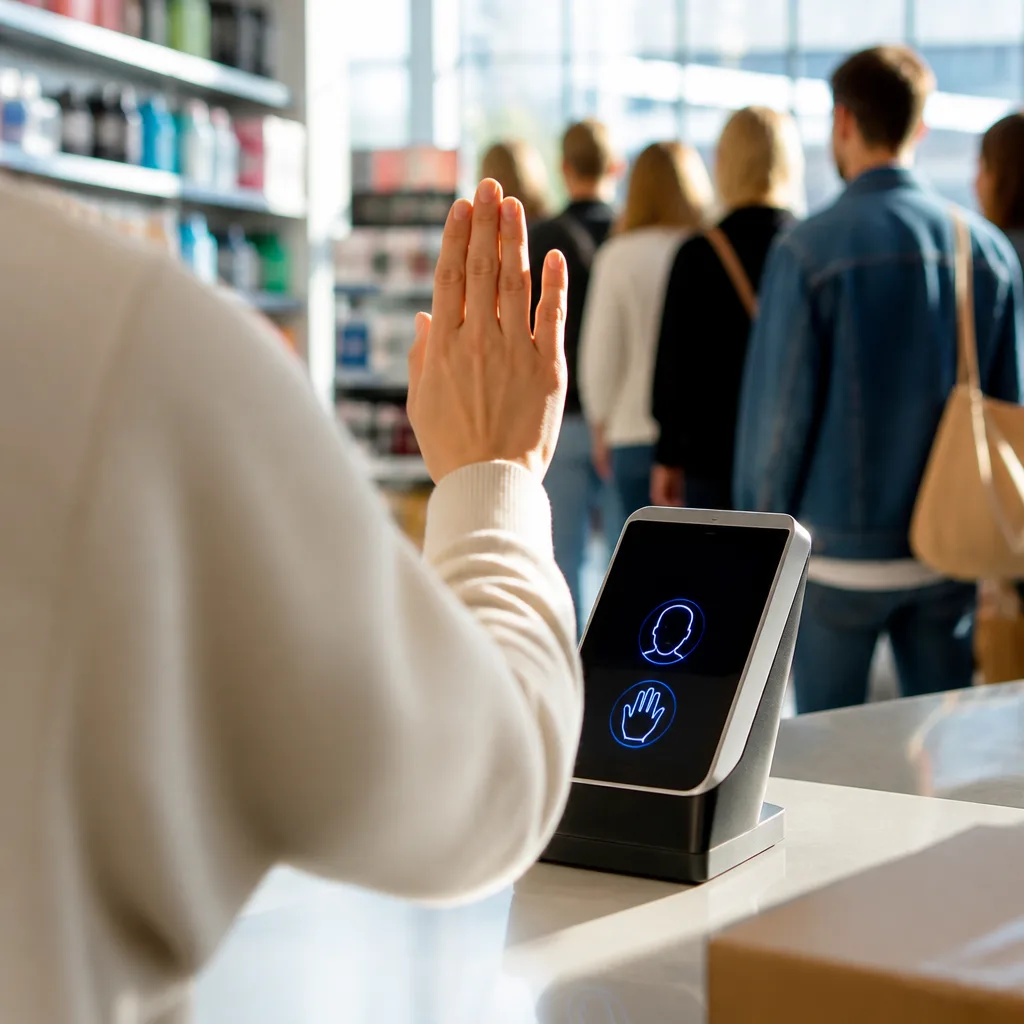
Verifone has started marketing new Eftpos terminals in Australia that allow customers to pay by looking at a screen or presenting a palm, moving biometric verification from niche pilots to mainstream retail hardware.
What the system does
The firm, which supplies around 300,000 Eftpos terminals in Australia, is promoting the Victa device as a way to reduce queue times and remove friction from common payments scenarios. Customers who opt in would authorise transactions using either facial recognition or palm‑vein scans rather than tapping a card or phone.
How the technology is intended to work
Verifone says biometric templates are converted into tokens on the terminal itself, so images are not stored centrally by the company. The vendor expects merchants, banks or digital wallet providers to manage the biometric profiles and to give consent for customers to use the feature. Card and phone contactless payments will remain available as alternatives.
“If you go to a grocery store and you have to tap a loyalty card, plus tap a payment card, that’s the kind of thing that now we’d be able to speed up,” said Ben Hughes, head of product for Asia Pacific at Verifone.
Uptake, security and the road to scale
Verifone anticipates retailers will upgrade incrementally as existing terminals reach end of life, rather than switching en masse. That staged approach reflects both the cost of hardware replacement and the need for banks and wallet providers to sign up to support biometric payments.
The company has also highlighted anti‑spoofing measures intended to prevent fraudulent use — a reference to past problems with facial verification systems being tricked with photos or masks. Verifone’s Asia Pacific president, Paris Tsounias, said the firm expects some resistance but compared current scepticism to the early days of contactless payments.
Context and implications
Biometric payments promise speed and convenience, yet they raise several questions for consumers, businesses and regulators:
- Privacy: who stores and controls biometric profiles — merchants, banks or third parties — and how long are they retained?
- Security: how effective are anti‑spoofing measures in real world retail environments?
- Choice and equity: will non‑participants face longer queues or awkward alternatives?
- Infrastructure costs: who pays to upgrade thousands of terminals across cafes, restaurants and stores?
Those questions will influence whether biometric payments remain a niche convenience or become a standard part of Australian retail. Verifone points to the consumer shift that once met contactless payments with scepticism: the company notes the technology later became ubiquitous. It also cites industry statistics to show broad acceptance of contactless methods, saying current contactless usage is above 90% in many contexts — a metric it uses to frame expectations for biometric adoption.
| Metric | Figure |
|---|---|
| Installed Eftpos terminals (approx.) | 300,000 |
| Contactless transaction share (industry cited) | over 90% |
What comes next
For biometric payments to scale, banks and digital wallet providers must accept the approach and integrate identity management into their systems. Retailers will need to replace or upgrade terminals over time, and regulators may seek to clarify rules around biometric data protection and consumer consent.
The decision to adopt will ultimately rest on whether the operational benefits — faster checkouts, reduced card handling — outweigh costs and privacy concerns for retailers and their customers. Verifone is positioning Victa as the bridge between a crowded payments counter and a frictionless future, but the technology will only be fully tested once it is widely deployed and subjected to scrutiny by consumers and regulators alike.
Key facts: Verifone is selling biometric payments via the Victa terminal; technology supports face and palm‑vein recognition; biometric templates are tokenised on device; rollout expected to be gradual as merchants replace ageing Eftpos hardware.