
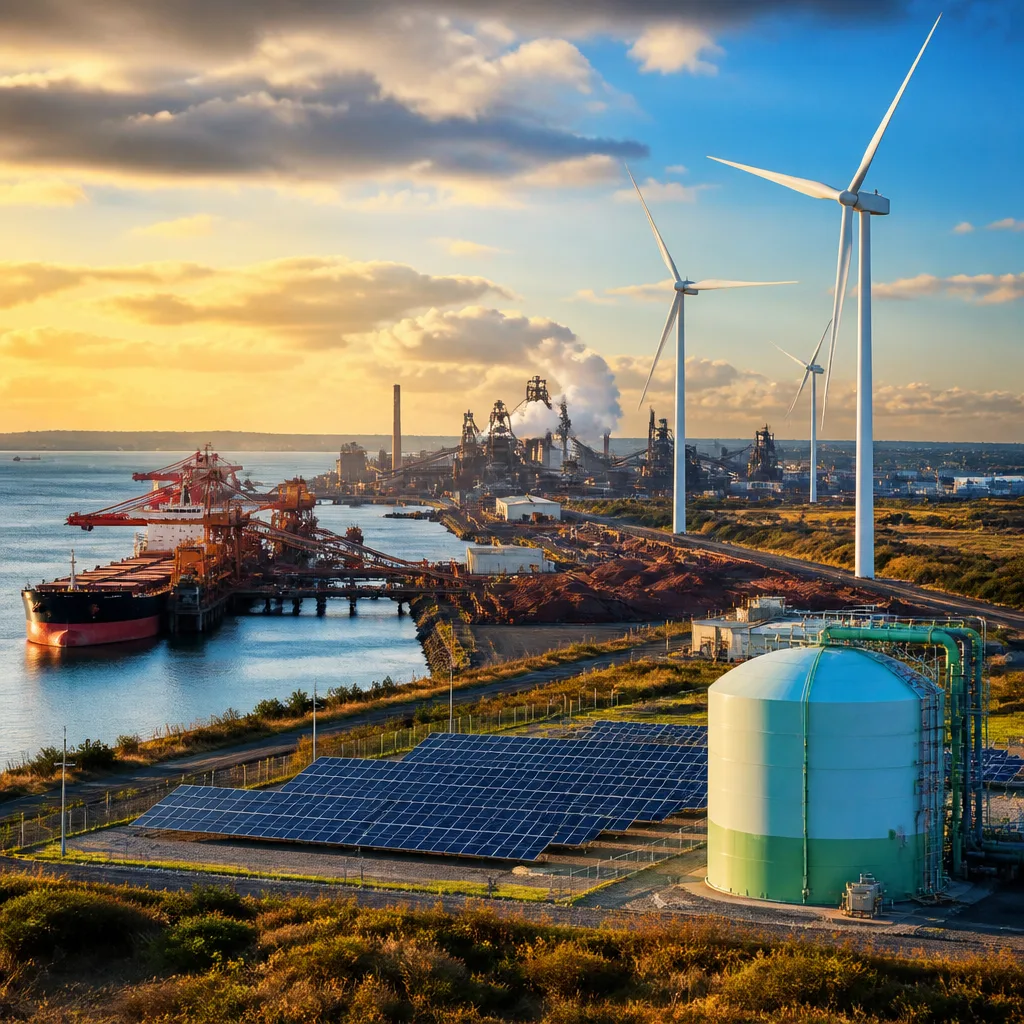
BHP outlines technology pathways for steelmaking decarbonisation by 2030
BHP Group has published an update on its efforts to support the decarbonisation of steelmaking, saying it is progressing a number of technological pathways as it pursues its 2030 objective. The miner positions the work as part of a broader role supplying raw materials that underpin the energy transition, while continuing to operate major commodity businesses.
The company, in a case study released on 18 August 2026, reiterated that it is a producer of a range of commodities including iron ore, copper, nickel, potash and metallurgical (steelmaking) coal. BHP said these products have roles in low‑carbon infrastructure: copper for renewable energy systems, nickel for electric-vehicle batteries, and iron ore and metallurgical coal for steel required by global infrastructure and the energy transition.
Multiple pathways, one objective
BHP did not present a single technical recipe for decarbonising steel; instead it emphasised progress across several routes. The approach reflects the complexity of reducing emissions in steelmaking — a sector where both fuel combustion and chemical processes contribute to greenhouse gases. By advancing different technological options, BHP aims to support a transition that accommodates the diversity of steelmaking technologies, feedstocks and regional markets.
- Diversified commodity supply: BHP underlines its portfolio breadth — iron ore, metallurgical coal, copper, nickel and potash — which it says underpins different low-carbon applications.
- Sector focus: The company’s segments include Copper, Iron Ore and Coal, reflecting where its decarbonisation work is intended to have the most impact.
- Infrastructure linkage: BHP frames steel decarbonisation as critical to delivering infrastructure for the broader energy transition.
Company context and scale
BHP described itself as an Australia-based resources company and highlighted that its operations supply commodities used in both traditional and emerging industries. The briefing reiterated recent corporate results and market context referenced alongside the case study: fiscal 2026 underlying earnings and revenue increases, record-high copper prices driving profit, and commentary about dividends.
While the case study focuses on technological progress, it sits within a corporate narrative that links commodity production with demand for low-carbon solutions. That link is key for steel — even as technologies change, substantial volumes of iron and metallurgical coal continue to be required in many current steelmaking routes.
| Primary segments | Role in transition |
|---|---|
| Iron Ore | Feedstock for steel; essential even as production methods evolve |
| Coal (metallurgical) | Used in traditional blast furnace processes; subject of decarbonisation efforts |
| Copper | Conductor in renewable energy and electrification |
Implications and unanswered questions
BHP’s emphasis on multiple technology pathways signals a pragmatic stance: decarbonising steelworld-wide will not be achieved by a single technology overnight. The company’s message also highlights the tension that many large commodity producers face — they supply raw materials for both conventional industries and the technologies that will replace them.
What remains unclear from the published case study is the balance between near-term measures that improve existing steelmaking processes and longer-term shifts to fundamentally different routes. Equally, the case study does not lay out detailed investment figures or concrete deployment timelines for specific technologies. Those details will be necessary for policymakers, steel customers and investors assessing how rapidly emissions can fall and what role suppliers such as BHP will play.
For now, BHP’s public update is an argument for a technology‑diverse strategy: moving multiple levers at once rather than betting on a single solution. That approach may reduce risk, but it also requires close coordination between miners, steelmakers, equipment manufacturers and governments if the 2030 ambition is to be met at scale.









