Villagers and MP challenge scale of proposed development near Cheddington
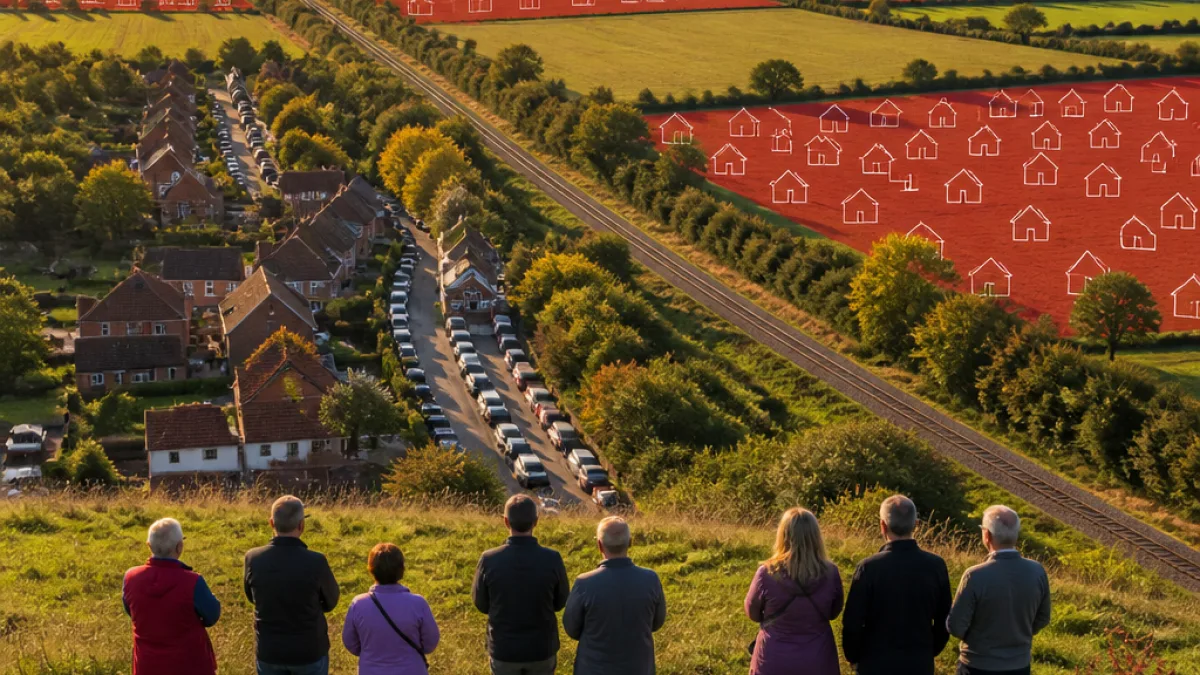
Campaigners in the Aylesbury Vale have raised strong objections to Buckinghamshire Council’s draft Local Plan after it identified land around Cheddington as a potential site for 7,450 homes. Members of the Cheddington Action Group met with the area’s Member of Parliament to press their case, saying the scale of development would radically alter a rural village.
Latest Census-based figures cited by the action group put Cheddington’s population at about 1,893 residents. Developers’ proposals for up to 7,450 new homes would, according to local campaigners, represent an increase in the village footprint of roughly 786%.
- Proposed homes near Cheddington: 7,450
- Current population (approx): 1,893
- Wider Local Plan housing ambition: c. 90,000 homes across the area (by 2024)
The proposals form part of a wider plan from Buckinghamshire Council that outlines where up to 90,000 homes could be built across the county. The authority has previously highlighted concerns about a Government target of around 95,000 homes tied to its 20-year development plan, describing the target as a substantial uplift — the council’s own analysis says it would represent around a 43% increase on previous expectations.
“My first concern is the appropriateness of the very large developments proposed near Wing and Cheddington,”
The quoted remark was among a series of points made by the Aylesbury MP, who visited the village and discussed the council plan with local campaigners. She also highlighted practical constraints identified by council assessments, including the impact on rural road networks, limited rail capacity and constrained bus routes.
Buckinghamshire Council has defended its strategy, saying the locations in the plan were the “most sustainable locations” for development in the county and that protecting countryside, Green Belt and important landscapes remains a priority. That tension — between meeting housing targets and safeguarding rural communities — is at the heart of the dispute.
| Item | Figure |
|---|---|
| Cheddington current population (approx) | 1,893 |
| Homes proposed in/around Cheddington | 7,450 |
| Local Plan housing capacity (across area) | c. 90,000 |
Residents question how essential infrastructure would be provided to match such rapid expansion. The action group and the MP pointed to difficulties already recorded by the council’s assessments: narrow rural roads, limited public transport services and rail lines that are close to capacity. Those constraints, they say, make large-scale development in and around Cheddington particularly problematic.
Locally, the debate is likely to centre on whether the county’s housing targets should be met by concentrating growth in larger towns — such as Aylesbury itself — rather than dispersing large schemes into smaller villages. The government’s guidance, the MP argued, prioritises major urban settlements for new housing ahead of smaller rural communities.
Buckinghamshire Council maintains that it must identify sites capable of delivering homes while balancing landscape protection. The authority’s statements also emphasise the need to reconcile national housing targets with local constraints — a difficult task when proposals raise strong opposition from communities who fear being overwhelmed by change.
The Local Plan process will continue to draw scrutiny from residents, their representatives and planning bodies. For now, Cheddington’s campaigners have secured attention from their MP and renewed public focus on how the county intends to meet its ambitious housing goals without eroding the character and infrastructure of rural villages.