Mass deworming drive aims for full coverage across Varanasi district
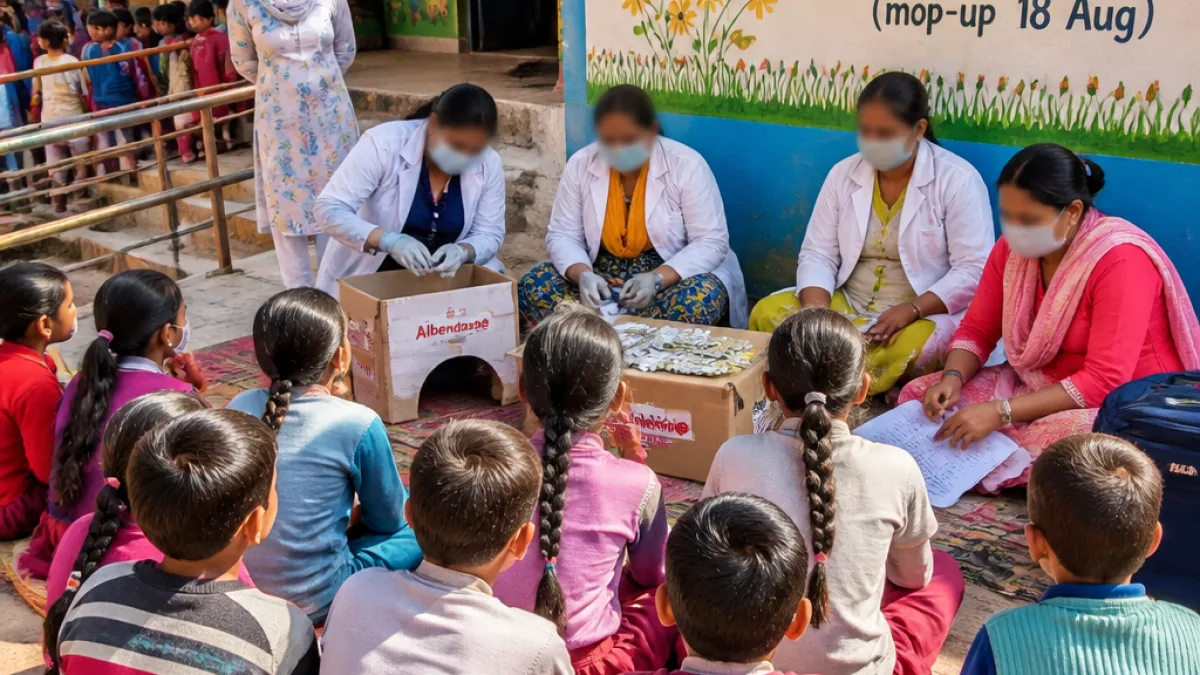
VARANASI: The district administration will administer Albendazole tablets to around 18.5 lakh children aged 1 to 19 years on 14 August as part of the National Deworming Campaign, Chief Medical Officer Dr N P Singh said on Wednesday. A mop-up exercise is scheduled for 18 August to cover children who miss the first round, officials added.
Dr Singh said intestinal worm infections contribute to malnutrition and anaemia, hampering physical growth, immunity and learning ability. "Deworming helps improve children’s health and nutritional status, supports anaemia control and enhances immunity and learning ability," he said, urging parents to ensure their children receive the tablets on the scheduled date.
Additional Chief Medical Officer and nodal officer for the programme, Dr Sanjay Rai, outlined the operational plan. Authorities have identified 3,914 Anganwadi centres and 2,853 government, recognised and private schools and madrasas as distribution points, and will deploy medical teams across urban and rural areas to achieve the target.
- Target population: 18.5 lakh children (aged 1–19 years)
- Urban target: 7.4 lakh children
- Rural target: 11.1 lakh children
- Distribution points: 3,914 Anganwadi centres; 2,853 schools/madrasas
- Mop-up round: 18 August for absentees
| Area | Children targeted |
|---|---|
| Urban | 7.4 lakh |
| Rural | 11.1 lakh |
| Total | 18.5 lakh |
Delivery and special groups
The CMO's office said distribution will be carried out at identified Anganwadi centres, schools and madrasas with the support of teachers and frontline health workers. In rural areas, doctors from the Rashtriya Bal Swasthya Karyakram (RBSK) teams will assist; in urban areas, doctors from urban primary health centres will support the drive along with ANMs and ASHA workers.
Officials emphasised that children who do not attend school and children of seasonal workers, including those employed at brick kilns, will be included in the campaign. The dosage plan follows national guidance: children aged 1–2 years will receive half a tablet of Albendazole, while children older than 2 years will be given one full tablet.
"A mop-up round will be organised on Aug 18 for those who miss the dose on Aug 14 to ensure 100% coverage," Dr Sanjay Rai said.
Public-health experts and district officials consider deworming an inexpensive yet effective intervention to reduce worm burden in children, which can help improve nutritional indicators and reduce anaemia prevalence when combined with other health and nutrition programmes. The current drive coincides with ongoing efforts to tackle childhood malnutrition and anaemia in Uttar Pradesh, where periodic mass interventions form part of the state's public-health strategy.
School and health authorities have been instructed to maintain records of administration and to report adverse events, if any, through existing surveillance channels. Parents and caregivers were advised to inform teachers or health workers about known allergies or previous adverse reactions to medicines.
With the campaign covering both urban wards and far-flung rural habitations, district officials said logistic arrangements, including supply of medicines and mobilisation of health staff, are in place to mitigate gaps in outreach. The mop-up round is expected to help reach children who are absent on the primary date or are located at informal work sites.
Authorities reiterated that the programme is preventive in nature and part of the larger national effort to improve child health. Local stakeholders — from Anganwadi supervisors to school principals — have been tasked to coordinate on-the-ground implementation over the coming week.