
Gold buying essentials for Muzaffarpur households
As demand for gold rises ahead of festival and wedding seasons in Muzaffarpur, buyers should be aware that the published daily gold rate is only a starting point. BusinessToday.in recently set out the main factors that determine what consumers actually pay and what they receive when they sell or invest in gold. Local traders and consumers must factor in purity, making charges, taxes and certification before making decisions.
Purity is the most important determinant of value. The standard measures used in India are karats (K). In practical terms for Muzaffarpur buyers:
- 24K is the purest commercial form and is best for investment in bars and coins.
- 22K is the customary choice for Indian jewellery because alloys make the metal more durable for daily wear.
- 18K and 14K contain less gold and are used where greater strength is required.
| Karat | Typical purity |
|---|---|
| 24K | ~99.9% |
| 22K | ~91.6% |
| 18K | Lower than 22K |
Showrooms in Muzaffarpur add amounts above the base quoted gold price. The final invoice normally includes the base metal value plus making charges (which vary by design and retailer) and 3% GST. For studded or stone-set jewellery, the metal weight is adjusted by deducting the stone weight when calculating price.
Authenticity and BIS hallmarking
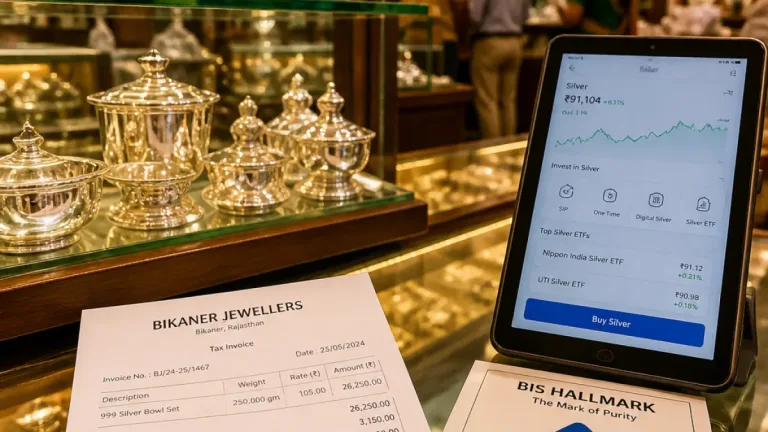
Verifying purity is vital. BusinessToday.in highlights BIS hallmarking as the standard safeguard. Buyers should check for the BIS logo, the purity grade (for example, 916 for 22K) and the six-digit HUID code. The HUID can be validated through the BIS Care app or website — a simple step that reduces the risk of purchasing wrongly represented jewellery.
"Look for the BIS logo, the purity grade (e.g., 916 for 22K), and the 6-digit alphanumeric HUID code," BusinessToday.in reported.
For Muzaffarpur consumers who deal with local jewellers, asking for a BIS certificate and an itemised bill that separates metal charge, making charge and tax helps in future resale or valuation.
Paper gold alternatives and taxation
Not everyone wants physical metal. The article outlines financial alternatives that may suit Muzaffarpur investors with limited storage or those seeking liquidity:
- Digital gold — allows purchases online in small amounts, sometimes starting at Re 1, with the convenience of fractional ownership.
- Gold ETFs and mutual funds — paper assets that track physical gold prices and trade on exchanges, offering liquidity.
- Sovereign Gold Bonds (SGBs) — government securities that pay an annual interest in addition to price appreciation.
Tax and KYC rules also affect local buyers. Purchases above specified limits require PAN and other KYC documents. The article notes that cash purchases above certain thresholds attract stricter KYC. All retail gold purchases are subject to 3% GST at the point of sale. When selling later, capital gains tax applies depending on the holding period. Inherited gold remains untaxed until sold; gifts received at marriage or from close relatives are exempt from tax under specified conditions.
Practical advice for Muzaffarpur buyers
For residents of Muzaffarpur, the practical steps before buying gold should include:
- Confirm BIS hallmarking and verify the HUID code.
- Ask for a detailed bill showing base metal value, making charges and GST.
- Consider design complexity versus making charges — simpler designs usually mean lower making fees.
- Evaluate paper-gold options if storage and liquidity are priorities.
Local jewellers and traders in Muzaffarpur remain the primary point of sale for most consumers, but increasingly available digital and exchange-traded options provide alternatives. Understanding the full cost structure and certification steps can help households make informed choices during high-demand periods.
Reporting for Muzaffarpur business pages drew on the explanatory summary published by BusinessToday.in to outline these considerations for local consumers and investors.