Chennai, 23 August 2026: The Tamil Nadu government has ordered stricter quality testing at all distilleries in the state after a short-lived ban on 11 liquor variants manufactured by Enrica Enterprises sparked public concern and criticism over a rapid reversal of the prohibition.
Broad directive after Enrica controversy
The instructions follow the decision by the Food Safety and Standards Authority of India (FSSAI) — under whose direction the state-run Tamil Nadu State Marketing Corporation (TASMAC) had on August 13 temporarily suspended sale of the 11 variants. A Prohibition and Excise office recommendation to lift the ban the next day and advise TASMAC to resume sales drew public suspicion and calls for tighter safeguards.
Officials said the new order requires comprehensive checks at distilleries to ensure alcohol content and other parameters remain within prescribed limits before bottling and dispatch. The directive also emphasises enhanced random sampling from retail outlets.
"Bottling and dispatch for sale only occur after Prohibition and Excise officials verify quality based on the test certificates issued by the central lab," a senior TASMAC official said, describing the current testing process.
How testing works
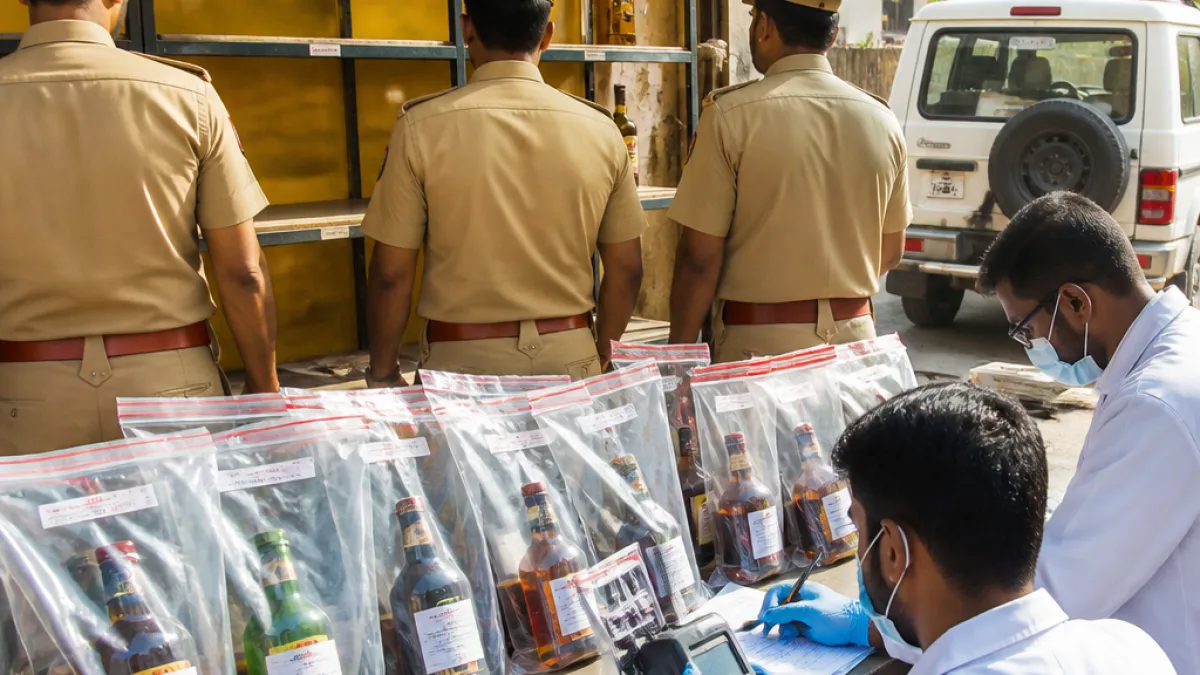
According to TASMAC, once liquor is produced at distilleries, samples are sent to the central government laboratory in Guindy, Chennai. Prohibition and Excise officials verify quality using the test certificates issued by the lab before allowing bottling and distribution. Separately, TASMAC officials conduct random bottle pickups from retail outlets for additional laboratory testing.
The recent instructions, officials said, add an extra layer of scrutiny at the distillery level to confirm that alcohol levels strictly match permitted limits before items reach the central lab for certification.
Scope and marketplace context
TASMAC purchases beer from seven companies and spirits from 11 manufacturers for sale through its retail network across the state. The directive therefore covers a broad manufacturing base supplying outlets in urban and rural areas alike.
- Immediate measures: enhanced distillery-level checks, continued central lab testing in Guindy
- Retail safeguards: intensified random sampling by TASMAC from outlets
- Regulatory oversight: actions taken following FSSAI guidance and Prohibition and Excise review
Consumer and employee concerns
The move responds to demands from consumers and TASMAC employees who had sought more stringent quality assurance across beverages sold through the state-run network. The quick revocation of the Enrica ban had prompted suspicion among stakeholders about the robustness and transparency of regulatory procedures.
Neither FSSAI nor the Prohibition and Excise office released detailed public statements on the reasons for the initial ban or the grounds for the immediate lifting of restrictions in the publicly available material. TASMAC's cited procedure places weight on central lab certificates and on-site verification by excise officials.
What this means for consumers
Officials indicated consumers should expect more visible quality controls upstream at distilleries, with the stated objective of preventing products with out-of-specification alcohol levels from entering circulation. The enhanced checks aim to maintain public confidence in packaged and bottled alcoholic beverages sold through TASMAC outlets.
| Aspect | Existing practice | New emphasis |
|---|---|---|
| Sampling | Samples from distilleries sent to central lab (Guindy) | Comprehensive distillery checks before dispatch |
| Verification | Prohibition & Excise verification based on lab certificates | Continued certification plus enhanced on-site scrutiny |
| Retail monitoring | Random bottle pickups by TASMAC | Maintained; frequency expected to increase |
Officials said the state will continue to rely on laboratory test reports to permit bottling and sale, and that any product failing to meet standards would be held back from the market pending further investigation.
Wider regulatory implications
Stakeholders have underlined the need for transparency in the testing process and for clear public communication when bans or restrictions are imposed and lifted. The episode has highlighted tensions between rapid administrative decisions and the public demand for accountability in matters that affect health and safety.
For now, TASMAC's enhanced instructions and the requirement for extra distillery checks are intended to reassure both consumers and employees that the regulatory chain of custody for alcoholic beverages will be strengthened while investigations and routine lab certification continue.
Further information on specific test results or any administrative action against manufacturers would be issued by Prohibition and Excise or FSSAI, officials indicated.