CHENNAI: The Speaker of the Tamil Nadu Legislative Assembly, JCD Prabhakar, on Sunday addressed the fifth National March for Life in Chennai and declared that "life begins at conception", aligning one of the state's highest constitutional office-holders with a religiously framed anti-abortion movement.
Event and attendance
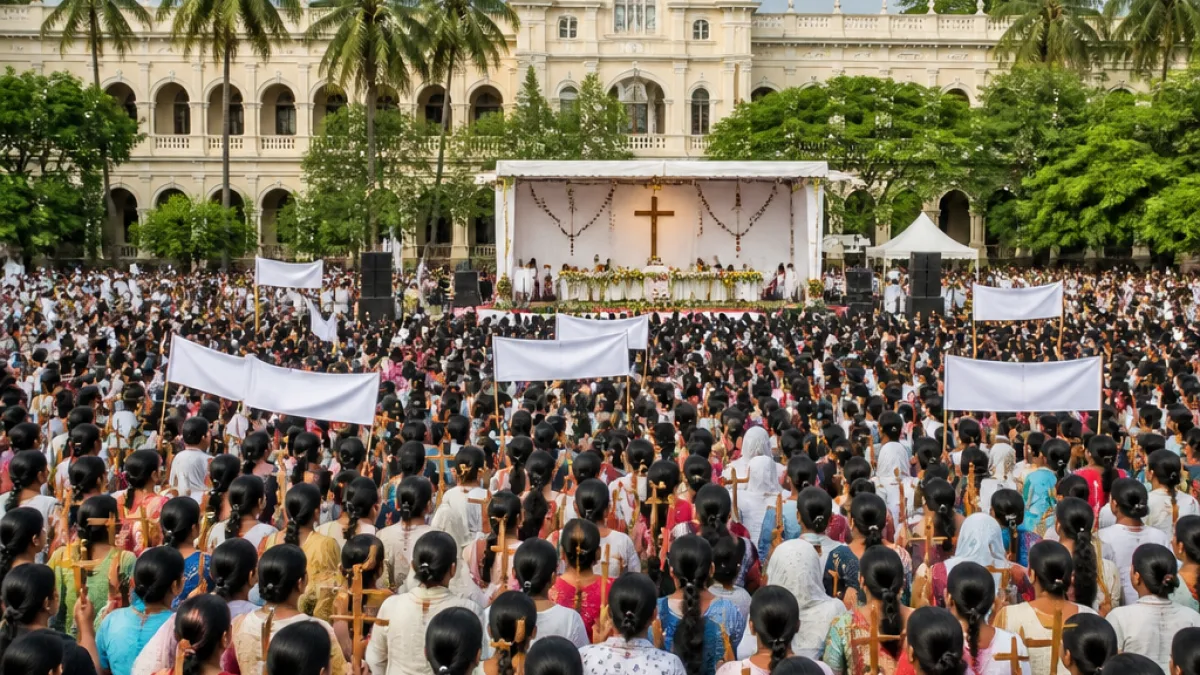
The rally was organised by CHARIS India under the aegis of the Catholic Bishops’ Conference of India and held at Stella Maris College. Organisers said more than 5,000 people attended the gathering, which the Speaker and other participants deliberately timed near 10 August — the date on which India’s Medical Termination of Pregnancy Act was enacted in 1971.
"Life begins at conception. The deep belief of this movement is that the value of a child's life should not be counted only from the day it is born, but that it should be valued as a life beginning in the womb itself," Prabhakar said at the event.
Constitutional officeholder at a religious rally
The appearance places a senior constitutional functionary alongside an explicitly Catholic campaign that advances moral theology as the basis for opposing abortion. Prabhakar, 73, is a Tamilaga Vettri Kazhagam (TVK) MLA from Thousand Lights and holds the non-partisan office of Speaker, a position that traditionally emphasises impartiality in legislative affairs.
Political observers and legal scholars note that when holders of constitutional posts participate in religiously oriented advocacy, it can prompt debate about the separation of state functions and faith-based positions, especially on sensitive matters such as reproductive rights.
Where doctrine meets law and public health
The Catholic Church’s teaching — cited by participants at the march — holds that human life merits protection from conception and rejects direct abortion and certain forms of contraception. That moral stance, however, meets a different framework in contemporary public-health ethics and Indian constitutional jurisprudence.
- The World Health Organization defines reproductive health to include the freedom to decide whether, when and how often to reproduce.
- India’s Supreme Court, in its 2022 abortion judgment, located the decision to continue or terminate a pregnancy within a pregnant woman’s bodily and decisional autonomy.
- The Medical Termination of Pregnancy Act (1971), significantly liberalised by amendments in 2021, establishes a legal framework for abortion in India.
These contrasting premises — one starting from the moral status of embryonic life and the other from the autonomy and rights of the pregnant person — underpin much of the contemporary legal and policy debate on abortion in India.
Political context in Tamil Nadu
Tamil Nadu has a diverse religious landscape and a history of public-policy debates that typically frame reproductive rights in terms of health, privacy and constitutional protections. Until now, organised anti-abortion campaigning in the state had rarely been overtly structured along Catholic ecclesiastical lines at this scale.
Prabhakar's public endorsement may therefore shift the tenor of local discussion by making religiously informed objections to abortion a more visible part of the state's political discourse. The event also follows other instances nationally where faith groups have sought to influence public opinion and law on reproductive matters.
Reactions and potential implications
No immediate official responses from the state government regarding the Speaker's appearance were available at the time of reporting. The participation is likely to draw scrutiny from civil-society organisations, women's-rights groups and constitutional experts who monitor the interface of religion, law and state office.
Legal analysts say the Supreme Court’s formulation on bodily autonomy and existing statutory safeguards remain operative law; debates and rallies, regardless of scale, do not alter statutory rights but may influence political priorities and legislative agendas.
Event details (summary)
| Item | Detail |
|---|---|
| Speaker | JCD Prabhakar (TVK MLA, Thousand Lights) |
| Event | Fifth National March for Life |
| Organiser | CHARIS India / Catholic Bishops’ Conference of India |
| Venue | Stella Maris College, Chennai |
| Approx. attendance | More than 5,000 (organisers’ estimate) |
| Date significance | Near 10 August — anniversary of Medical Termination of Pregnancy Act (1971) |
As the state and nation continue to navigate competing claims about moral values, legal rights and public health, the participation of constitutional officeholders in faith-based advocacy will remain a focal point for discussion and scrutiny.
Reporting from Chennai.