CHENNAI: Sri Lanka’s Cabinet has approved a special arrangement to facilitate the voluntary return of citizens who fled the country during the civil war and have been living in India without valid passports or after leaving through unauthorised ports, a development with direct implications for the estimated tens of thousands of Sri Lankan Tamils residing in Tamil Nadu.
What the Cabinet decision says
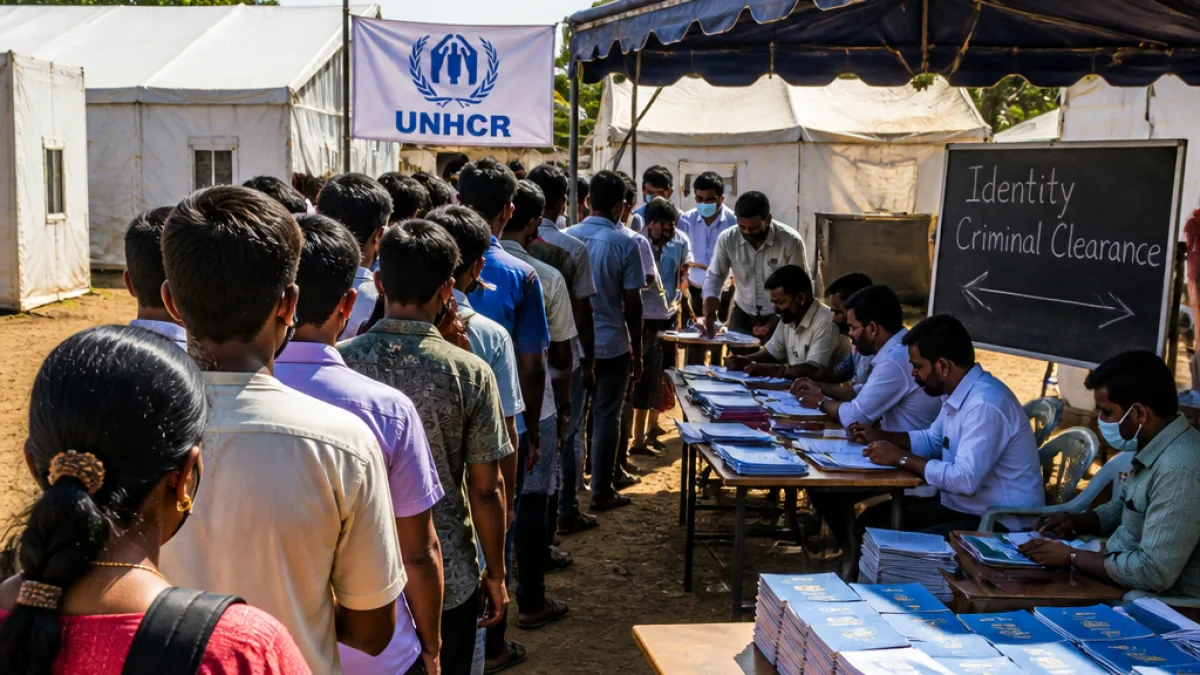
The Cabinet action, taken after advice from the Attorney General, directs immigration clearance facilities be provided for Sri Lankan refugees opting to go back through the United Nations High Commissioner for Refugees (UNHCR), according to Sri Lankan media reports. The arrangement aims to create a process for voluntary returns while addressing security and identity concerns raised by authorities.
Under the approved plan, people who left Sri Lanka between 1 August 2006 and 19 May 2009 without using an approved port or without valid travel documents must obtain a clearance report issued by the State Intelligence Service after their identity is verified as Sri Lankan citizens through Sri Lankan diplomatic missions in India. The process will also include clearance on involvement in serious offences.
Verification and criminal-clearance mechanism
According to reports, the mechanism will:
- Verify identity through Sri Lankan diplomatic missions in India.
- Provide clearance confirming absence of involvement in murder, treason or other specified offences.
- Issue temporary passports for those cleared to travel and allow entry through authorised ports.
- Detain and hand over to relevant authorities any returnee found to have committed or been involved in serious offences.
The Sri Lankan Department of Government Information has indicated that those found to have been involved in such offences will be detained at the port of entry and processed by the appropriate authorities.
Scale and local context
Former Tamil Nadu Chief Minister M.K. Stalin earlier wrote to Prime Minister Narendra Modi, urging Centre intervention on issues faced by Sri Lankan Tamils in India. In his correspondence, Mr. Stalin cited figures that place the refugee population in and outside camps in Tamil Nadu at around 89,000, with nearly 40% of them born in India.
The Cabinet decision therefore affects a sizeable community in Tamil Nadu where decades-long displacement and family ties across the Palk Strait have created complex legal and humanitarian situations. The Sri Lankan move is likely to rekindle discussions in the state on options available to refugees, whether to remain, regularise status in India or pursue voluntary return.
Practical implications for refugees in Tamil Nadu
Based on the Cabinet's parameters, refugees in Tamil Nadu considering return will need to follow a multi-step process coordinated by diplomatic missions and the UNHCR. Key practical points are:
- Return is voluntary and must be processed through the UNHCR channel as per the Cabinet decision.
- Applicants need identity verification by Sri Lankan missions in India to obtain the State Intelligence Service clearance report.
- Those cleared will be issued temporary passports and allowed to enter through authorised ports; those failing criminal-clearance checks face detention and further legal action.
Table: Who is covered and key steps
| Eligibility window | Key requirement | Outcome if cleared |
|---|---|---|
| Left Sri Lanka between 1 Aug 2006 and 19 May 2009 | Identity verification via Sri Lankan diplomatic mission; State Intelligence clearance | Temporary passport; authorised entry through ports |
| Left via unauthorised ports or without valid documents | Criminal-clearance check for specified offences | Detention and legal handover if involved in offences |
Responses and next steps
At present, the Sri Lankan decision is a framework; operational details, including timelines and the role of Indian authorities, must be finalised between the governments, diplomatic missions and the UNHCR. For refugees and civil-society groups in Tamil Nadu, clarity on documentation, access to consular verification and safeguards for those born in India will be critical.
Stakeholders in Tamil Nadu, including political leaders who raised the issue with the Centre, are likely to seek firm assurances on procedural safeguards and humanitarian protections before any large-scale returns take place.
As this matter develops, affected families and advocacy groups are expected to engage both Indian and Sri Lankan authorities and the UNHCR for precise guidance on eligibility, documentation and the logistics of voluntary return.