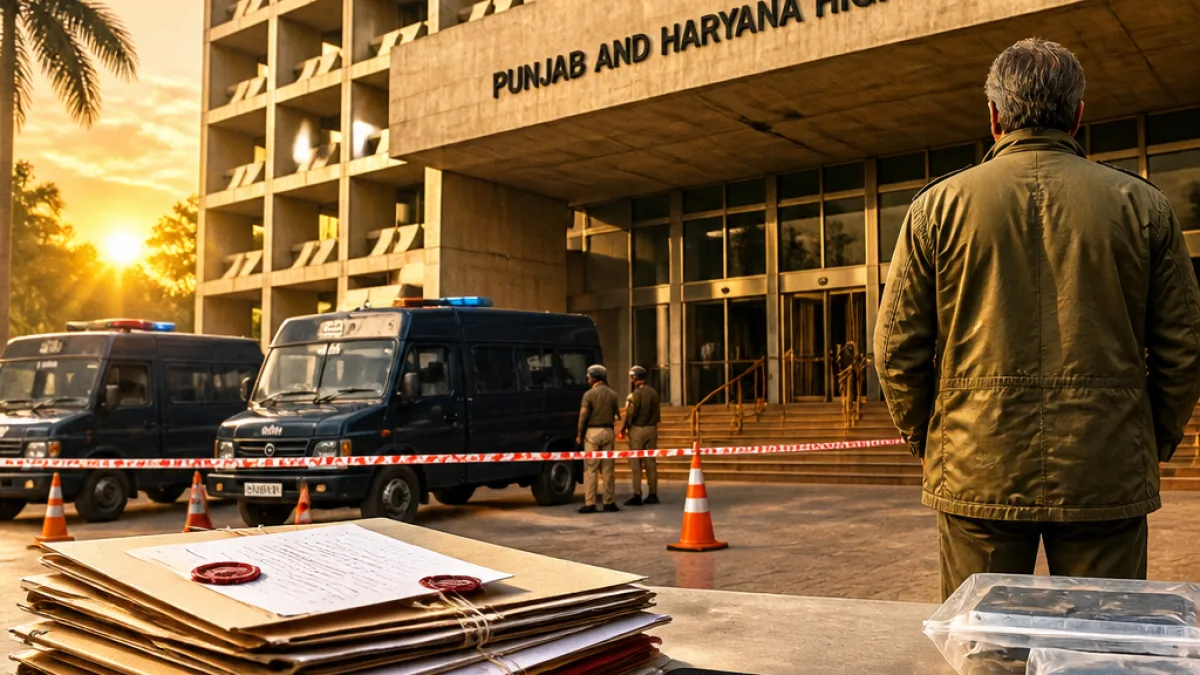
The Punjab and Haryana High Court has declined to grant regular bail to an ex-serviceman accused of establishing contact with Pakistan-based intelligence agencies and purportedly transmitting confidential information about Army movements in return for payment, the court order showed.
Court cites seriousness of allegations and material collected
Justice Manisha Batra, in an order dated August 6, held that the evidence gathered during the probe and the wider public interest made the case unsuitable for the concession of regular bail at this stage. The judge observed that investigators had found the petitioner to be in constant contact with Pakistani intelligence through telephone communications.
“The seriousness of the allegations, the nature of the material collected during investigation and the larger public interest involved, this Court does not find it to be a fit case for extending the concession of regular bail to the petitioner at this stage.”
The court repeated that the nature of the accusations was grave and emphasised the investigatory material as a key factor in refusing bail. No regular bail was allowed, though the order does not indicate whether interim or special bail applications were considered separately.
Allegations and investigative origins
According to the charge sheet and police records made public in court papers, a secret informer alerted the State Special Operation Cell, Amritsar, that the accused — an ex-serviceman who had served with the Defence Service Corps and was posted earlier at Air Force Station, Bikaner — had been in contact with officials of Pakistan’s intelligence apparatus via social media platforms.
It is alleged the accused exploited his former Army contacts to obtain highly confidential information related to troop movements and other security-sensitive matters, and forwarded such data to handlers across the border in exchange for money. The precise nature of the material, the duration over which the alleged activity took place, and the amounts purportedly involved were not detailed in the excerpted court record made available.
Prosecution stance and law enforcement role
The State Special Operation Cell initiated the probe following the informer’s disclosure. Investigators appear to have focussed on call records and digital communications, concluding the accused remained in regular telephone contact with Pakistan-based intelligence agencies. Those investigative findings formed the basis of the High Court’s decision to refuse bail.
The order underscores the intersection of criminal procedure and national security considerations: when allegations potentially affect the integrity and security of the armed forces, courts will weigh public interest and the sensitivity of evidence heavily before granting bail.
Key procedural facts
- Bench: Justice Manisha Batra, Punjab and Haryana High Court
- Order date: 6 August (as cited in court papers)
- Investigating agency: State Special Operation Cell, Amritsar
- Accused: Ex-serviceman formerly posted with Defence Service Corps at Air Force Station, Bikaner
| Item | Detail |
|---|---|
| Court | Punjab and Haryana High Court |
| Judge | Justice Manisha Batra |
| Core allegation | Contact with Pakistan intelligence; sharing confidential Army information for money |
| Investigating agency | State Special Operation Cell, Amritsar |
Legal and public-interest implications
The refusal of regular bail in cases implicating national security is not uncommon where investigative agencies claim ongoing threats to sovereignty or public safety. The court’s reasoning centred on the alleged sustained communications with foreign intelligence and the character of material collected by investigators — factors that typically weigh against bail under Indian criminal jurisprudence when national security elements are involved.
The judgement did not supply further operational details or the next procedural steps such as charge framing, trial schedule, or whether custody was remanded back to police or an agency. Further hearings will determine whether the accused seeks other forms of judicial relief or whether prosecutions file additional evidence to advance the trial.
No comment was recorded from the accused, his legal counsel, or the investigating agency in the publicly available court extract. The Punjab and Haryana High Court’s order highlights how courts balance individual liberty against wider security concerns when allegations touch on defence and intelligence matters.