Government, MPEDA to pilot fish-based items in school midday meals
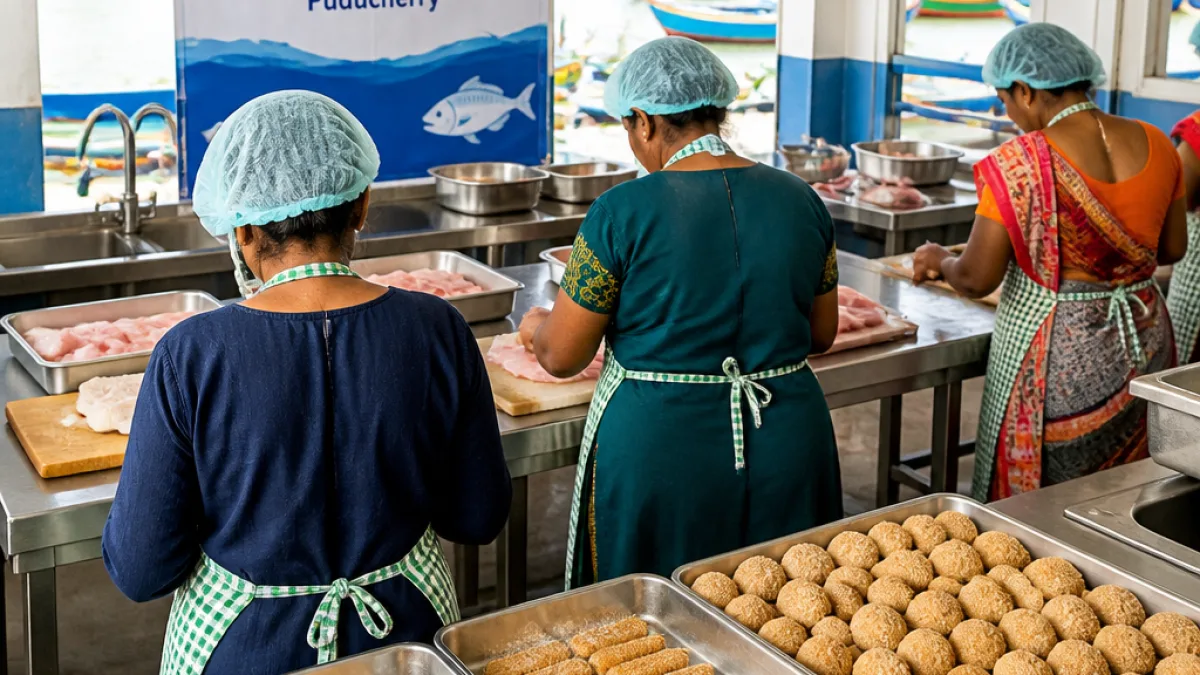
The Puducherry administration is preparing a pilot project to include locally processed fish products in the midday meal scheme for students of selected government schools in coastal areas of the Union Territory, officials said. The initiative would introduce value-added items such as fish fingers and fish balls, to be served on alternate days as part of the school lunch.
The plan emerged after a preliminary meeting on September 24 between Malladi Krishna Rao, Minister for Public Works and Fisheries, and P. Jawahar, Chairman of the Marine Products Export Development Authority (MPEDA), a statutory body under the Union Ministry of Commerce and Industry. Mr. Jawahar told reporters that MPEDA will assist with training for the women staff currently employed in government schools to boil milk and eggs, extending their skills to processing fish fillet and preparing the value-added dishes.
“We had a preliminary discussion with the Minister on the matter. The School Education Department will take up the project further, after discussing the proposal with the School Management Committees in the territory,”
Mr. Jawahar also said he had met Lieutenant Governor K. Kailashnathan and Chief Minister N. Rangasamy to explore further collaboration between MPEDA and the Puducherry government for strengthening the UT’s fisheries sector. “The government is keen on working with MPEDA for the improvement of the UT’s marine economy and the livelihood of fishermen,” he added.
Pilot location, training and implementation steps
The authorities indicated the pilot will be launched in the Yanam region of the Union Territory. According to the proposal discussed, implementation will involve the following elements:
- Procurement of locally available fish from the UT’s coastal areas.
- Conversion into value-added products such as fish fingers and fish balls, suitable for school kitchens.
- Training of women staff who already handle boiling of milk and eggs in government schools, to process fish fillet and prepare the new menu items.
- Selection of a limited number of coastal government schools to evaluate acceptability, logistics and cost.
The School Education Department will review the proposal and consult School Management Committees before rolling out the scheme beyond the pilot, Mr. Jawahar said.
Local context and potential impacts
The proposal links two policy priorities: improving child nutrition in school feeding programmes and supporting the local marine economy. Fish is a traditional source of protein in coastal communities of Puducherry, and processing into ready-to-serve items could address kitchen capacity constraints while adding variety to midday meals.
Potential benefits cited in discussions include:
- Enhanced protein intake for schoolchildren through affordable, locally sourced fish products.
- Skill development for women staff engaged in school meal preparation.
- Market support for fishermen and fish processors in the UT by creating steady institutional demand.
| Stakeholder | Role |
|---|---|
| MPEDA (P. Jawahar) | Provide training on fish processing, technical guidance |
| Puducherry Fisheries Ministry (Malladi Krishna Rao) | Coordinate pilot, liaise with local fish suppliers |
| School Education Department | Select schools, consult School Management Committees, implement pilot |
| School women staff | Receive training, prepare fish-based items in kitchens |
Officials did not provide a timeline for the pilot’s start beyond saying it would be launched “soon” in Yanam. Details such as quantity requirements, procurement norms, cold-chain arrangements and calorie-protein calculations for the menu remain to be worked out by the School Education Department in consultation with MPEDA and local bodies.
Next steps and considerations
Before expansion, the authorities plan consultations with School Management Committees to assess acceptability among parents and local communities. Operational questions that the administrative agencies will need to resolve include:
- Food safety and hygiene standards for processing and serving fish in school kitchens.
- Training duration and certification for staff handling fish processing.
- Cost implications for the midday meal budget and whether the model is scalable across other coastal schools.
The collaboration with MPEDA, a central statutory body, signals an institutional push to both diversify midday meal menus and support the UT’s marine economy, subject to the School Education Department’s appraisal and the results of the Yanam pilot.