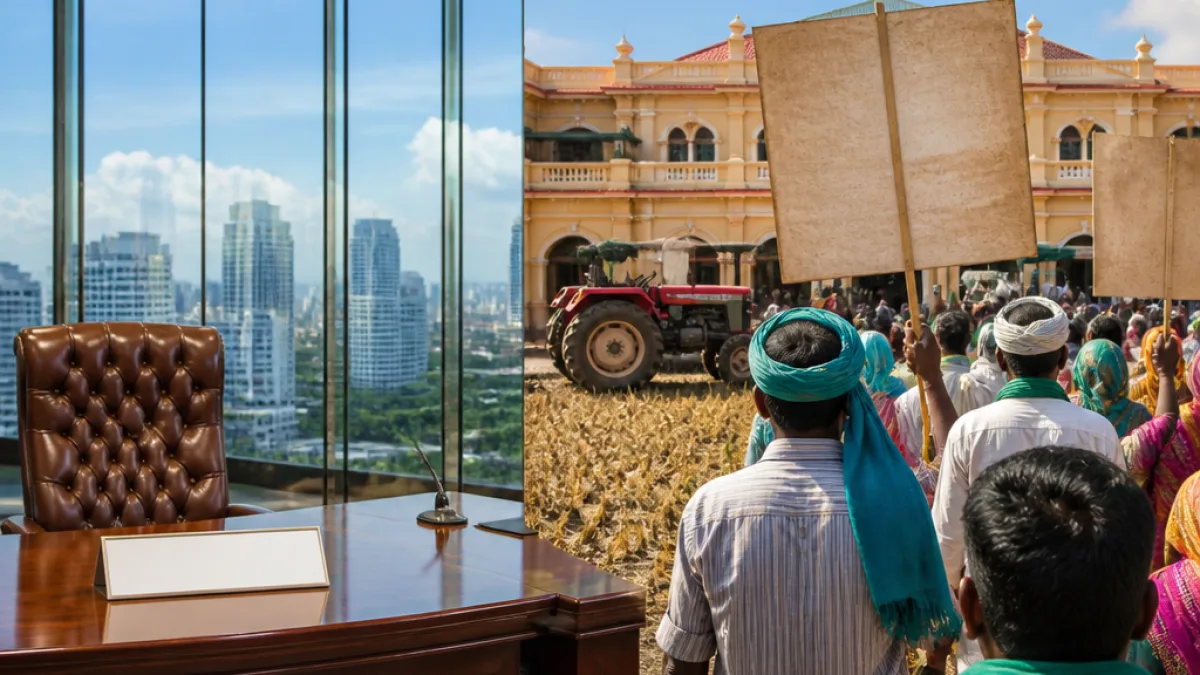
Chennai, Aug 14: AIADMK president Edappadi K. Palaniswami on Friday criticised Tamil Nadu Chief Minister C Joseph Vijay for shifting to a modern official chamber, saying the move showed the government was focusing on appearances while farmers struggled with crop losses, loans and water shortages.
Party protest over Cauvery water, loan waiver demand
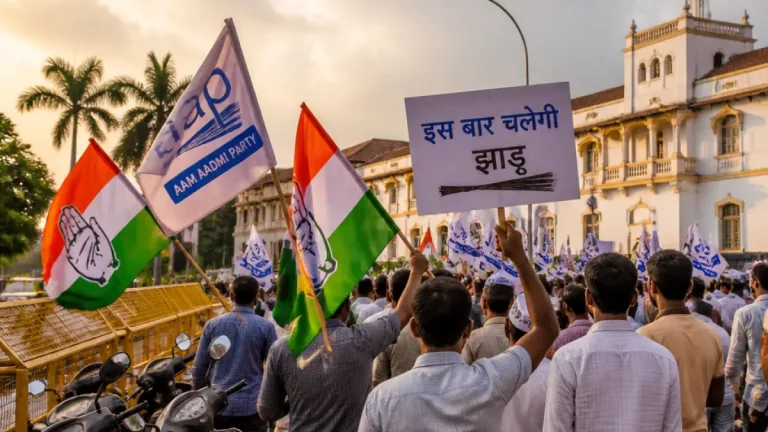
Palaniswami led AIADMK workers in protests across the state aimed at highlighting what the party calls the ruling administration's failure to secure Tamil Nadu's rightful share of Cauvery water. The party also demanded a complete waiver of crop loans taken by farmers, contending that water scarcity had disrupted Kuruvai paddy cultivation in delta districts.
Addressing party workers at a demonstration near the Head Post Office in Thanjavur, Palaniswami contrasted the chief minister's move with the historical lineage of Fort St George as the working chamber of former chief ministers, including C N Annadurai, M Karunanidhi, M G Ramachandran, J Jayalalithaa, Palaniswami himself and M K Stalin.
“The CM seems to be concerned about the aesthetics of his office while farmers in the state are struggling and working day and night in harsh weather conditions,”
This remark formed the central thrust of Palaniswami's criticism as he urged the state government to prioritise relief measures for farmers over official refurbishments.
Rebel MLAs skip protests, underline party divisions
The statewide agitation was marked by notable absences. Two senior AIADMK legislators, S P Velumani and Natham R. Viswanathan, both identified in recent months as party rebels, did not participate in Friday's protest. The two had been assigned to lead agitations in Theni (Velumani) and Ramanathapuram (Viswanathan) but reportedly objected to being asked to lead demonstrations outside their strongholds.
Velumani and Viswanathan were among a group of 25 MLAs who earlier defied the party line and voted in favour of the TVK government during the May 13 floor test. According to party records and subsequent reports, they later reconciled with the leadership, agreeing to function under Palaniswami’s command. The present absence, however, signals continuing unease within party ranks.
Party sources noted that six of the 25 defecting legislators subsequently resigned from AIADMK and joined the ruling TVK, accepting the leadership of Chief Minister Vijay.
What AIADMK demanded and the government response so far
AIADMK workers staged protests across multiple districts demanding:
- Complete waiver of agricultural loans taken by farmers;
- Assurance and protection of Tamil Nadu's share of Cauvery water;
- Measures to address failure of Kuruvai paddy cultivation caused by water shortage.
The chief minister's office and the ruling TVK did not issue an immediate response to Friday's protests or to Palaniswami's comments by the time of filing.
Background — floor test and shifting allegiances
The political backdrop to Friday’s protest remains the series of developments that followed the May 13 floor test, when a sizable group of AIADMK legislators voted in favour of the TVK administration. That episode led to a temporary split within AIADMK ranks, followed by partial reconciliation with Palaniswami. Nevertheless, the movement of six legislators to the ruling party has altered the legislative arithmetic and contributed to tension within the opposition.
| Event | Date / Period |
|---|---|
| AIADMK MLAs backed TVK during floor test | May 13 |
| Reconciliation of many rebel MLAs with Palaniswami | Post-May 13 |
| Six of 25 legislators resigned and joined TVK | Subsequent to reconciliation (no specific date furnished) |
| Statewide AIADMK protests led by Palaniswami | Aug 14 |
Party observers say the coalition dynamics and individual ambitions within AIADMK continue to influence who leads protests and where. The absence of Velumani and Viswanathan from Friday's events was interpreted by several local political commentators as a reassertion of autonomy by those leaders.
Implications for farmers and politics
AIADMK framed the protests as an effort to force the government to act on pressing agrarian concerns, especially in the Cauvery delta. Farmers in those districts have long depended on timely water releases for Kuruvai paddy; any shortfall can have immediate economic consequences. The public mobilisation also offers the opposition a platform to challenge the ruling party on governance and resource allocation ahead of the coming political calendar.
The developments underline an ongoing contest for political narrative in Tamil Nadu: the ruling party asserting administrative control, and the opposition attempting to translate agrarian discontent into political pressure.
Reporting for this article is based on the PTI dispatch filed from Chennai.