
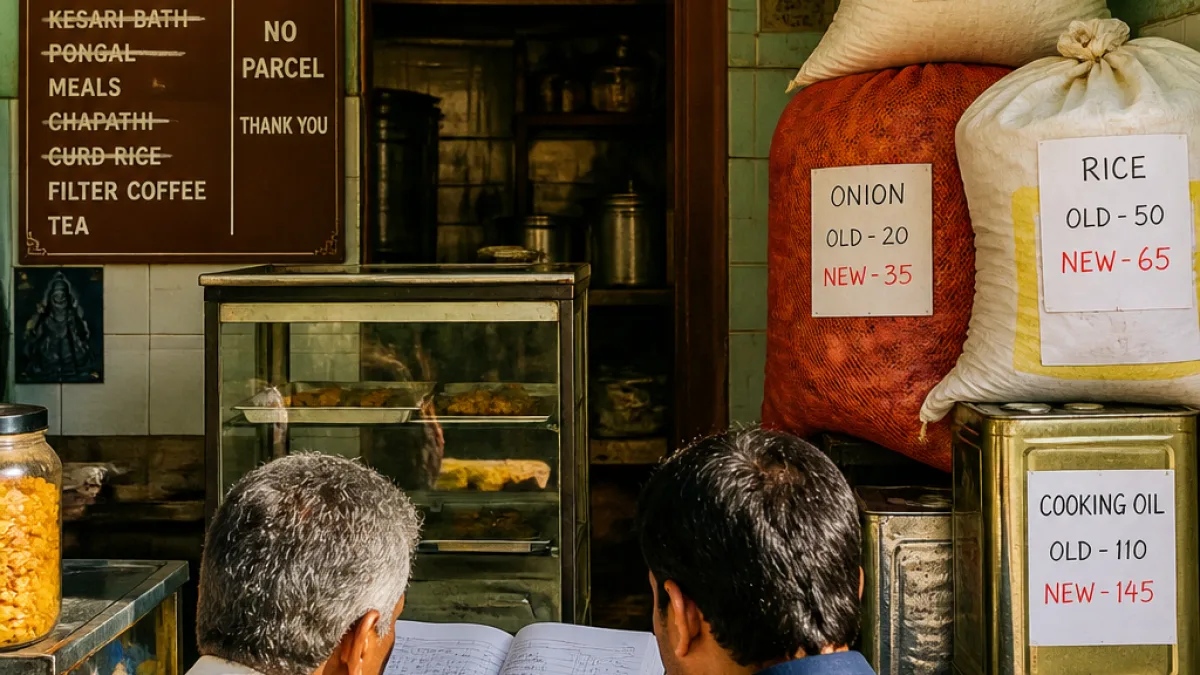
Rising input costs bite Mysuru hospitality, owners urge government intervention
Hotel proprietors and small-scale caterers in Mysuru have raised alarm over a sudden spike in the prices of sugar and other essential commodities that they say is putting the sector under severe strain. The Mysuru Hotel Owners’ Association warned the rapid escalation in input costs could force changes to menus, portion sizes or even closures for marginal establishments if relief is not forthcoming.
According to the association, the price of sugar — a staple across hotels and tea stalls — has increased sharply from about ₹40 a kg roughly 15 days ago to around ₹72 a kg now. Other key ingredients used daily in hotel kitchens have also become significantly costlier.
- Onion: from ₹18 to ₹50 a kg
- Rice (used for meals): from ₹50–₹55 to ₹70 a kg
- Good-quality cooking oil: from ~₹140 to ~₹250
"With cooking gas prices already high, any further increase in diesel and petrol prices would add to the burden on hotel operators and consumers," said C. Narayana Gowda, president of the association.
Causes cited by hotel owners
The association has attributed part of the sugar price rise to increased diversion of sugarcane sugar towards ethanol production. It also pointed to adverse weather conditions, reporting that monsoon failures in several areas have driven up prices of foodgrains and vegetables.
Hotel owners say the combined impact of these increases — together with persistently high fuel and LPG prices — is eroding already thin margins. Small and medium-sized hotels and roadside eateries that compete on low-cost, high-volume sales are particularly vulnerable because they have limited room to absorb input-price shocks or pass costs on to price-sensitive customers.
Immediate effects and demands
Operators warn of a range of consequences if prices remain elevated: reduced hiring or wage freezes, smaller serving sizes, higher menu prices, or temporary shutdowns of loss-making outlets. The association has urged government authorities to step in to stabilise prices and provide targeted relief to the hospitality sector and other affected trades.
The association's plea echoes wider concerns in Karnataka and across the country where commodity price volatility can quickly affect inflation, household budgets and the informal economy that depends on affordable staples.
| Item | Price ~15 days ago | Present price |
|---|---|---|
| Sugar (₹/kg) | ₹40 | ₹72 |
| Onion (₹/kg) | ₹18 | ₹50 |
| Rice (meal rice) (₹/kg) | ₹50–₹55 | ₹70 |
| Good-quality cooking oil (₹/litre approx.) | ~₹140 | ~₹250 |
Local hoteliers are also monitoring fuel price movements closely, noting that any fresh rise in diesel or petrol would further elevate logistics and distribution costs. The association has asked the state and central governments to consider measures such as targeted subsidies, temporary price controls, or opening buffer stock releases to calm the market.
For Mysuru — a city with a large network of small hotels, cafés and tea stalls serving daily commuters, students and tourists — sustained price pressure could ripple through the labour market and reduce disposable spending. The tourism season and festival periods that typically boost demand for hotels may not offset higher operating costs if commodity prices remain elevated.
Officials from the association said they will continue to monitor prices and hold discussions with municipal and district authorities to explore short-term relief and longer-term mitigation, including support for supply-chain efficiency and local procurement where feasible.
The situation remains fluid as owners await policy responses and hope for stabilisation in monsoon-related supply chains and commodity markets.