Two nurseries planned in Minapur to supply quality sugarcane planting material
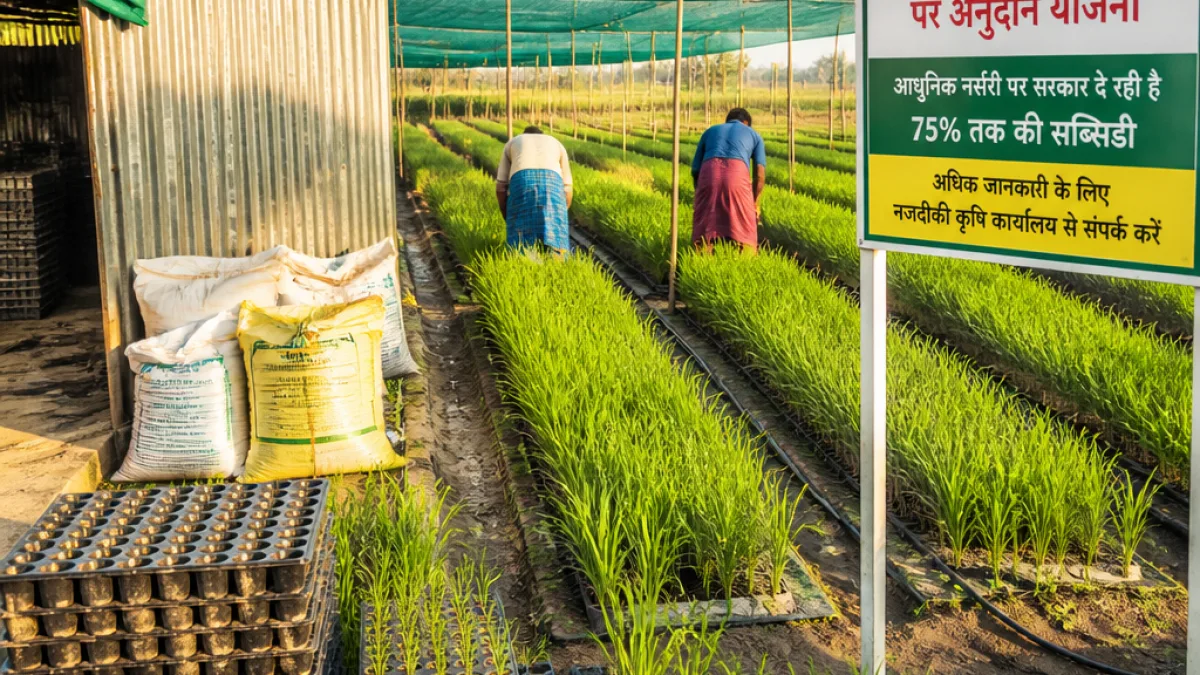
MUZAFFARPUR: The district administration has selected two farmers in Minapur block to set up modern sugarcane nurseries that are expected to supply improved planting material locally and support expansion of the crop in the district. The State will provide a subsidy covering 75 per cent of the cost while the selected farmers will contribute the remainder.
According to the district sugarcane development department, each nursery will be established on roughly 8,000 sq ft and together they are projected to produce about five lakh sugarcane plants a year. Based on the department’s estimate that around 10,000 plants are required to plant one acre of sugarcane, the nurseries could facilitate cultivation over an additional 20–25 acres annually.
- Location: Minapur block (selected villages: Jhitkahiyan and Prasad)
- Selected growers: Kishor Kumar Singh (Jhitkahiyan) and Pankaj Kumar (Prasad)
- Land per nursery: about 8,000 sq ft
- Estimated annual production: ~5 lakh plants combined
- Govt subsidy: 75% of nursery cost; farmers provide 25%
The department said the scheme aims to make quality planting material available nearer to farms, which should help raise productivity and support the district’s sugarcane-based economy. Sugarcane is presently cultivated across 124 villages in Muzaffarpur, with clusters of growers in Motipur, Kanti, Sahebganj and Minapur blocks.
"The main objective of the modern nurseries is to make quality planting material available to farmers locally," the Assistant Director, Sugarcane Development, said, according to the department.
Winter planting of sugarcane in the district is scheduled to begin in October, the department noted. Farmers interested in taking up sugarcane will also be eligible for subsidies for improved planting material under the scheme.
Local impact and capacity
At five lakh plants a year, the two nurseries will address a key bottleneck for small and marginal farmers who otherwise rely on distant sources for setts or planting material. Given the department’s planting ratio, the combined output could enable planting across close to 50 acres if fully utilised — roughly 20–25 acres per year as the department estimated — supporting new or replacement plantings in the coming seasons.
| Parameter | Figure |
|---|---|
| Nurseries | 2 (Minapur) |
| Land per nursery | Approx. 8,000 sq ft |
| Annual plants (combined) | ~5,00,000 |
| Plants per acre required | 10,000 |
Officials framed the project as both an agronomic and economic intervention: better planting material can lead to higher yields per hectare, and more reliable local supply chains reduce transport and transaction costs for farmers. The nurseries will be farmer-managed, which the department says will encourage ownership and maintainability.
While the scheme provides a sizeable subsidy for establishment, the long-term benefits will depend on distribution of planting material to surrounding villages and the uptake of improved varieties by growers. The department has indicated that it will link interested farmers with the subsidy scheme ahead of the October planting window.
Muzaffarpur’s sugarcane sector supports livelihoods across multiple blocks, and targeted investments in propagation material are a low-cost way to promote area expansion and potentially higher incomes. The success of these pilot nurseries in Minapur will be watched by growers in Motipur, Kanti, Sahebganj and other sugarcane-growing pockets of the district.
Implementation details such as exact subsidy amounts, operational timelines and distribution plans for the planting material will be finalised by the department prior to the winter planting season, the department stated.