Mumbai, Maharashtra: The Maharashtra chief electoral officer has proposed amendments to Form 6, seeking to simplify the process for eligible electors whose names were removed from rolls during the Special Intensive Revision (SIR) to apply for re‑inclusion, officials said on Sunday. The package of changes was submitted to the Election Commission of India (ECI) last week.
What the state has proposed
According to the document sent to the ECI, Maharashtra has recommended three changes to the existing Form 6, the application used for enrolment in electoral rolls. Two of the proposals are described in the submission:
- Removing the words “New Voters” from the title of Form 6 to reflect that the form may be used by persons seeking re‑inclusion.
- Introducing a separate declaration for applicants who were previously registered in an assembly constituency but are not enrolled anywhere at present.
The third proposed amendment is included in the submission, but the publicly available report did not reproduce the complete wording of that change.
Reason for the move: confusion after SIR
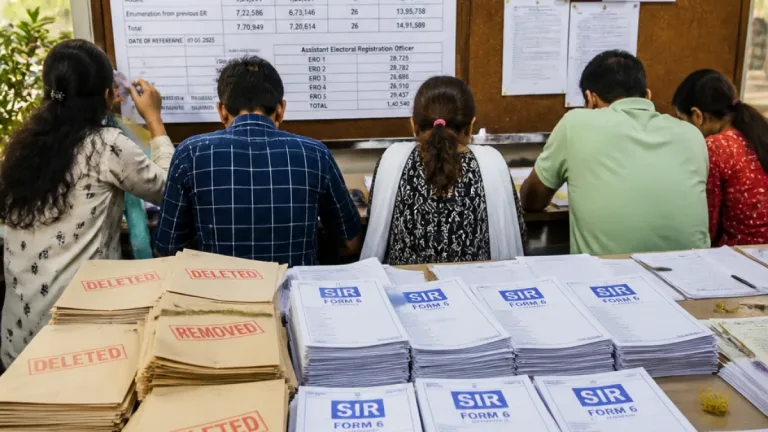
The state election machinery says the move aims to allay fears among electors deleted during the SIR that filling Form 6 could amount to making a false statement. Under current wording, the form is generally presented as meant for first‑time registration and carries a declaration to that effect.
The ECI had earlier directed people whose names were removed in the SIR exercise to use Form 6 to seek re‑inclusion. That instruction, election officials say, has led to uncertainty: some previously registered voters have hesitated to apply because they fear a declaration that they are “first‑time” applicants might expose them to legal consequences.
Legal context
The submission to the ECI quoted provisions of the law to underline the stakes. Under Section 31 of the Representation of the People Act, 1950, knowingly making a false declaration in relation to electoral rolls is an offence punishable with imprisonment of up to one year, or a fine, or both. Election officials have cited this provision when explaining why electors are apprehensive about the present declaration in Form 6.
Officials flag practical difficulties
Maharashtra election officers report that staff at the field level have faced challenges persuading previously registered electors to submit Form 6 because of the present wording. The proposed edits attempt to remove a procedural deterrent and align the form’s language with instructions already issued by the ECI regarding re‑enrolment after SIR.
| Item | Current situation | Proposed change (per Maharashtra submission) |
|---|---|---|
| Form title | Includes the words “New Voters” | Delete “New Voters” from title |
| Declaration | Designed for first‑time applicants | Separate declaration for previously registered but currently unenrolled electors |
| Third amendment | Not publicly detailed in full | Included in submission; text not reproduced in the report |
Possible impact and next steps
If the ECI accepts Maharashtra’s proposals, the state’s electoral rolls process could become less intimidating for people whose names were deleted during the SIR and who wish to be re‑enrolled. The proposed wording changes are administrative and procedural; they do not alter the eligibility criteria under the Representation of the People Act.
The final decision rests with the ECI, which ordinarily considers such state submissions before issuing guidance or approving amended forms for nationwide use.
What voters should know
- Persons removed from electoral rolls during the SIR were instructed by the ECI to use Form 6 to seek re‑inclusion.
- Under Section 31 of the Representation of the People Act, knowingly making a false declaration on electoral documents is an offence.
- Maharashtra’s proposed changes aim to clarify the form’s language so previously registered electors can apply without fearing legal consequences arising from the “first‑time” declaration.
Election officials in Mumbai said the state’s submission seeks to reconcile legal safeguards with practical field realities so that eligible electors are not left disenfranchised by procedural ambiguity. The ECI is expected to examine Maharashtra’s proposals in consultation with other states and its legal advisers before issuing any final order.
Reporting from Mumbai.