New Delhi: Himachal Pradesh is set to benefit substantially from the 422‑megawatt Kishau Multipurpose Project after state and central governments signed a memorandum of understanding on Tuesday, Chief Minister Sukhvinder Singh Sukhu said.
Key terms and financial gain for Himachal
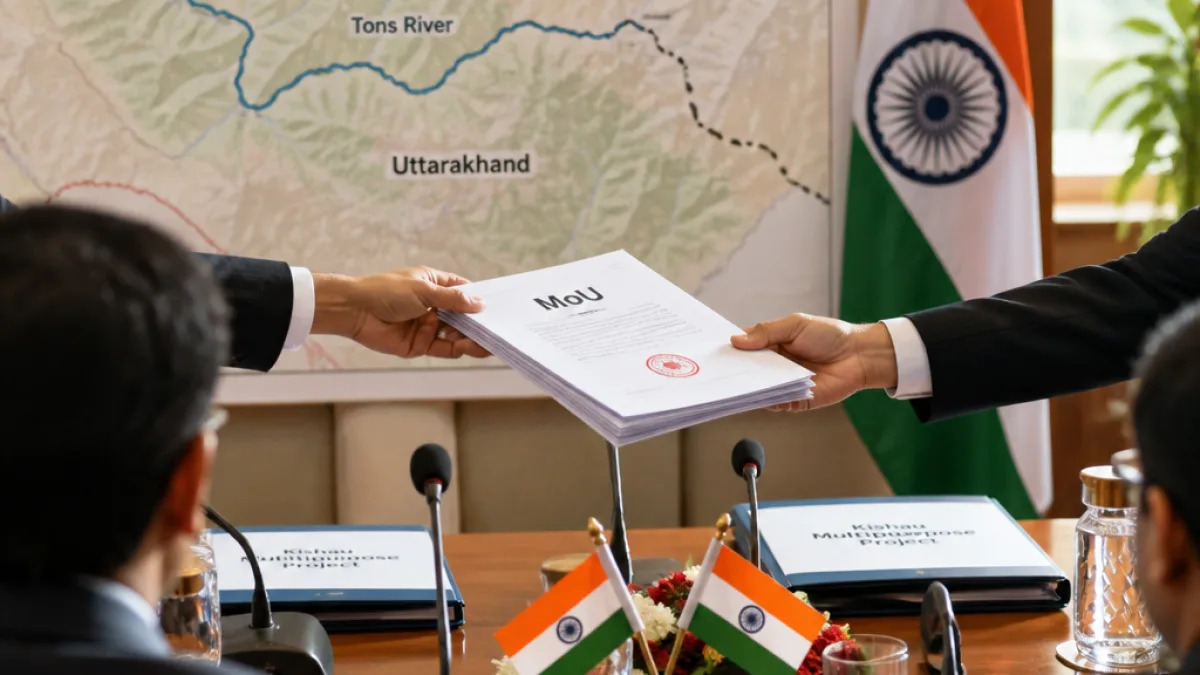
The MoU, inked in the presence of Union Home Minister Amit Shah, was signed by Union Jal Shakti Minister C.R. Patil and the chief ministers of Himachal Pradesh, Haryana, Uttarakhand, Uttar Pradesh, Delhi and Rajasthan. The project will be built on the Tons river along the Uttarakhand–Himachal border at an estimated cost of ₹15,624 crore.
Sukhu said the state will receive 211 MW of electricity generated by the Kishau Dam without having to bear generation costs. He added that the arrangement will result in estimated annual receipts of about ₹1,200 crore for Himachal Pradesh once the project becomes operational.
“We accorded the highest priority to the state’s interests during the negotiations and after prolonged discussions, we succeeded in securing important decisions in favour of the state,” Sukhu said.
What changed from earlier estimates
The Chief Minister noted that earlier calculations had put the state’s annual income from the project at roughly ₹600 crore, but revised estimates now suggest the figure will be near ₹1,200 crore. He attributed the upward revision to the negotiated terms reached during the inter‑governmental talks.
Sukhu emphasised that under a prior agreement Himachal Pradesh would have been required to finance the power it received. He said his government resisted that condition over three years of discussions and succeeded in ensuring that the cost of generation will be borne by the states that use the project’s water.
Allocation and responsibilities
According to the Chief Minister’s account, Himachal’s receipt of 211 MW without cost implies direct fiscal benefit to the state budget and relief from upfront capital or recurring generation charges. The MoU sets out co‑operative arrangements among the beneficiary states and the Centre for construction and utilisation.
- Project capacity: 422 MW
- Estimated cost: ₹15,624 crore
- Himachal allocation: 211 MW (no generation cost to the state)
- Projected annual income for Himachal: ~₹1,200 crore
| Item | Figure |
|---|---|
| Installed capacity | 422 MW |
| Himachal's share | 211 MW |
| Estimated project cost | ₹15,624 crore |
| Expected annual earnings for Himachal | ₹1,200 crore |
Compensation and local concerns
Sukhu said that families affected in Himachal Pradesh by project construction will receive compensation in accordance with applicable provisions. He indicated that the government prioritised protecting the state’s interests during the negotiations, though he did not provide a timetable for disbursal or detail the compensation formula.
No further specifics on implementation timelines, rehabilitation packages or environmental clearances were provided in the immediate post‑MoU statements. The Kishau Project lies on a inter‑state river and will require coordination among multiple state administrations and central agencies during construction and operation.
What this means for Himachal’s finances and power sector
If the projected annual receipts materialise, the additional ₹1,200 crore could strengthen the state’s fiscal position and increase funds available for public services and local development projects. Free allocation of 211 MW will also reduce the need for the state to procure costly power or invest in generation to meet demand.
Officials have said the cost of generation will be met by the states that draw on the project’s water; the MoU will govern the apportionment of capital and operating expenses. Implementation will require detailed agreements on technical, financial and administrative arrangements, which are typically finalised after an MoU.
The signing in New Delhi marks a political and administrative step forward for the project; further notifications and project‑level approvals will determine the construction schedule and eventual commissioning.