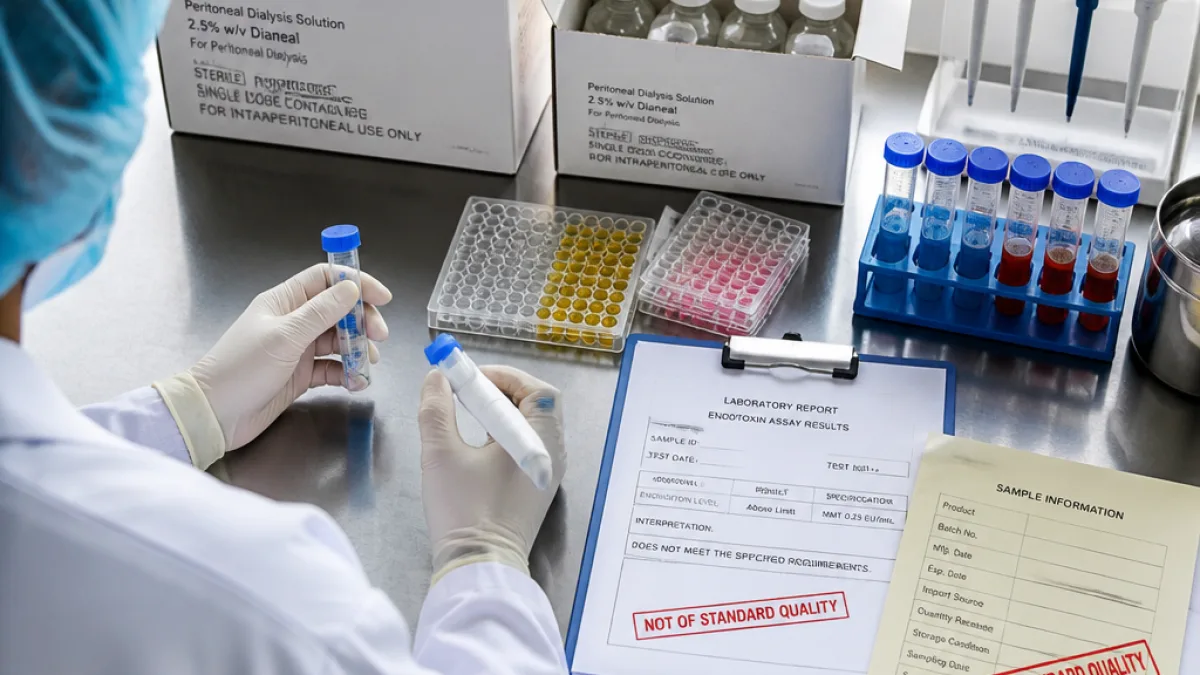
The Drug Testing Laboratory at Baddi has declared two batches of an imported peritoneal dialysis solution as "Not of Standard Quality" after samples failed bacterial endotoxin tests conducted under Indian rules, the Himachal Pradesh health and family welfare department reported.
What the laboratory found
Samples drawn from the paediatric intensive care unit and the nephrology department of AIIMS-Bilaspur were tested at the Baddi laboratory. The report, dated 3 September, and a subsequent state department letter of 7 September to the Drugs Controller General of India (DCGI) list multiple regulatory non-conformities.
- The two batches failed bacterial endotoxin tests as per the Indian Pharmacopoeia 2022 standard for endotoxins.
- The laboratory report documents nine regulatory violations, including use of non‑Indian pharmacopoeial standards for key salt ingredients and labelling deficiencies.
- The product was manufactured in Thailand and imported by Baxter India; Baxter’s renal business was separated in 2024 as Vantive, which did not respond to requests for comment, according to the documents.
Standards and labelling breaches highlighted
Among the principal technical concerns, the report states that ingredients such as sodium chloride, calcium chloride and magnesium chloride in the product conformed to the United States Pharmacopeia rather than the Indian Pharmacopoeia. The laboratory classified the product as misbranded for this reason.
"Since the product is intended for sale in India, all ingredients must conform to Indian Pharmacopoeia standards," said a person in the know, according to the documents.
The report also notes that sodium lactate was mentioned on the label without any pharmacopeial specification, attracting another misbranding classification. Additional labelling violations included omission of critical safety warnings and failure to follow Indian rules on font size and placement of the generic name relative to the brand name.
Regulatory steps taken
The state health department forwarded the laboratory report and its findings to the DCGI for further action. The laboratory date stamp and the department letter are part of documents seen by national publications and cited in the state communication.
| Item | Detail |
|---|---|
| Medicine | Peritoneal dialysis solution |
| Origin | Manufactured in Thailand; imported by Baxter India |
| Test location | Drug Testing Laboratory, Baddi |
| Samples drawn from | Paediatric ICU & Nephrology dept, AIIMS-Bilaspur |
| Report date | 3 September |
| State letter to DCGI | 7 September |
| Violations noted | Nine (including endotoxin non-conformance, misbranding, labelling defects) |
Clinical and public-health implications
Peritoneal dialysis solution is a critical sterile fluid used by patients with kidney failure during home or hospital dialysis. Failure to meet bacterial endotoxin limits can pose a risk of pyrogenic reactions, which may be serious in vulnerable patients such as children and those in intensive care.
Healthcare facilities typically maintain alternative sterile fluids and protocols to manage dialysis safely; however, the state report does not describe any immediate adverse events linked to the batches in question. The communication from Himachal Pradesh asks the central regulator to examine the matter and take appropriate action.
Advice for patients and providers
- Patients using peritoneal dialysis solutions should not stop treatment without consulting their treating nephrologist. Any concerns about a particular batch or brand should be raised with the treating facility.
- Hospitals and dialysis centres should review stock records, batch numbers and the source of supplies and follow institutional infection‑control protocols if they have used the batches mentioned in the report.
- The DCGI and state health authorities are the statutory bodies to determine recall or further regulatory action; patients and clinicians should follow official advisories.
The laboratory report and state letter form the basis for regulatory follow-up. The DCGI's response or any industry reply from Vantive was not included in the state documents cited.
Given the potential patient-safety implications, the finding underscores the importance of adherence to Indian Pharmacopoeia standards and correct labelling for medicines and medical solutions marketed for use in India.