Mandi, Himachal Pradesh: BJP Member of Parliament Kangana Ranaut on Saturday expressed support for the establishment of schools run by the Rashtriya Swayamsevak Sangh (RSS) in Himachal Pradesh, saying such initiatives should be introduced in the state if the saffron party secures power there.
Support for RSS educational initiatives
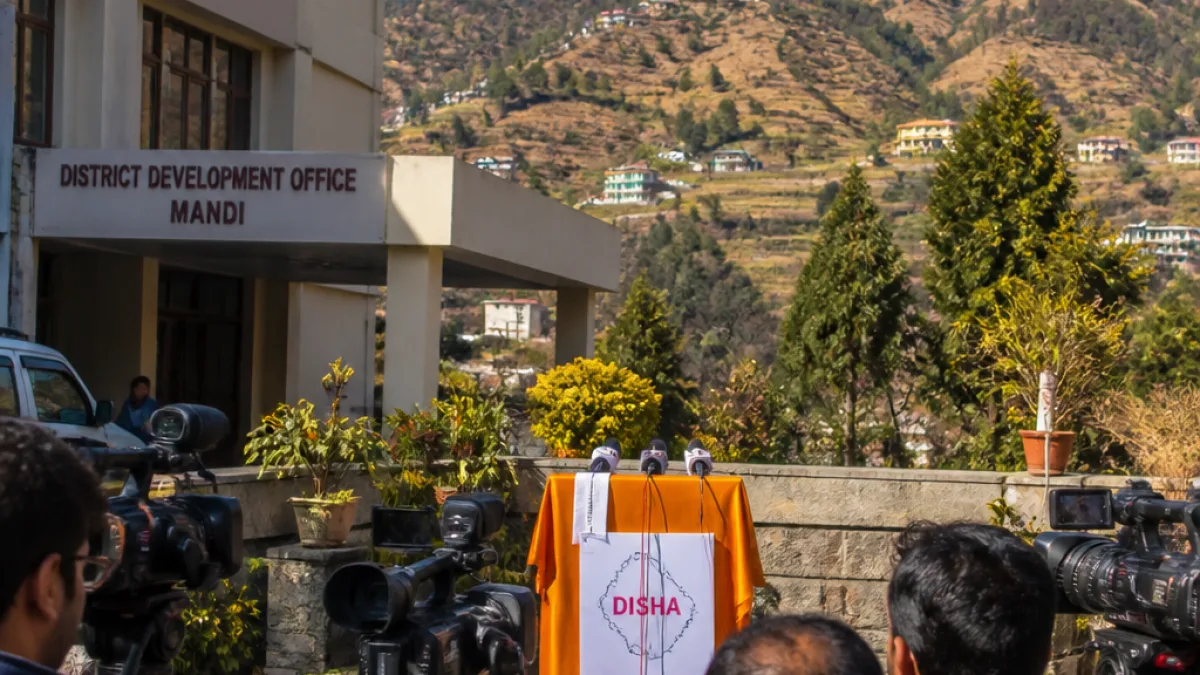
After chairing a meeting of the District Development Coordination and Monitoring Committee (DISHA) in Mandi, Ranaut spoke to PTI Videos and endorsed the proposal for RSS-run schools, calling it "a good initiative" that should be replicated in Himachal Pradesh. She highlighted initiatives associated with the RSS, including Eklavya Model Schools and NEET preparation programmes, asserting they provide better opportunities for students in rural and remote areas.
"I would like such schemes to be introduced in Himachal Pradesh when our government comes to power in the state. It is a good initiative and should be replicated in Himachal too," Ranaut said, according to PTI.
Context: proposal in West Bengal and political debate
The MP's remarks follow a proposal by West Bengal Chief Minister Suvendu Adhikari to establish a network of Vidya Bharati institutions in his state. Ranaut's comments referenced that development, and she sought to pre-empt criticism from opponents who characterise such moves as attempts to "saffronise" education.
Ranaut countered allegations of saffronisation levelled by the Trinamool Congress, saying the party promotes "anti-national" sentiments. She described the RSS as an organisation that has set up schools and provided relief during crises, framing the expansion of its education work as a national service.
What she highlighted
- Replication of RSS-run schools: Ranaut urged the adoption of similar schemes in Himachal if the BJP forms the state government.
- Focus on rural access: She pointed to Eklavya Model Schools and NEET coaching as mechanisms that can benefit students in remote areas.
- Political defence: Ranaut dismissed criticism that such moves amount to ideological capture of education, calling such allegations unfounded.
Responses and wider implications
The proposal to expand RSS-linked schools is part of a broader national conversation on the role of non-governmental organisations and ideological groups in education. Proponents argue that alternative management structures can improve access and outcomes, particularly in under-served regions. Critics, including political opponents, caution against curricular or institutional changes that could prioritise a specific ideological viewpoint.
In Himachal Pradesh, where education remains a politically salient issue ahead of assembly polls, the idea of introducing RSS-run institutions — whether as new schools or through partnership with existing bodies — would require deliberation on policy, curriculum oversight, state regulation and Centre-state coordination. Ranaut offered support but did not elaborate specific implementation plans or timelines.
| Point | Ranaut's position (as reported) |
|---|---|
| Establishment of RSS-run schools in Himachal | Supported; should be replicated if BJP forms government |
| Examples cited | Eklavya Model Schools; NEET preparation programmes |
| Response to saffronisation claims | Rejected such allegations; called critics anti-national |
What remains unclear
Ranaut's remarks were promotional and political in tone; she did not provide details on funding mechanisms, regulatory arrangements or how state government education policies would adapt to such a model. It is also not specified whether the proposed expansion would involve newly built schools, conversion of existing schools, or partnership with central or state education schemes.
Policy decisions of this nature would require discussions among state education authorities, the Union government (where applicable), regulatory bodies and local stakeholders. As of the PTI report, there has been no formal announcement from the Himachal Pradesh BJP leadership or the state government on adopting RSS-run schools.
The comments are likely to shape debate in the state as political parties and civil society weigh in on the balance between access to education and concerns about curriculum content and institutional governance.