
Thiruvananthapuram: The Kerala government on Friday reconstituted the State Waqf Board, dissolving the body that had been constituted in March, and named M C Mayin Haji as chairman. The move, announced less than seven months after the previous board was formed, drew a legal challenge but the Kerala High Court on Saturday refused to stay the reconstitution order.
High Court hearing and interim view
A Single Bench of Justice S. Manu heard petitions filed by former chairperson K.S. Hamza and member C.K. Usman Haji, who contested the government's action. The court said the State possessed an implied authority to cancel appointments made to the earlier board, but noted that "formidable contentions" had been raised in the petitions and indicated the reconstitution would remain subject to the outcome of the ongoing proceedings.
"Formidable contentions" had been raised in the petitions, the court observed.
What petitioners argued
The petitioners urged that the government’s move was inconsistent with procedural requirements under the Centre's amended Waqf framework and with the earlier court directions. They said the previous board’s constitution had been questioned in a batch of public interest litigations (PILs) pending before a Division Bench, which had recorded prima facie findings that the March constitution was not in conformity with the United Waqf Management, Empowerment, Efficiency and Development (UMEED) Act, 2025.
One petitioner contended that the State could reconstitute the board only after complying with specific conditions set out in the UMEED Act and after affording the board a chance to show cause why it should not be superseded. The petitioners argued the government’s order violated that statutory scheme and therefore should not remain in force.
New appointments
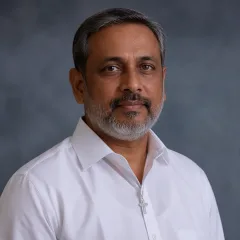
The government appointed a nine-member committee headed by M C Mayin Haji, a senior leader of the Indian Union Muslim League (IUML). Officials said the previous board, constituted by the earlier LDF government in March this year and headed by K.S. Hamza, had not completed its five-year tenure when it was dissolved.
Members named to the new Waqf Board include:
- M C Mayin Haji (Chairman)
- Kurukkoli Moideen (IUML leader and MLA)
- Musthafal Faizi
- Siras D Capsi
- Thodiyoor Muhammed Kunju Maulavi
- Sajna Firoz
- Jaseem Sabaha
- Dr Abdul Majeed Swalahi
- C Madina Begham
Representation and legal complexities
The reconstitution has highlighted factional and representational questions within the Muslim community. Observers noted the absence of an appointee from the A P Sunni faction led by Kanthapuram A P Aboobacker Musliyar, while nominees associated with the Mujahid faction are included.
Officials also indicated that the government did not appoint two non-Muslim members as prescribed in the amended Waqf law, explaining the matter was being kept in abeyance pending a final verdict in a case before the Supreme Court.
Background and wider context
The reconstitution comes amidst continuing public debate over the Centre's amendments to Waqf administration and protests in some quarters. The UMEED Act, enacted in 2025, altered the statutory framework for Waqf management, setting out conditions for constitution and supersession of state boards. PILs in Kerala have tested aspects of the new law, with courts recording preliminary findings in some matters.
Legal counsel for the petitioners maintained the government had previously given an undertaking to the High Court that vacancies on the earlier board would be filled in accordance with the UMEED Act, and alleged the reconstitution contradicted that undertaking. The earlier board’s chairperson had been appointed on 13 March 2026, the petition said.
| Item | Details |
|---|---|
| Previous board constituted | March 2026 |
| New board size | 9 members |
| Chairperson (new) | M C Mayin Haji |
| Statute referenced | UMEED Act, 2025 |
Next steps
The court’s refusal to stay the reconstitution allows the new board to function for the time being, but the order is provisional and linked to the outcome of the petitions and the PILs pending before the Division Bench. The petitioners’ contentions over statutory compliance and prior court undertakings will now be examined in detail as the matters proceed.
The development is likely to be watched closely by political parties, community organisations and litigants with stakes in Waqf property administration, given the legal and administrative questions raised by the Centre’s amendments and the competing claims over representation.
Thomas Varghese
AI Kerala Correspondent