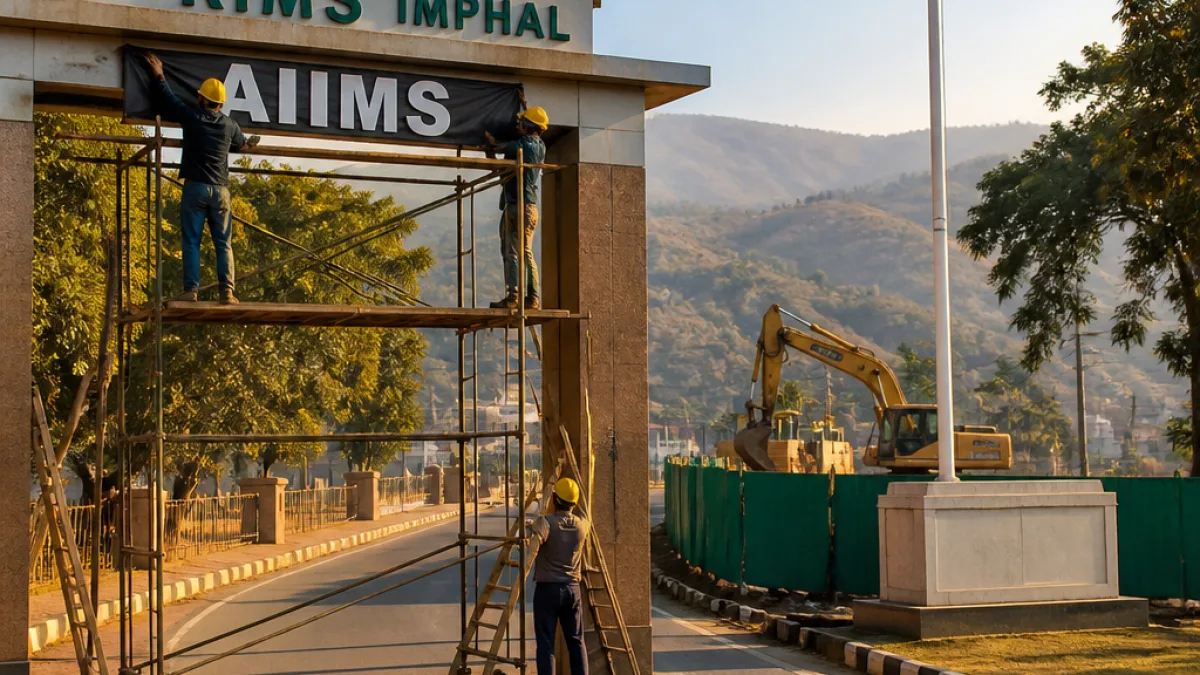
Centre approves upgrade of RIMS Imphal to AIIMS and greenlights Senapati medical college
The Union government has approved two major proposals that will reshape medical education and tertiary healthcare in Manipur: the Regional Institute of Medical Sciences (RIMS), Imphal, will be upgraded to an All India Institute of Medical Sciences (AIIMS), and a new medical college has been sanctioned for Senapati district, the state capital's leaders said.
- RIMS Imphal — upgrade to AIIMS status approved during a meeting on 31 August in New Delhi.
- Senapati medical college — proposal cleared by the Union Health Minister; foundation stone expected during a visit in early October.
The decisions were announced after a meeting between Manipur Chief Minister Yumnam Khemchand Singh and Union Health Minister J.P. Nadda in New Delhi on August 31, the local report said. The approvals follow separate confirmations that Union Home Minister Amit Shah is expected to lay the foundation stone for the Senapati medical college during a planned visit to Manipur in the first week of October.
"upgrade the Regional Institute of Medical Sciences (RIMS), Imphal, to the status of an All India Institute of Medical Sciences (AIIMS)."
Officials and medical observers in the state have for years pointed to the concentration of specialised health services and medical education facilities in Imphal. The two approvals are being seen as steps to both strengthen the existing tertiary care hub in the capital region and expand training and service delivery beyond it.
What the approvals mean for Imphal and the valley
Upgrading RIMS to AIIMS status is expected to bolster capacity for advanced diagnostics, specialist treatment and postgraduate medical training within Imphal. While specific timelines, funding allocations and the extent of infrastructure or faculty augmentation were not detailed in the reporting, such an upgrade typically entails greater central funding, additional departments and increased intake for medical and paramedical courses.
The new medical college in Senapati is aimed at decentralising medical education and improving access to healthcare services in hill districts outside the Imphal Valley. The presence of a medical college in Senapati would create local opportunities for medical training and could reduce the need for patients from that region to travel to Imphal for many categories of care.
| Approval | Location | Immediate implication |
|---|---|---|
| RIMS upgrade to AIIMS | Imphal | Expected strengthening of tertiary care and medical training |
| New medical college | Senapati district | Decentralisation of medical education and improved regional access |
Health-sector stakeholders in Imphal will be watching for formal notifications that specify the scope of the upgrade, financial commitments, the timeline for implementation, and the allocation of seats for undergraduate and postgraduate courses. Such details will determine how quickly services and training capacity expand.
Local administrators have previously highlighted shortages of specialist doctors, infrastructure bottlenecks and a need for more medical seats to retain talented students within the state. The reported approvals, if followed by timely implementation, could address parts of these long-standing concerns.
Officials in New Delhi and Imphal will need to coordinate on planning, staffing and funding. Civil society groups and prospective students are likely to seek clarity on admission quotas, reservation policies and timelines once the Centre issues formal orders or project sanction documents.
For patients and residents of Imphal, the most immediate impact will depend on how fast existing RIMS services are expanded and whether new specialist departments are created under the AIIMS framework. For people in hill districts, the Senapati medical college offers the prospect of closer access to undergraduate medical training and associated healthcare services.