
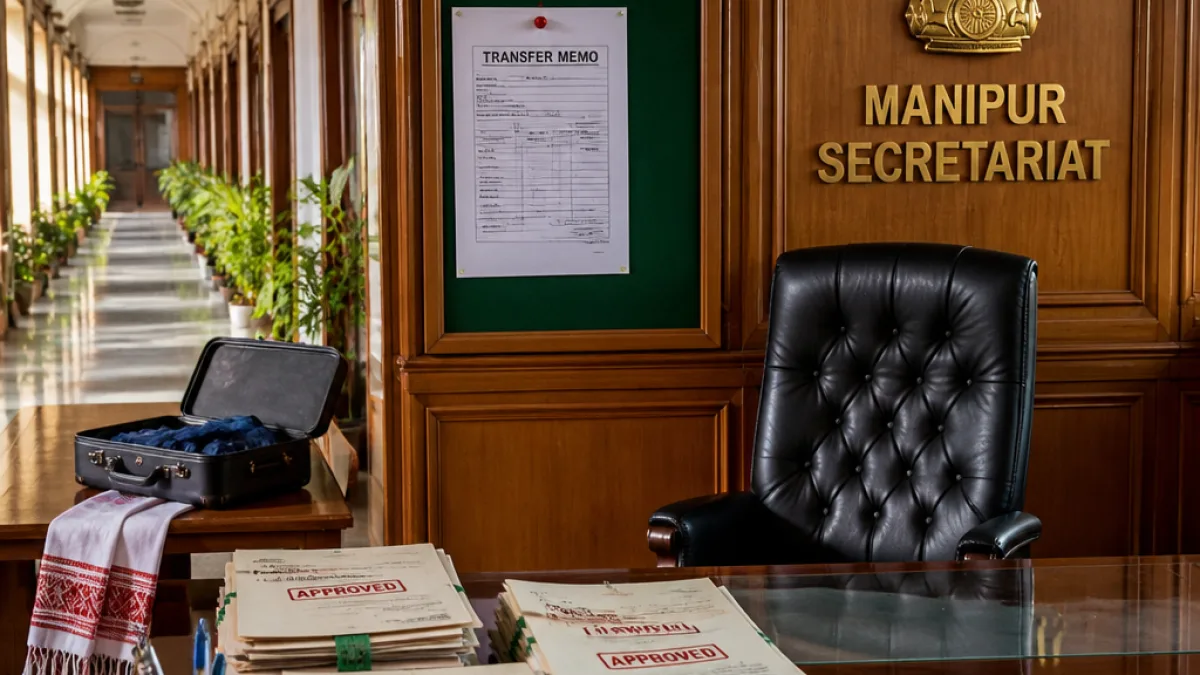
Centre approves curtailment of deputation; state expected to notify appointment
The Appointments Committee of the Cabinet (ACC) has approved the inter‑cadre transfer of senior IAS officer Rajeev Singh Thakur, making him likely to assume charge as the next Chief Secretary of Manipur, officials said on Sunday. The transfer was sanctioned by curtailing his ongoing central deputation and allowing him to join the Manipur cadre until his superannuation.
Thakur, a 1995‑batch IAS officer of the Rajasthan cadre, is currently on central deputation serving at NITI Aayog as Programme Director for Administration, Governance and Reforms, and Infrastructure Connectivity. The ACC clearance follows a proposal moved by the Department of Personnel and Training (DoPT), the officials added.
Tenure on deputation and retirement
Under the approval, Thakur’s inter‑cadre deputation to Manipur will continue through 30 June 2029, the date when he is due to retire. The continuation of his deputation beyond the normal tenure was allowed as a relaxation of the existing deputation policy, according to the communication.
| Detail | Information |
|---|---|
| IAS batch | 1995 |
| Cadre | Rajasthan |
| Current posting | Programme Director, NITI Aayog (Administration, Governance & Reforms, Infrastructure Connectivity) |
| Deputation end / retirement | 30 June 2029 |
Administrative context and implications
The formal notification of Thakur’s appointment as Chief Secretary is expected from the Manipur government. If made official, the move will place a senior central‑deputed officer at the apex of the state bureaucracy at a time when Manipur continues efforts to restore peace and normal civil administration following the prolonged ethnic conflict that affected the state.
The Chief Secretary is the senior-most civil servant in a state, coordinating inter‑departmental work and acting as the principal adviser to the Chief Minister and the council of ministers on administrative matters. The selection of a Chief Secretary with central deputation experience and a portfolio covering governance and infrastructure at NITI Aayog signals the Centre and the state are prioritising administrative capacity and coordination for reconstruction and normalisation.
Process followed
Officials said the DoPT initiated the proposal for the transfer and sought ACC approval to curtail Thakur’s central deputation to enable his move to the Manipur cadre. The ACC cleared the inter‑cadre deputation request and approved continuation in Manipur until retirement, invoking a relaxation of deputation rules to permit the extension.
- Transfer authorised by the Appointments Committee of the Cabinet after DoPT submission.
- Inter‑cadre deputation to Manipur will persist until retirement in June 2029.
- The decision involved a relaxation of standard deputation policy to accommodate the extension.
What this means for Manipur
Bringing in a senior IAS officer on deputation at this level is likely intended to strengthen administrative oversight and coordination across departments engaged in relief, rehabilitation and development work. Manipur faces the task of rebuilding public services and infrastructure while pursuing peacebuilding measures, and an experienced administrator with exposure to national policy design and connectivity projects could play a central coordinating role.
At present, the state administration has been managing multiple priorities, including restoration of basic services, security arrangements and implementation of central and state schemes aimed at stabilising the situation. The new Chief Secretary, once formally appointed, will be expected to align state machinery with these priorities and coordinate with Union ministries and agencies on assistance and project implementation.
Next steps
The Manipur government’s formal notification will confirm the transfer and appointment and set out the date on which Thakur is expected to assume office. Until that notification is issued, the arrangements remain subject to procedural formalities. The DoPT and the ACC have already completed the central clearances necessary for the move.
Given the significance of the post and the sensitive context in the state, stakeholders and observers will watch the formalisation of the appointment closely for indications on administrative priorities and coordination between the state and the Centre.













