New Delhi: The recently launched Cockroach Janata Party (CJP) has drawn attention after ThePrint reported that at least six of its 12 members of the national working committee had prior associations with the Aam Aadmi Party (AAP). The finding has renewed examination of the CJP’s origins, personnel choices and the potential continuity of political tactics between the two formations.
Composition of the core team
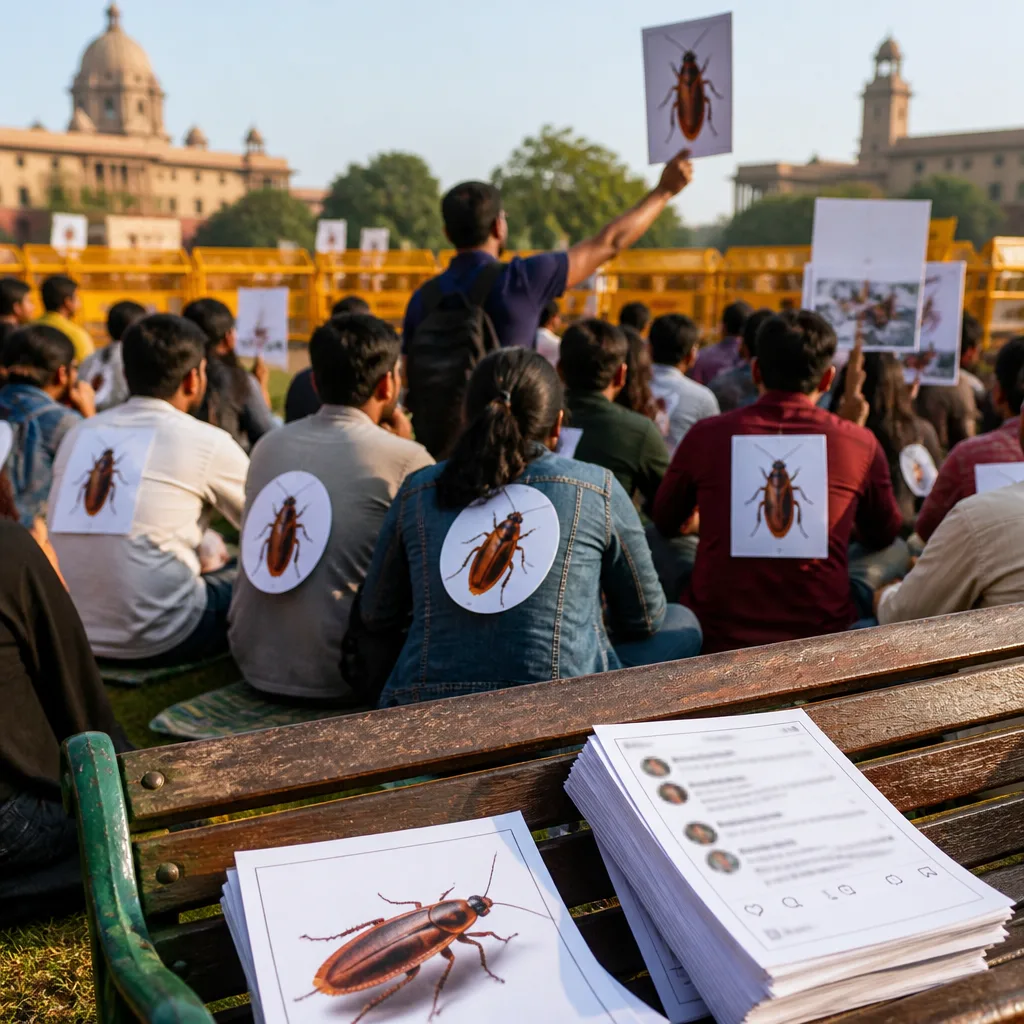
ThePrint’s account says the CJP founder, Abhijeet Dipke, worked with AAP’s social media team in 2020 and developed a political communication style that used memes, satire and humour. Dipke later moved to the United States for further study and launched the CJP after returning to India. The report noted visible familiarity between Dipke and AAP leader Arvind Kejriwal during a CJP protest at Jantar Mantar, when the two met and embraced.
According to the same reporting, of the 12 members in the CJP’s national working committee, six were either directly associated with AAP in the past or had publicly supported the party. One of the named figures is Ashutosh Ranka, identified as a CJP co-convener who earlier volunteered for AAP in Rajasthan and appeared publicly in the party cap.
| Item | Number |
|---|---|
| Total CJP national working committee members | 12 |
| Members with reported past AAP links | 6 |
Responses and explanations
Asked about his previous AAP association, Dipke told ThePrint that he had been part of the party but no longer maintained a connection. An AAP spokesperson, Sanjeev Jha, acknowledged that some individuals now in the CJP had past links with the party but said they had since moved on.
“Yes, there was a link, but no more. They were with the AAP, but recently there was no contact. They went their own ways to find jobs or study,”
ThePrint also reported that AAP sources said the party had offered support to the CJP agitation beyond what was visible publicly, providing volunteers and basic amenities. The nature and extent of any such assistance was not documented in detail in the report.
Implications for political strategy and perception
The overlap between personnel of the CJP and former AAP volunteers raises several questions for analysts and party operatives alike. The CJP’s founder is credited in the report with adapting social media techniques cultivated in AAP to shape the new party’s communication, which could suggest a degree of tactical continuity even if organisational ties have been formally severed.
Political parties in India frequently see movement of activists, volunteers and functionaries between formations. However, when a newly launched party’s core team includes multiple former members of an established party, two immediate effects follow:
- It can influence public perception about ideological proximity or continuity of methods, especially in campaign messaging and street mobilisation.
- It may prompt scrutiny from political opponents and the media about whether the new outfit is an independent force or an extension of older networks.
For AAP, which is building its national footprint while defending its regional bases, the presence of former associates in a new party may be inconvenient politically, even if the party insists contacts have ceased. For the CJP, having organisers experienced with digital campaigning and street actions could be an asset in rapidly establishing visibility.
What remains unclear
ThePrint’s reporting stops short of asserting any ongoing organisational linkage between AAP and the CJP. It documents past associations and public interactions but does not present evidence of current coordination or financial ties. Questions that remain include whether the CJP will continue to rely on former AAP operatives for key functions, how voters will interpret the personnel overlap, and whether the relationship — if any — will affect alliances or contestation in upcoming elections.
As the CJP develops its public profile and electoral strategy, both its personnel choices and its messaging approach will be watched closely by political observers, parties and voters. The unfolding narrative will likely influence how the new party positions itself in a crowded political field and how established parties respond to its entry.
Reporting in this article is based on ThePrint’s coverage of the CJP core team and statements attributed there.