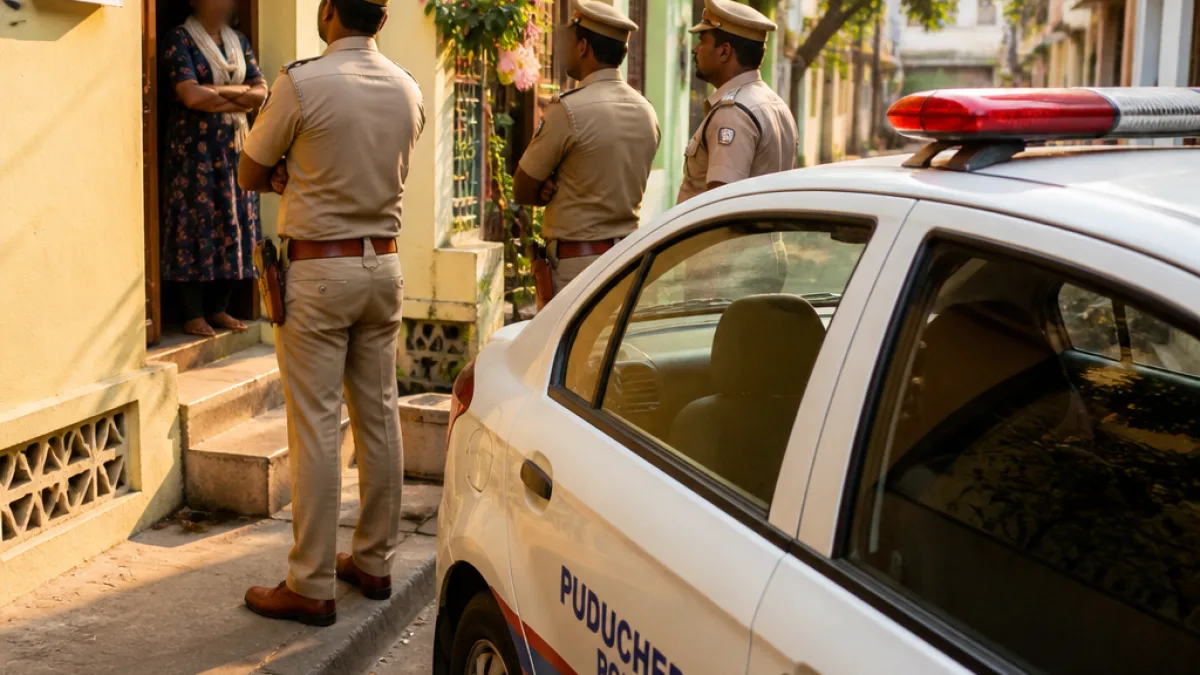
Puducherry: A political dispute has erupted after Cockroach Janata Party (CJP) co‑convenor Saurav Das said Puducherry Police visited his family home and questioned relatives, an action he characterised as harassment and intimidation. The police, however, described the visit as a routine security check conducted ahead of Independence Day.
Allegation of intimidation
In a post on the social media platform X, Das said police personnel arrived at his family residence and subjected those present to questioning. He asked who authorised the action and for what purpose, and suggested the visit was intended to silence him politically.
"Two hours ago, the Pondicherry Police showed up at my family's home and subjected them to all kinds of questioning. Why this harassment, @PuducheryPolice? Who ordered this and for what purpose? Is this the legal procedure?"
Das further alleged the move was linked to the ruling Bharatiya Janata Party in the Union Territory and claimed it was being carried out "at the behest of the Union government." He referenced a recent visit by Union Home Minister Amit Shah to Puducherry, suggesting the meetings during that visit could have preceded or informed the action.
Police response
Puducherry Police responded by saying the visit was part of standard security procedures implemented before Independence Day. The force said teams were making enquiries at private homes and hotels in areas frequented by VIPs to check whether any new individuals had arrived or were staying in the Union Territory.
What each side is saying
- Saurav Das (CJP): Described the visit as harassment aimed at intimidating him and his family; said it would not deter his political work.
- Puducherry Police: Called the activity routine security verification ahead of a national event and said enquiries were being made in locations of interest to protect VIP movements.
Context and local implications
The dispute comes against the backdrop of heightened political sensitivities in the Union Territory following visits by central leaders. While Das explicitly connected the police action to the recent visit of the Union Home Minister, police characterised the activity as procedural and focused on public safety around a national celebration.
Such incidents tend to have two immediate local effects: they raise concerns among political activists about potential misuse of security apparatus, and they also prompt law‑and‑order authorities to justify preventive measures when high‑profile events or visits are involved. Independent verification of who authorised the visit or the specific lines of questioning reported by Das was not available at the time of reporting.
Legal and procedural questions
Das asked whether the questioning of family members away from the person concerned conforms to legal procedure. Police statements earlier characterised these visits as enquiries to ascertain whether new persons had entered Puducherry or were staying in hotels and private residences in areas frequented by VIPs.
Absent further public records or an independent statement from the police listing the authorisation for the visit, the matter remains contested between a political leader alleging intimidation and the law‑enforcement agency citing security protocol.
What to watch next
The situation could evolve in several ways: the police might provide a detailed operational account or records of the checks they conducted; CJP or other political actors could seek an independent probe; or the matter may recede if police and political representatives reach an understanding. For residents, such episodes often prompt questions about transparency and the boundaries of routine security checks in residential neighbourhoods.
| Item | Position |
|---|---|
| Principal complainant | Saurav Das, CJP co‑convenor |
| Authority responding | Puducherry Police |
| Police explanation | Routine security check ahead of Independence Day |
| Political claim | Visit intended to intimidate at behest of Union government |
Both the political allegation and the police clarification were publicly available; further documentary disclosure from the police or a formal complaint lodged by the CJP would be necessary to move the issue beyond competing accounts.
Note: The reporting here is limited to statements made publicly by the parties involved; no independent eyewitness testimony or official authorisation records were available to corroborate either account at the time of publication.