Ministry says 9,257 billing grievances logged after private firm took over distribution
Chandigarh — More than 9,200 electricity billing-related complaints were registered in the 2025-26 financial year after a Kolkata-based private company assumed operations of the city's power distribution, the Ministry of Power told the Lok Sabha on Thursday.
The ministry said 9,257 complaints were recorded through the customer relationship management (CRM) system and that the matters were resolved according to the prescribed grievance redressal mechanisms. The handover of operational control took place on February 1, 2025, the ministry added.
- Tariff revision: The Joint Electricity Regulatory Commission (JERC) approved new tariffs for Chandigarh for the period 2025-26 to 2029-30, which came into effect from 1 November 2025.
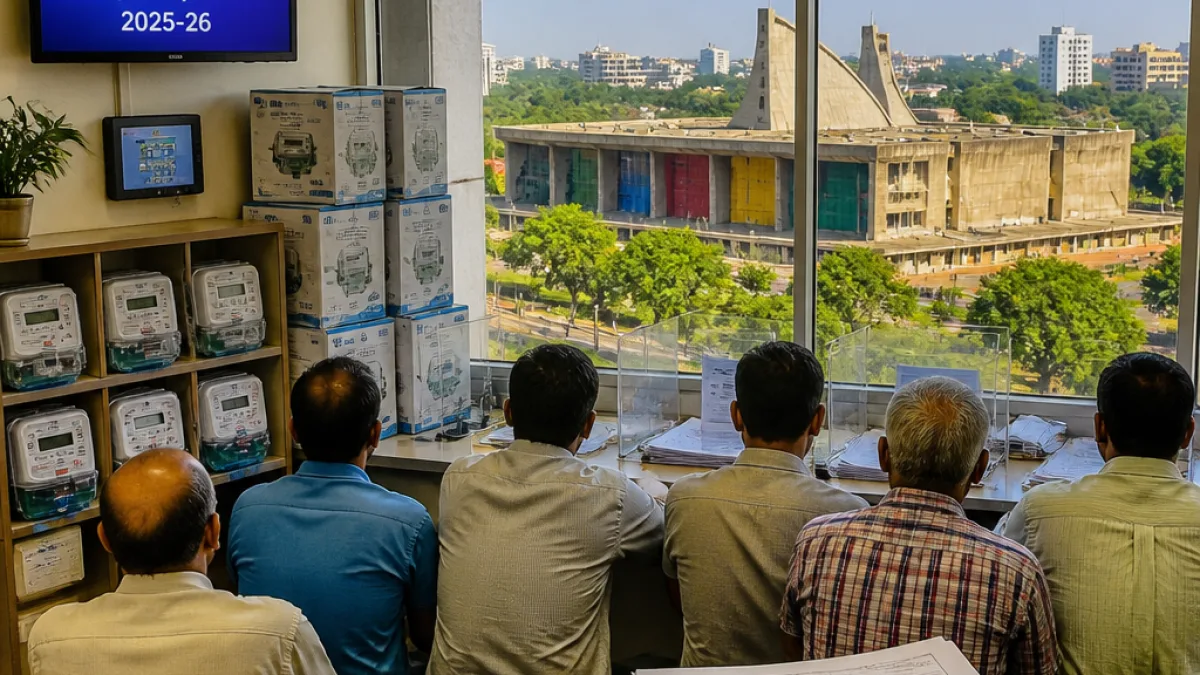
- Smart meters: The ministry highlighted deployment of smart meters but said their installation was optional; 2,037 smart meters have been installed so far.
- Complaints handling: All 9,257 complaints were said to have been registered via the CRM and addressed as per existing grievance procedures.
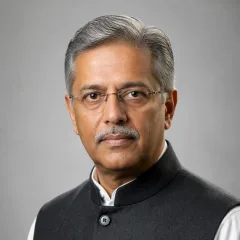
"Look how detailed the question is and how evasive the answer is — it elevates obfuscation to an absolute fine art," Chandigarh MP Manish Tewari said, adding the ministry's reply did not directly state whether ordinary consumers' electricity bills had risen after privatisation.
In response to the ministry's statement, Mr Manish Tewari, the Chandigarh Member of Parliament, said the government's reply failed to state explicitly whether the average consumer faced higher bills following the transfer of distribution to the private operator. He also noted that the relatively low number of smart meters fitted — 2,037 — reflected that meters remained optional and were not compulsory, a point he raised in the Lok Sabha reply.
The ministry emphasised that tariff determination is the responsibility of the Joint Electricity Regulatory Commission (JERC) for Union Territories, noting that the revised tariff schedule had been approved by the JERC and implemented from November 1, 2025. The ministry did not provide an assessment in its Lok Sabha reply on whether bills for an average consumer had increased or decreased following privatisation.
Observers and consumer groups in Chandigarh have voiced concerns since the handover about billing accuracy and the timing of tariff changes, citing the combination of a new distributor and a recently revised tariff framework. The ministry's data — limited to the number of CRM-logged complaints and the status of their resolution — does not include a breakdown of complaint types, the time taken to resolve disputes, or household-level bill comparisons before and after February 2025.
What the official figures show
The ministry's submission to the Lok Sabha contained the following concrete items:
| Item | Detail |
|---|---|
| Complaints registered (2025-26) | 9,257 (via CRM) |
| Private operator takeover | 1 February 2025 |
| Smart meters installed | 2,037 |
| Tariff period | 2025-26 to 2029-30 (effective 1 November 2025) |
Mr Tewari described the ministry's reply as "disappointing" and said it reflected a perceived erosion of parliamentary accountability. He urged clearer information on whether privatisation and the tariff revision had led to higher costs for ordinary consumers.
The ministry's note to Parliament focused on procedural aspects — CRM registration of complaints, the stated resolution under grievance mechanisms, and the JERC-approved tariff schedule — without supplying comparative billing data or the number of complaints that specifically concerned alleged overcharging or meter faults.
For residents, the key outstanding questions remain: how many complaints related to billing accuracy, how quickly disputes were resolved, and whether the tariff change and the change in distribution management have materially altered monthly household bills. The Lok Sabha reply, as tabled, does not provide those details.
Officials at the distribution company and the JERC have not been quoted in the ministry's submission to Parliament. The information released to the Lok Sabha establishes the scale of consumer grievances recorded after the privatisation but leaves the broader impact of the change on consumer bills unresolved.