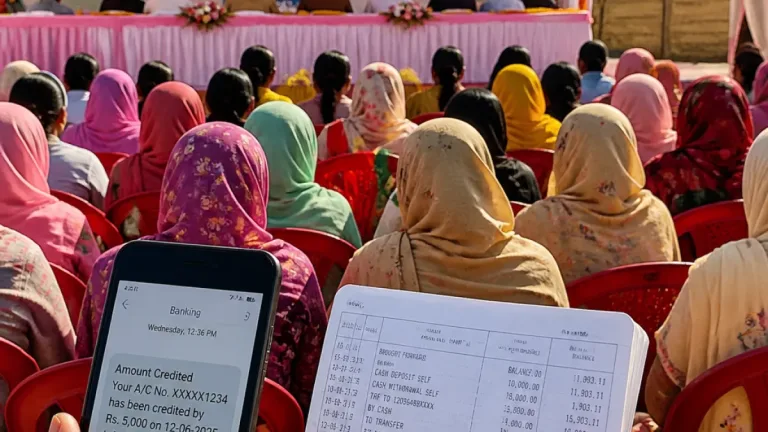
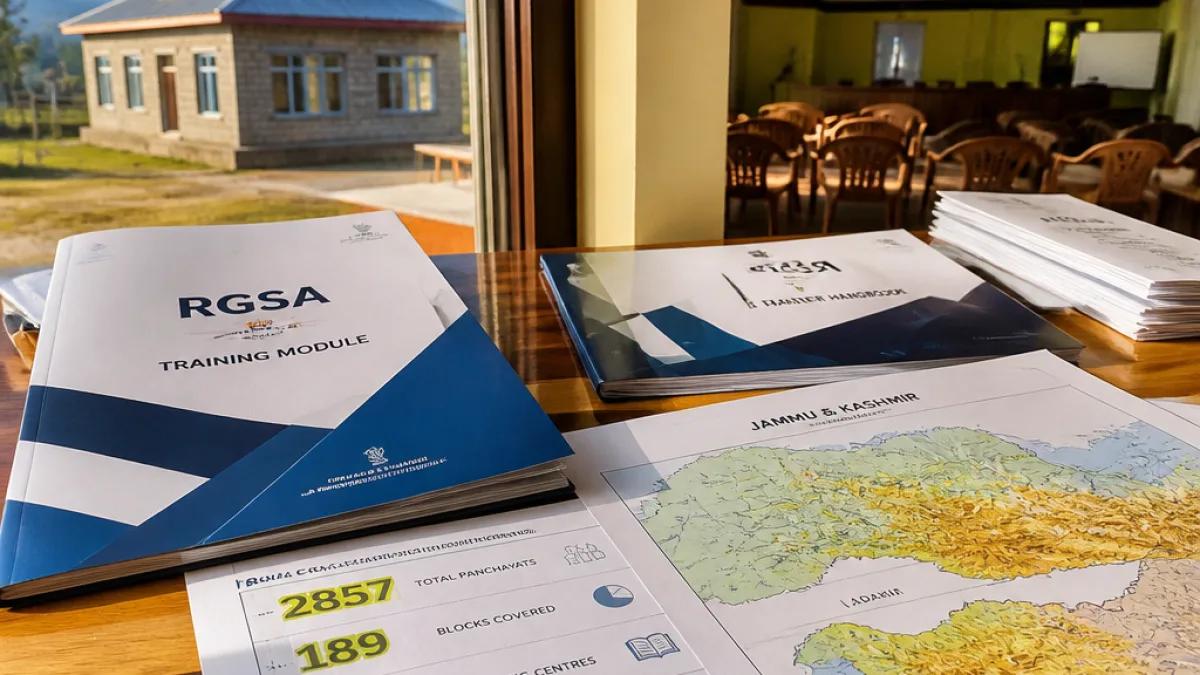
New Delhi/Srinagar: The Centre informed the Lok Sabha on Tuesday that 23,83,765 Women Elected Representatives (WERs) were provided capacity‑building training under the revamped Rashtriya Gram Swaraj Abhiyan (RGSA) during the three financial years from 2023-24 to 2025-26, with the programme also covering Jammu & Kashmir and Ladakh.
Numbers for Jammu & Kashmir and Ladakh
In a written reply to a starred question, Union Minister of Panchayati Raj Rajiv Ranjan Singh (Lalan Singh) supplied a breakdown of beneficiaries and funds released under the scheme.
- Jammu & Kashmir: 1,75,168 Women Elected Representatives were trained under the revamped RGSA in 2022-23 and 2023-24 — 1,07,089 in 2022-23 and 68,072 in 2023-24. The data shows seven representatives trained in 2024-25; no training figures were recorded for 2025-26 or for 2026-27 up to 10 July 2026.
- Ladakh: The official returns show 27 Women Elected Representatives were trained during 2025-26 under the revamped RGSA. There were no beneficiaries listed for Ladakh for 2022-23, 2023-24, 2024-25 or for 2026-27 up to 10 July 2026.
The minister reiterated the division of responsibilities between the Centre and States/Union Territories, stating that strengthening Panchayati Raj institutions is primarily a State subject and that the central role is supportive.
"Strengthening Panchayati Raj capacity is primarily the responsibility of States and Union Territories as Panchayats are a State subject," the minister said.
Funds released and utilisation
The response to the Lok Sabha also contained figures on central releases and expenditures under RGSA for the two Union Territories.
| UT | Year | Central release | Utilisation |
|---|---|---|---|
| Jammu & Kashmir | 2023-24 | ₹65 crore | ₹98.61 crore |
| 2024-25 | ₹65 crore | ₹57.89 crore | |
| 2025-26 | ₹57 crore | ₹78.99 crore | |
| Ladakh | 2023-24 | ₹1 crore | ₹0.80 crore |
The data table presents releases and utilisation as laid before Parliament. The minister explained that the RGSA, revamped from 2022-23, supports Panchayati Raj Institutions through induction, refresher and theme‑based Panchayat Development Plan training for elected representatives, with a special focus on women representatives.
What the figures imply locally
Officials and observers say capacity building of Women Elected Representatives is intended to improve local governance, planning and fund management at the grassroots. The training numbers for Jammu & Kashmir show substantial activity in the initial two years after revamp, while figures for Ladakh remain modest in comparison, with only 27 beneficiaries recorded in 2025-26.
Stakeholders in the UTs will be watching whether training coverage for Ladakh increases in subsequent years and how central releases are matched by local utilisation to ensure the intended capability building reaches gram panchayats, block and district institutions.
Programme framework and next steps
The Ministry of Panchayati Raj's role under the revamped RGSA is framed as facilitative: issuing guidelines, funding components and supporting capacity development. Implementation and scaling up within States and Union Territories rests with local governments and panchayat administrations.
Parliamentary disclosure of beneficiary and fund utilisation figures provides a basis for follow-up questions in the House and for monitoring by the respective UT administrations and civil society groups concerned with women’s political empowerment and decentralised governance.
Further details, including year-on-year beneficiary lists and district-level breakups, would be available from the Ministry or the UT administrations if sought under official channels or parliamentary follow-up requests.