Urban mandate reshapes Rajasthan municipal landscape
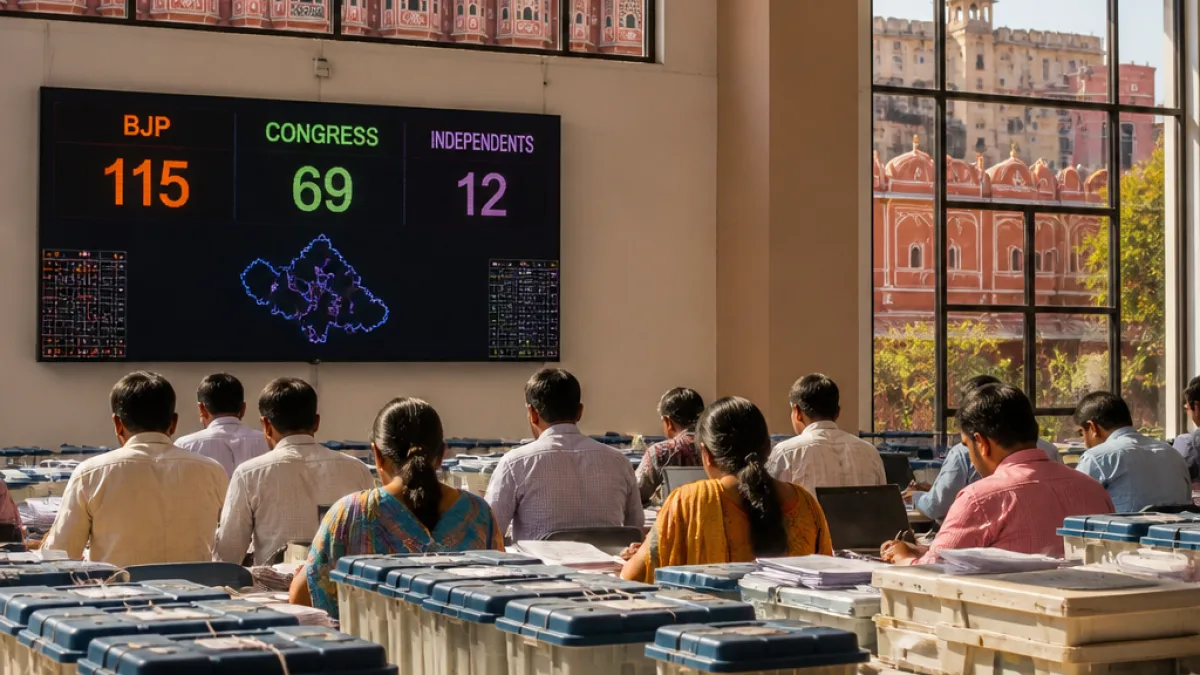
The Bharatiya Janata Party (BJP) emerged as the single largest party in Rajasthan's recently concluded urban local body elections, winning 4,179 wards across municipal corporations, councils and boards, according to official tallies. The Indian National Congress secured 3,613 wards, while Independents accounted for a substantial 2,273 wards, underscoring a fragmented verdict in many towns and cities.
Results were declared for 10,235 of the state’s 10,244 wards by 8.30 pm on the final counting day, the state election commission data showed. The polls covered 309 urban bodies — 10 municipal corporations, 47 municipal councils and 252 municipal boards.
Where parties crossed majority thresholds
The BJP secured clear majorities in four municipal corporations, consolidating its position in several urban centres. The Congress won a majority in Bikaner and retained control of important municipal seats elsewhere.
| Municipal Corporation | BJP | Congress | Notes |
|---|---|---|---|
| Jaipur | 78 of 150 wards | 53 | BJP crossed majority |
| Udaipur | 53 of 80 wards | 23 | BJP majority |
| Kota | 55 of 100 wards | 40 | One ward result held after EVM issue |
| Bhilwara | 45 of 70 wards | BJP majority | |
| Bikaner | 27 | 42 of 80 wards | Congress majority |
| Jodhpur | 44 | 44 | Deadlock between two national parties |
Independents and local dynamics
Independents emerged as a powerful third force in several municipalities. In the chief minister’s home district, Bharatpur, Independents won a plurality of wards, reflecting localised contests where community ties and local issues shaped outcomes more than party labels.
- Independents: 2,273 wards, a reminder of strong local currents in urban Rajasthan.
- Congress: 3,613 wards, retaining influence in several municipal councils and winning Jhalawar municipal council — a notable result given its association with former chief minister Vasundhara Raje.
- BJP: 4,179 wards, making it the largest party and delivering majorities in key corporations.
Counting day incident in Kota
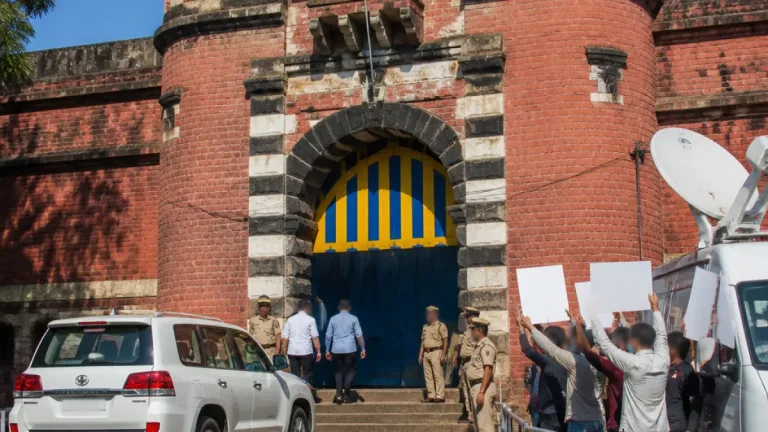
The counting process in Kota saw a procedural difficulty when the result for Ward 87 was put on hold after an Electronic Voting Machine (EVM) malfunction. A Congress candidate and party workers protested outside the counting centre seeking clarification. Election officials subsequently sealed the machine in the presence of the district collector and additional district magistrate, and forwarded a report to the Election Commission through the returning officer.
“Heartfelt thanks to the people of Rajasthan for delivering a resounding victory to the BJP in the municipal elections,” Prime Minister Narendra Modi wrote on X, adding that the results reflected support for the party’s development agenda and the “double-engine government”. “This is a testament to the triumph of truth over the jhooth ki goonj,” he said.
Political implications and local governance
The municipal verdict will shape urban governance across Rajasthan’s historic cities, from heritage-rich Jaipur and Udaipur to industrial centres such as Kota and Bhilwara. Majorities in municipal corporations give parties administrative control over city services, urban planning and welfare schemes, influencing daily life in these urban centres.
For the BJP, the wins will be presented as an endorsement of governance and development initiatives at the urban level. For the Congress, holding pockets such as Bikaner and winning in select councils offers a foothold in municipal administration. The strong independent showing highlights continuing voter emphasis on local leadership and issue-based politics.
While the official figures indicate a clear numerical edge for the BJP, the presence of many Independents and close contests in several cities suggest that coalition-building and local alliances will be crucial in determining who leads municipal administrations over the next term.
Counting procedures and any pending challenges or anomalies reported to the election machinery will be closely watched in the coming days. The results underline the mixed and competitive nature of urban politics in Rajasthan, where local issues, community factors and party strategies intersect amid the state’s unique cultural and civic landscape.
Meera Rathore is the Rajasthan correspondent reporting on state politics and urban governance.