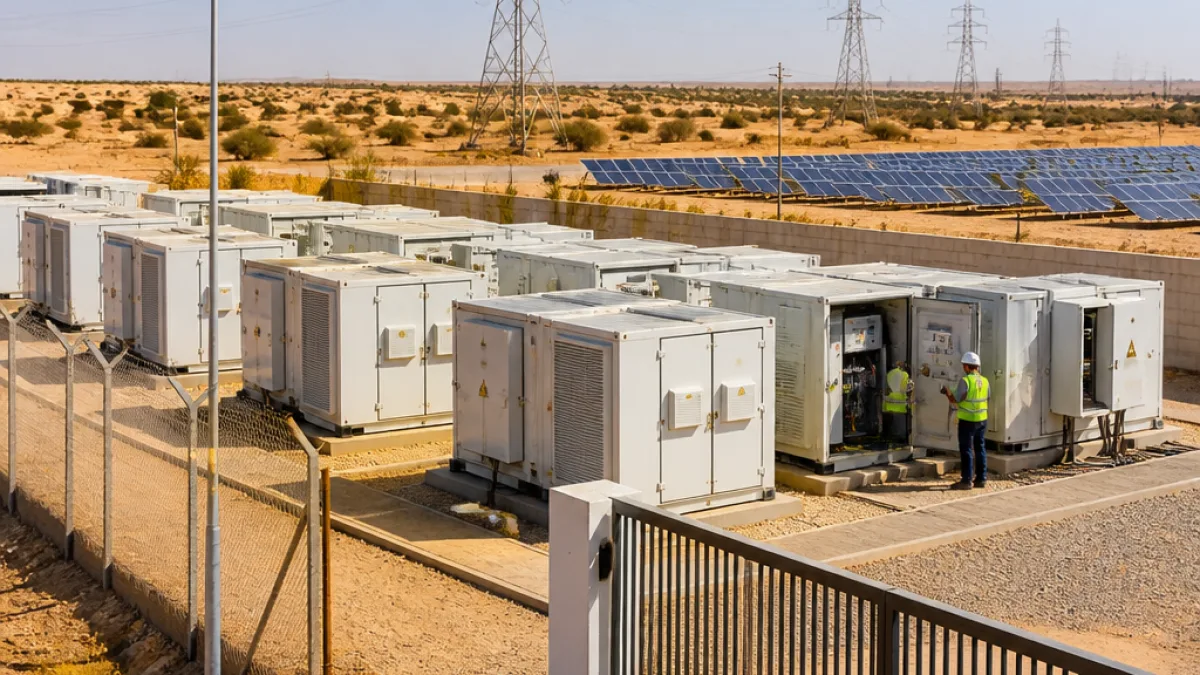
Phalodi, Rajasthan: Kabra Extrusiontechnik Limited has commissioned a 10 MW/20 MWh Battery Energy Storage System (BESS) at Phalodi for Rajasthan Rajya Vidyut Prasaran Nigam Limited (RVPNL), according to a regulatory filing submitted to stock exchanges on September 9.
Project delivery and purpose
The company stated the system has been designed, executed, tested and successfully commissioned. The BESS is intended to enhance operational flexibility of the transmission network, support efficient energy management and assist in integration of variable renewable energy into Rajasthan’s grid.
The disclosure was signed by Hiren Vala, Company Secretary and Compliance Officer of Kabra Extrusiontechnik Limited, in the filing made under Regulation 30 of the SEBI (Listing Obligations and Disclosure Requirements) Regulations, 2015.
Why this matters for Rajasthan
Rajasthan has emerged as a large centre for solar and wind generation in India. As renewable capacity grows, storage installations become important to handle the mismatch between generation and demand, manage ramping requirements and provide ancillary services such as frequency support.
The Phalodi BESS adds to an expanding portfolio of storage projects across the state aimed at strengthening grid stability while enabling higher shares of renewable energy. Operators can use such facilities to shift energy from periods of surplus to times of peak demand, reducing curtailment and improving system utilisation.
Technical snapshot
| Parameter | Value |
|---|---|
| Installed power capacity | 10 MW |
| Energy storage capacity | 20 MWh |
| Location | Phalodi, Rajasthan |
| Owner / Implementer | Kabra Extrusiontechnik Limited |
Operational and market implications
- Storage capacity of 20 MWh enables short-duration shifting of energy to cover evening peaks or sudden dips in renewable output.
- BESS units can offer ancillary services such as frequency regulation, ramp management and reserve support to the dispatch agency.
- Successful commissioning may encourage similar private and public projects across Rajasthan as the state manages growing renewable capacity.
Industry sources and recent policy directions have emphasised the role of battery storage in improving grid reliability and reducing renewable curtailment. While the filing does not disclose commercial terms, the project’s scale—10 MW with 20 MWh storage—fits within the category of short-duration grid-support installations that are currently being deployed across the country.
Context within Rajasthan’s energy landscape
Rajasthan’s high solar irradiance has attracted large-scale generation, but variability in output has created operational challenges for transmission utilities. Storage installations, alongside transmission upgrades and demand-side management, are part of a multi-pronged strategy to maintain supply quality and integrate more clean energy.
By supplying capacity that can respond within seconds to minutes, BESS installations reduce reliance on fossil-fuel peaking plants for balancing, offering environmental as well as economic benefits if dispatched effectively.
The Phalodi project, reported in the exchange filing, represents another step in the state’s transition toward a more flexible grid architecture that accommodates renewable growth while maintaining reliability.
"The BESS project has been designed, executed, tested and successfully commissioned," the company said in its filing to the exchanges.
Further details on ownership, operations and long-term dispatch arrangements were not provided in the filing. Market watchers will monitor whether this project is followed by larger-duration storage deployments aimed at multi-hour shifting, which is critical to maximising renewable utilisation.
Meera Rathore, reporting from Rajasthan.