Nigeria records largest absolute food-insecure population in Africa; report cites conflict, displacement and market disruption
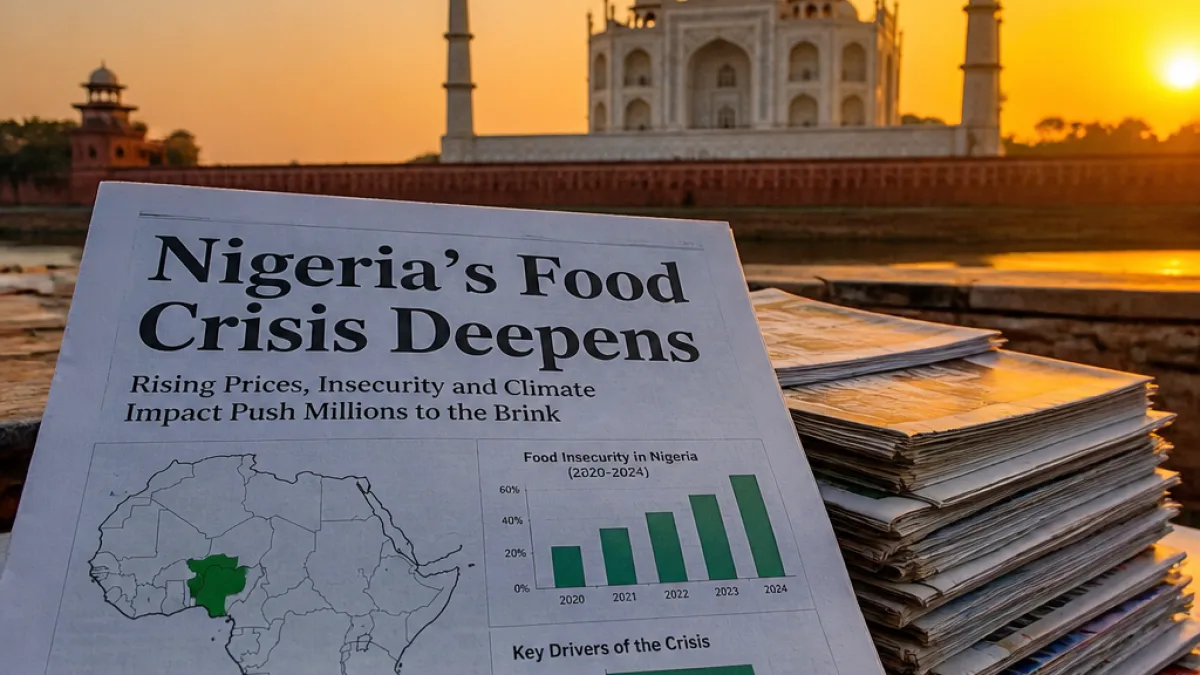
Nigeria had an estimated 36.3 million people facing crisis-level or worse food insecurity in July 2026, the Alliance for a Green Revolution in Africa (AGRA) said in its Food Security Monitor covering 17 African countries. The report, published in July 2026, ranked Nigeria as having the highest absolute number of people in IPC/CH Phase 3 or worse among the monitored countries.
- Nigeria: 36.3 million (16.7% of population)
- South Sudan: 7.8 million (55% of population)
- Kenya: 4.1 million
- Malawi: 4.0 million
- Mozambique: 3.5 million
The AGRA monitor noted that while Nigeria recorded the largest absolute number of people in crisis, its proportion of the population affected — about 16.7 per cent — was considerably lower than that in South Sudan, where more than half the population was assessed as food insecure at crisis level or worse.
"Crisis (IPC Phase 3) and Emergency (IPC Phase 4) conditions persist in conflict-affected areas of Nigeria and other parts of West Africa," the report said.
The report highlighted several compounding factors that are worsening food insecurity in Nigeria: ongoing insecurity, large-scale displacement, weakened purchasing power and disturbances to agricultural production and market access. These disruptions continue to affect farming, trade and humanitarian operations in conflict-affected areas.
Commodity prices show mixed short-term signals
AGRA's monitor recorded mixed movements in staple cereal prices in Nigeria during July. Month-on-month changes included a 4.1 per cent decline in maize prices and a modest 0.3 per cent dip in rice prices. Conversely, prices of other staples rose: millet increased by 2.8 per cent to N465.27 per kilogramme and sorghum climbed 5.8 per cent to N412.01/kg.
The report attributed the upward movements in some commodities to seasonal tightening of supplies, while noting that longer-term price trajectories for several staples remained elevated compared with historical levels.
Overall regional picture and implications
Across the 17 countries the monitor tracks, AGRA reported little month-on-month change overall, with most countries showing limited movement in levels of food insecurity between June and July 2026. Nonetheless, the chronic and conflict-driven nature of food crises in parts of West and East Africa remains a central concern for policy makers and humanitarian actors.
| Country | Estimated people in IPC Phase 3+ | Noted proportion or comment |
|---|---|---|
| Nigeria | 36.3 million | 16.7% of population |
| South Sudan | 7.8 million | 55% of population |
| Kenya | 4.1 million | |
| Malawi | 4.0 million | |
| Mozambique | 3.5 million |
For readers in Agra — a city with deep agricultural linkages in Uttar Pradesh and a major market for cereals and pulses — such international monitors offer early warning on trends that can influence global commodity markets and humanitarian policy. While the AGRA report focuses on African countries, its findings underline how conflict, displacement and market access combine to produce severe food crises — dynamics that public policy and humanitarian assistance must address to prevent deeper, longer-lasting emergencies.
The AGRA Food Security Monitor remains a monthly tracking tool for food security, commodity prices, agricultural conditions and policy developments in the sampled countries. The July 2026 edition signals continued concern in conflict-affected regions even as some domestic markets show short-term easing in select staples.