
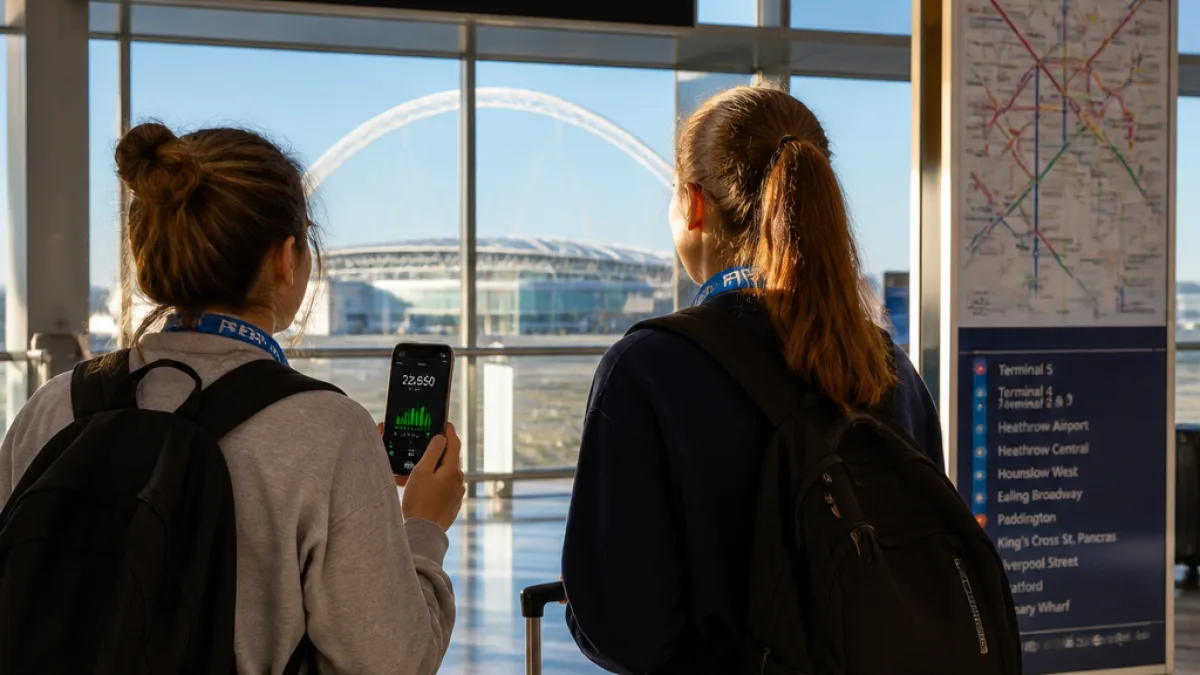
Long day at Heathrow set tone for frenzied coverage
Two student reporters arriving at London Heathrow at 7 a.m. found themselves immediately immersed in a sustained reporting effort that stretched through the next two days. The trip, focused on covering ASU London and the Union Jack Classic, left the pair working “nonstop for 39 hours,” according to a first‑hand account of the assignment.
The duo — a writer and a Visuals Editor named Madison Haynie — described the assignment as intensive and businesslike rather than a sightseeing excursion. They moved rapidly between interviews, Underground journeys and site visits, with the pace punctuated by logistical challenges such as getting lost outside Wembley Stadium.
“When you get the once‑in‑a‑lifetime chance to cover something in another country — you better not mess it up.”
Practical demands overshadowed leisure
The trip was framed as work from the outset: the pair dressed in business attire for both days, conducted interviews with more than a dozen sources and toured multiple sites linked to a newly opened campus. The reporter said they were operating on less than four hours of sleep, did not sleep on the plane and logged over 14,000 steps during one busy Saturday in unfamiliar dress shoes.
- Arrival: 7 a.m. at London Heathrow
- Working streak: 39 continuous hours
- Physical toll: more than 14,000 steps on a single day
Interviews and campus tours packed into tight schedule
Among the core tasks were interviews with parts of ASU London’s leadership team, undertaken immediately after the overnight flight. The reporter noted the pressure and nerves tied to meeting founding members of a new global centre while running on limited sleep and managing the logistics of a foreign city’s transit system.
Despite the strain, the account emphasised the experience’s professional value. The reporter described a mix of exhaustion and satisfaction: physical weariness and lingering jet lag were outweighed by the fulfilment of completing a concentrated assignment and the confidence built through collaboration with the Visuals Editor.
Local logistics and the realities of cross‑border student reporting
The story highlights the practical realities facing student journalists covering international events: tight timelines, unfamiliar transit routes, the need for advance planning and coordination, and the physical fatigue that comes from long stretches of fieldwork. For media outlets and university programmes that send students abroad, the account is a reminder of the support and preparation necessary when reporting in another country.
| Detail | Value |
|---|---|
| Heathrow arrival | 7 a.m. |
| Continuous working period | 39 hours |
| Steps logged on busiest day | 14,000+ |
For readers in London and beyond, the account offers a candid look at what covering an international education and sporting event entails — not sightseeing but sustained, deadline‑driven reporting. The piece also underlines the importance of logistical planning for student journalists and the value of experienced collaborators on fast‑moving assignments.
While the writer acknowledged moments of stress and exhaustion, they also described the experience as professionally rewarding and educational, a concentrated exposure to international reporting conditions that left a lasting impression despite the physical toll.













