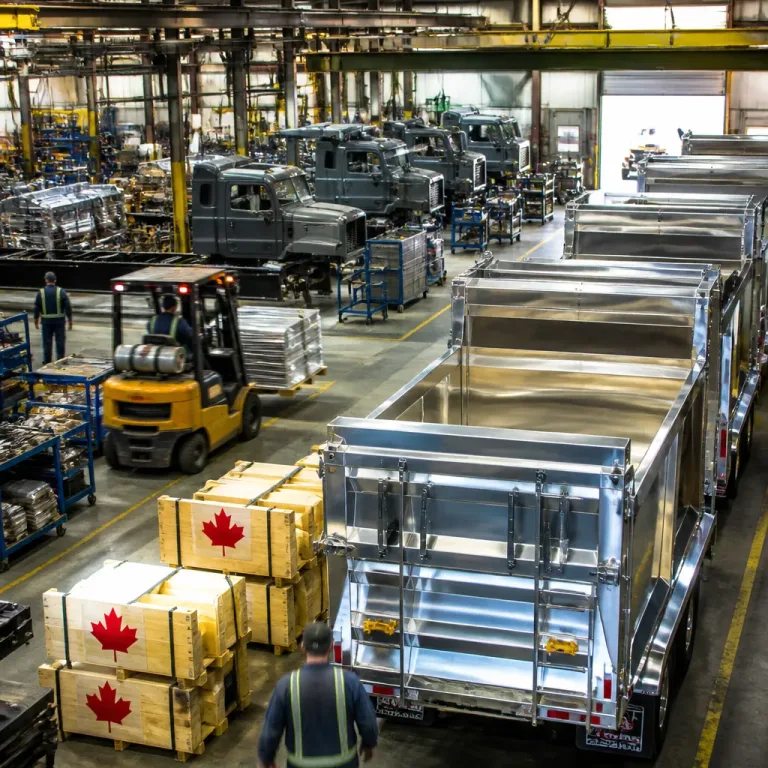
The Sarnia‑Lambton Chamber of Commerce is urging federal and provincial officials to step in after trade talks between Canada and the United States broke down and both countries announced reciprocal tariff measures that threaten to ripple through the region’s integrated industrial economy.
Local economy tied to cross‑border trade
On the weekend, the United States imposed a new 50 per cent tariff on about $28 billion of Canadian goods after negotiations stalled, and Canada announced it would match the tariff rate. The measures are scheduled to take effect on Sept. 8, a date that has local companies and supply‑chain managers watching closely.
In a statement issued Monday, the chamber’s interim chief executive, Steve Crozier, described Sarnia‑Lambton as one of Southwestern Ontario’s "most vital industrial hubs and border communities," noting the region’s heavy reliance on predictable, seamless cross‑border commerce with neighbouring Michigan and broader U.S. markets.
"Our region's economy is uniquely integrated with our cross‑border partners in the United States. Unilateral tariffs and trade friction create significant uncertainty for local employers, threaten critical supply chains, and place unnecessary burdens on local businesses and workers on both sides of the border," said Crozier.
The chamber emphasised that many local enterprises cannot afford prolonged trade disputes, particularly at a time when some are engaged in economic recovery and retooling. The statement said the chamber would consult with federal and provincial representatives to make sure area businesses are not overlooked as governments consider next steps.
Practical impacts for Sarnia companies
Sarnia‑Lambton’s manufacturing and petrochemical sectors have deep operational links across the border. While the chamber did not list specific firms, the combination of high tariff rates and uncertainty can have immediate and secondary effects:
- Increased cost of inputs or finished goods moving across the border, squeezing margins for exporters and importers;
- Potential delays and administrative burdens as companies seek exemptions, pursue appeals or reroute supply chains;
- Risk that smaller suppliers or contractors might be unable to absorb sudden cost increases, which could affect employment in the region.
The chamber urged any local members or business leaders with concerns about cross‑border shipments or operational impacts to contact the organisation directly, signalling an intent to gather local intelligence and raise issues with elected officials.
| Measure | Details |
|---|---|
| U.S. tariff rate | 50% on roughly $28 billion of Canadian goods |
| Canada response | Match at 50%; measures to take effect Sept. 8 |
Political response and next steps
The chamber said it will be monitoring developments closely and consulting with federal and provincial representatives. The statement did not specify which provincial or federal officials the chamber plans to contact, nor did it outline specific policy asks beyond ensuring local businesses are not "left out or forgotten" as governments work through their responses.
Trade disruptions of this magnitude typically prompt a range of actions: industry groups and chambers assemble economic impact data for politicians; businesses seek clarification about exemptions or relief programs; and some firms begin contingency planning to mitigate immediate cost pressures. The timeline to Sept. 8 leaves only weeks for local actors to assess exposure and for governments to negotiate or design measures to reduce harm.
For Sarnia‑Lambton, where cross‑border commerce is a routine part of daily business life, the chamber’s public statement reflects both concern and a call to action. The region’s economic health depends on the free flow of goods and the predictability of trade rules, and local leaders now face the task of translating that vulnerability into practical advocacy at higher levels of government.
Residents and businesses seeking guidance or wanting to share concerns were directed by the chamber to make contact with the organisation so those issues can be relayed to policymakers.
More details on specific impacts and any coordinated responses from municipal or provincial officials are expected as the chamber and its members engage with elected representatives over the coming days.